
 Newsletter
Wine gains ground, EV prices might go up, and LPG supply boost.
🗓️ Morning folks and Happy Monday! ☀️
If your weekend felt too short, you’re not alone.
While most of us are just getting back into work mode, India’s EV market has already had one of its busiest months yet.
Electric two-wheelers saw a sharp spike in March, with buyers rushing in before subsidies potentially shrink and prices move higher. Over 1.27 lakh units have already been sold this month, making it one of the strongest months this financial year.
What’s next: prices could go up soon. Rising costs of key materials like silver and platinum, along with overall inflation, are putting pressure on manufacturers, and some of that increase may soon be passed on to buyers.
Why this matters: If you’ve been thinking about buying an electric scooter or bike, this window might not last long. Prices could rise in the coming months, and subsidies may shrink, making EVs more expensive than they are today.

Let’s hit it! 💪🏻
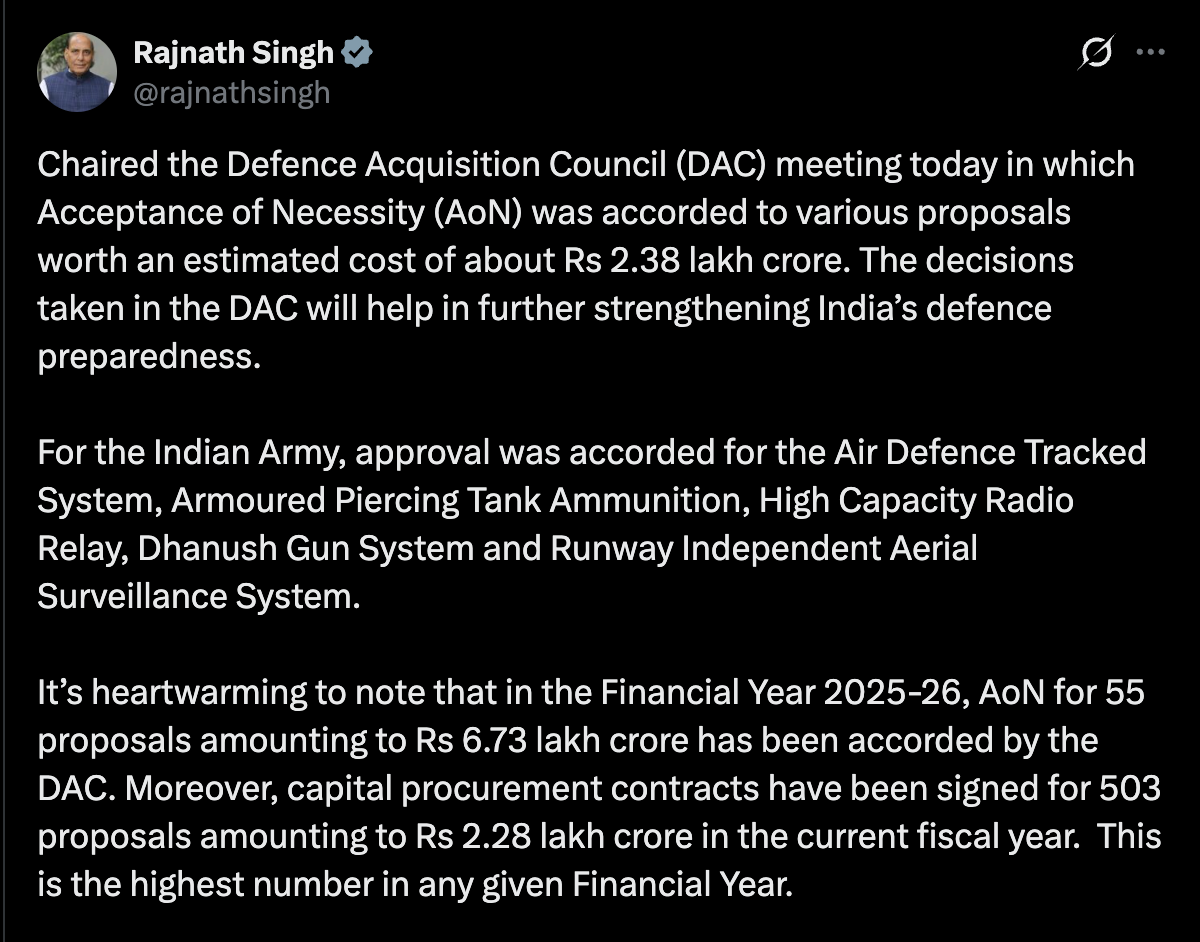
1 Big thing: ₹2.38 lakh crore boost for defence 🇮🇳
India just cleared one of its biggest defence shopping lists yet.
What’s buzzin’: the Defence Acquisition Council has approved proposals worth ₹2.38 lakh crore, covering everything from air defence systems to drones, artillery, and communication tech across the Army, Air Force, and Coast Guard.
With this, total clearances this financial year now stand at ₹6.73 lakh crore across 55 proposals.
What’s in the cart:
- Army: air defence systems, Dhanush artillery guns, surveillance gear, armour-piercing ammunition
- Air Force: strike drones, upgraded Su-30 engines, S-400 systems, new transport aircraft
- Coast Guard: high-speed air cushion vehicles for patrol, rescue, and surveillance
Also in play: separately, India also signed a ₹445 crore deal with Russia to buy Tunguska air defence missile systems for the Army, and a ₹413 crore deal with Boeing India for maintenance of Navy P-8I aircraft.
The Tunguska systems will strengthen India’s air defence by better handling threats like drones, aircraft, and cruise missiles.
Why now: this comes at a time when tensions in The Middle East are rising, making defence preparedness more urgent. At the same time, India is upgrading its largely old, Soviet-era equipment and diversifying where it buys from.
2. Govt boosts LPG supply for industries 🔥
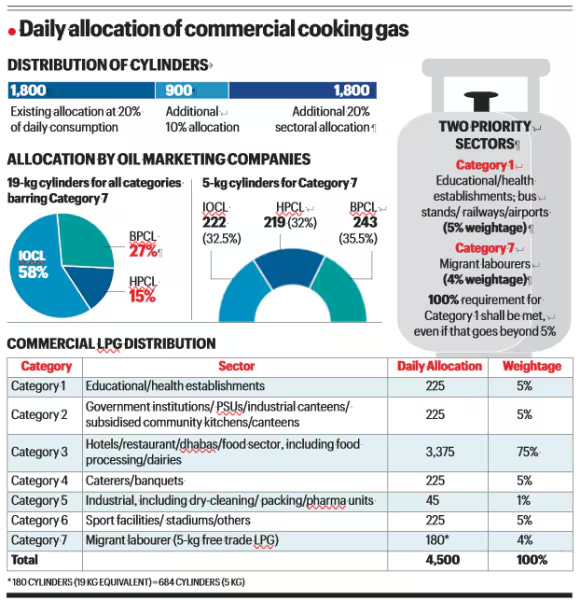
The government plans to increase commercial LPG supply to 70% of pre-crisis levels to support industries.
Context: global oil prices have surged from $70 to $122 per barrel, driven by tensions in the Middle East, tightening fuel supply and pushing costs higher across sectors.
The why: industries like steel, auto, textiles, and chemicals rely on LPG for operations. With supply cuts earlier, many were facing cost pressure and disruptions, this move aims to ease that stress and keep factories running smoothly.
Background: during the recent energy crunch, the government had cut LPG supply to industries to prioritise household cooking gas (domestic LPG). It had initially restored supply to 50% of pre-crisis levels, and is now gradually increasing it to 70%.
Deeper analysis: LPG is a critical fuel in India, used not just for cooking but also in industrial heating and manufacturing processes where alternatives like natural gas don’t always work.
As crude prices rise and supply routes like the Strait of Hormuz remain uncertain, the government is trying to balance supply between households and industries, while also pushing long-term shifts toward piped natural gas (PNG).
3. Azad ties up with Mitsubishi 🤝
Azad Engineering has signed a long-term, 8-year contract with Japan’s Mitsubishi Heavy Industries (MHI).
What’s happening: Azad will manufacture and supply highly complex nozzle vane segments, critical components used in gas turbine engines that power energy systems across the world.
These components are not standard parts. They require extreme precision and advanced engineering, as they operate under high temperatures and pressures in gas turbines used for global power generation.
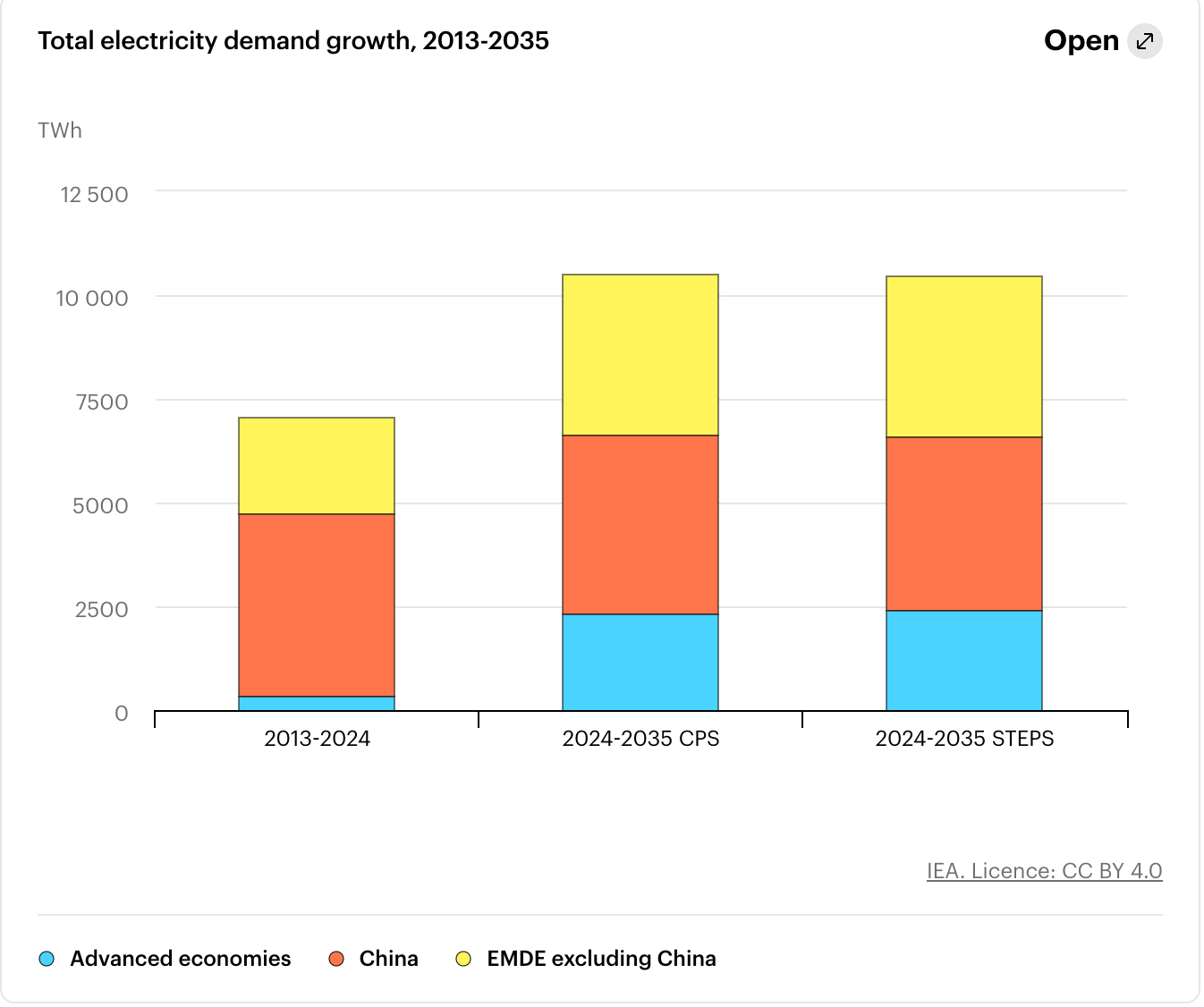
Big theme: Azad is becoming part of the global system that powers the world. The International Energy Agency’s (IEA) World Energy Outlook 2025 forecasts electricity demand to grow by 40-50% by 2035, driven by AI, data centres, manufacturing, and everyday energy use.
And that’s where this fits in. By supplying critical components used in turbines across global markets, Azad is positioning itself right at the center of this rising demand for power.
While we are on deals 💸,
Sula Vineyards is buying Chandon’s winery and estate in Nashik for ₹20 crore, doubling down on both wine-making and wine tourism.
The 19-acre property comes with a functional winery, room for expansion, a visitor centre, event spaces, and vineyards. Located in Dindori, one of India’s top grape-growing regions, the deal strengthens Sula’s presence in a key wine hub.
Big picture: globally, wine drinking is slowing down, with consumption at its lowest level in decades.
But in India, it’s a different story. Wine demand is picking up fast, with imports jumping over 50% and local sales steadily rising. So, Sula is clearly betting that India’s taste for wine is only just getting started.
4. Who controls India’s LPG market? 🔥
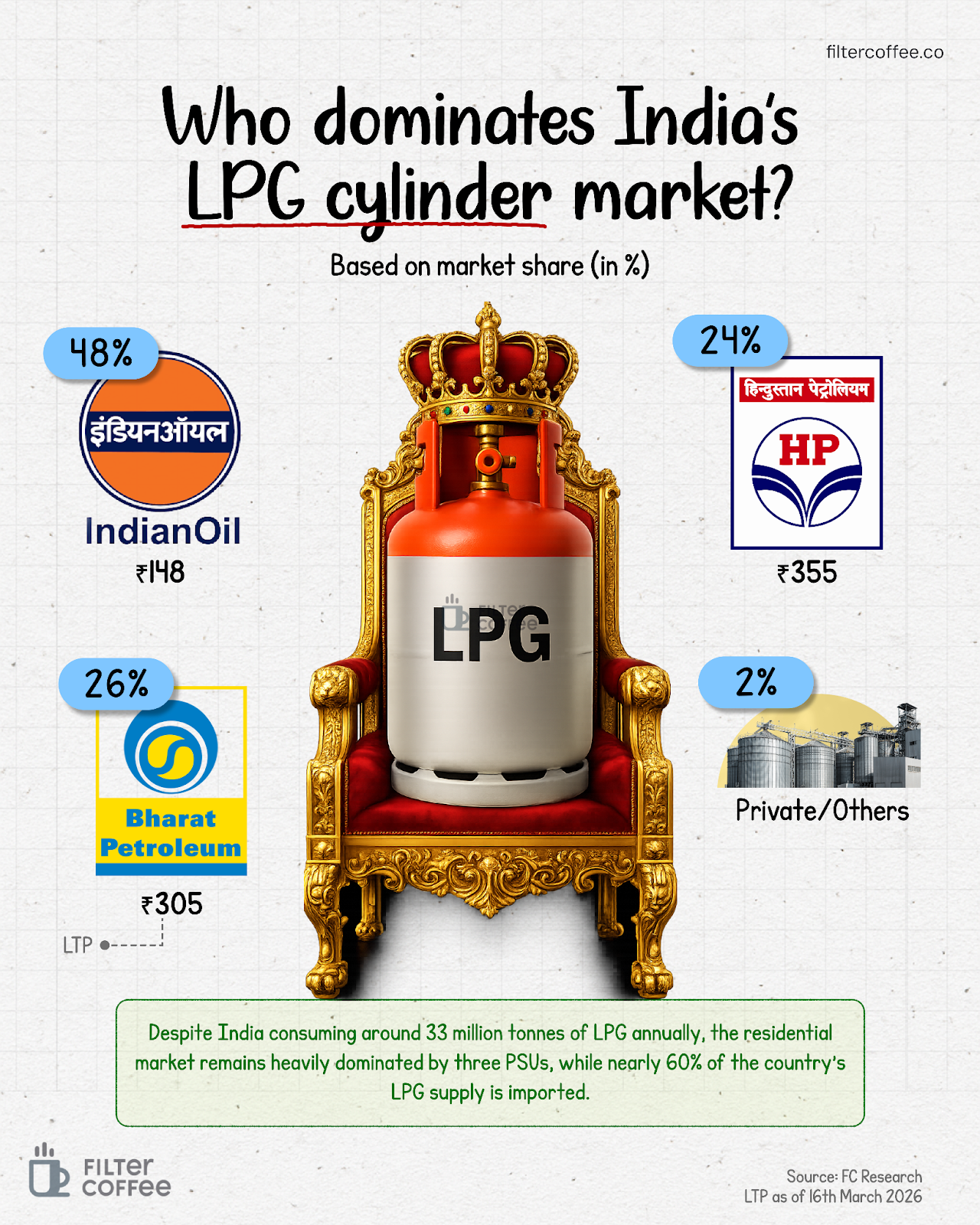
India’s LPG cylinder market is heavily dominated by public sector companies, with Indian Oil leading at 48% market share, followed by Bharat Petroleum and Hindustan Petroleum. Private players barely have a foothold, controlling just ~2%, making this a highly concentrated market.
What’s interesting is that despite consuming around 33 million tonnes of LPG annually, India still imports nearly 60% of its LPG needs.
So while a few government companies control distribution, the country remains heavily dependent on global supply, making prices and availability closely tied to international markets.
5. Stocks that kept us interested 🚀
What went up ⬆️
⛽ ONGC jumped over 4% as oil prices surged, with Brent crude nearing $110 per barrel, boosting earnings outlook for oil producers.
🏦 LIC Housing Finance rose around 2% after HSBC upgraded the stock to ‘Buy’, boosting investor confidence.
What went down ⬇️
🚘 Tata Motors Passenger Vehicles shares tumbled nearly 5% as Jaguar Land Rover’s production may be hit by a temporary closure at its Solihull plant in England, near Birmingham.
What else are we snackin’ 🍿
🏛️ Crisis panel: the government set up an inter-ministerial panel led by Rajnath Singh to tackle the Middle East crisis, with key ministers including Amit Shah and Nirmala Sitharaman.
📄 IPO filed: Bharat PET filed its DRHP with SEBI for a ₹760 crore IPO, including a fresh issue and promoter OFS.
⚡EV design: JSW Motors partnered with Dassault Systèmes to speed up EV design, engineering, and manufacturing using a digital platform.
⛽ Duty cut: India slashed additional excise duty on petrol to ₹3/litre from ₹13 and on diesel to zero from ₹10 to ease fuel price pressures.
❗️War deepens: Iran says it doesn’t want war but won’t give up its defence power, while reviewing a Pakistan-backed 15-point peace proposal.
That’s a wrap! Don’t let the weekday blues get to you.
Markets are closed tomorrow for Mahavir Jayanti. We’ll be back like clockwork on Wednesday.
If you’d like to place your brand on this newsletter, let us know.
Hit that 💚 if you liked this issue.