
 Newsletter
Resin’s main moment, Asia’s biggest IPO, and healthcare gets AI boost.
🗓️ Morning, folks ☀️
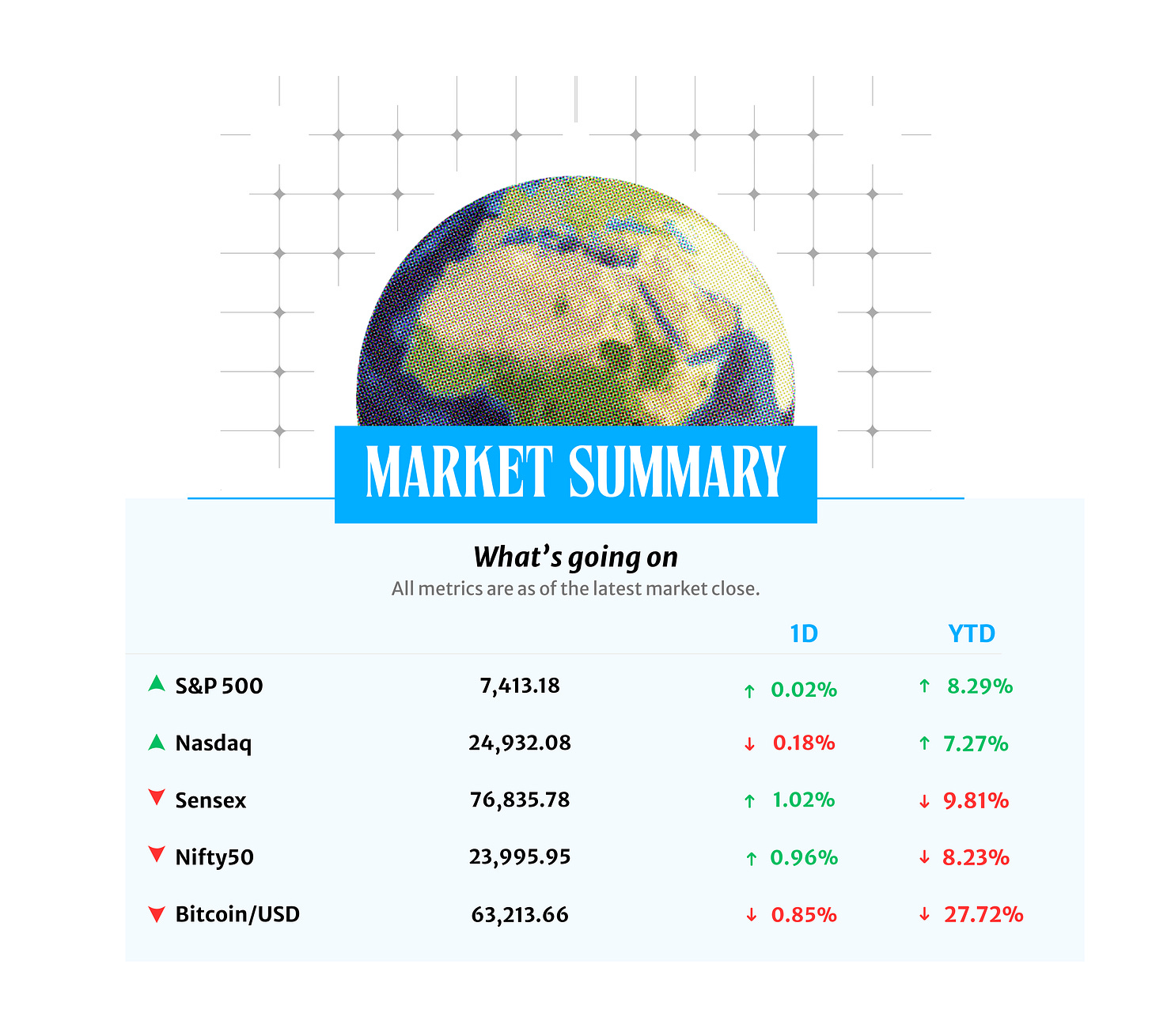
After five straight days of losses, Indian markets bounced back strongly on Monday.
The credit goes to easing global tensions and falling crude oil prices. Sensex and Nifty gained up to 1% each.
Financial stocks, especially NBFCs, led the gains, while IT and auto stocks climbed up to 2%. Airline and oil marketing stocks benefited from cheaper crude, but oil producers like ONGC fell as lower oil prices could hurt their earnings.
💡Spotlight: government wants India to sip Yule Tea ☕
The Ministry of Heavy Industries has asked all central ministries and departments to serve Yule Tea at official meetings, conferences, canteens and government functions.
The move sent shares of state-run Andrew Yule & Company up nearly 20% intraday.
Andrew Yule is one of India’s oldest tea producers, with tea estates in Assam and West Bengal. It sells Darjeeling, Assam, Dooars, green and flavoured teas under the Yule Tea brand and already supplies tea to Parliament through the Tea Board.
This move is being seen as the Centre's latest push for "Atmanirbhar Chai".
Let’s hit it! 💪🏻
1 Big Thing: defence orders help BEL deliver steady quarter 🛡️
Bharat Electronics delivered a steady quarter, driven by strong execution of its massive defence order book. While Q1 revenue surged sharply, profit growth was relatively moderate as operating margins softened.
The numbers:
- Net profit: ₹1,048 crore, up 8% YoY
- Revenue: ₹5,533 crore, up 25% YoY
- Total income: ₹5,700 crore vs ₹4,580 crore last year
- Margin: 25%, down from 27.9% a year ago
- Order book: ₹72,258 crore
Decoding numbers: as India’s defence spending continues to rise, the company has been steadily winning large orders from the Indian armed forces.
Revenue growth was driven by faster execution of existing defence projects. However, profit grew at a slower pace because operating margins slipped compared to last year, indicating higher costs and a different execution mix during the quarter.
Alongside the earnings, the board also approved a proposal to increase the company’s authorised share capital from ₹750 crore to ₹1,000 crore.
It means the company has increased the limit on how many shares it can issue in the future. This doesn’t raise money immediately, but gives the company flexibility to issue more shares later if needed for growth or expansion.
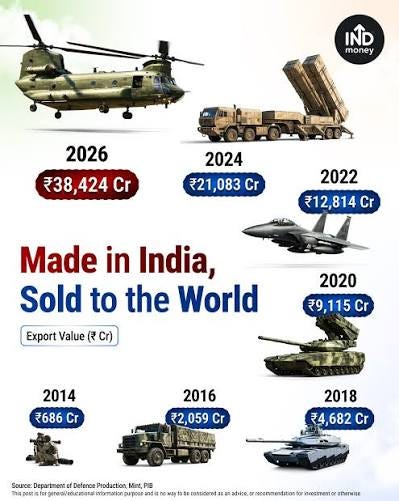
Zoom out: India is targeting ₹50,000 crore in defence exports by 2030, driven by rising global demand for military equipment.
2. Why is Epigral betting ₹600 crore on epoxy resin? 🤔
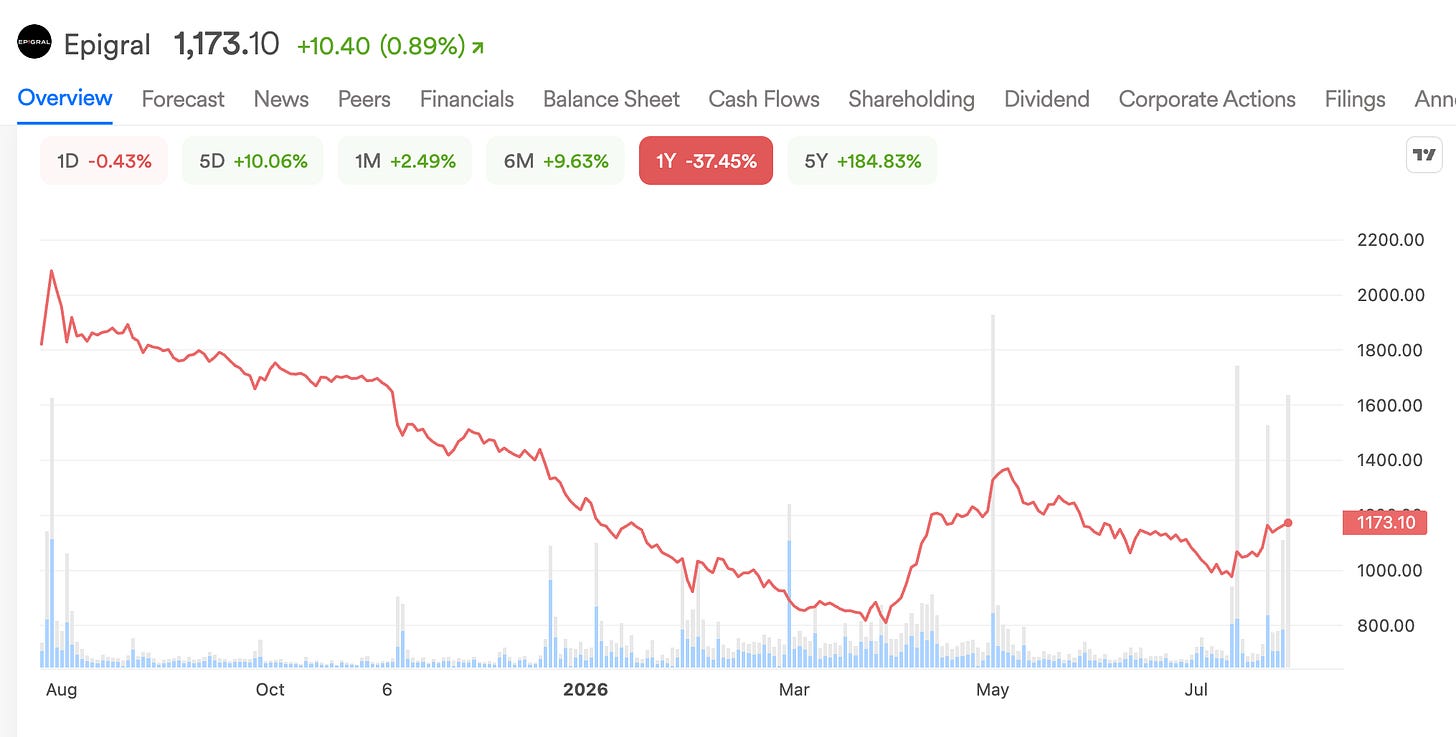
Specialty chemicals maker Epigral is investing ₹600 crore to enter the epoxy resin and formulations business.
Think of epoxy resin as a super-strong glue and protective coating. It’s used to make everything from wind turbine blades and cars to electrical equipment and industrial floors stronger and more durable.
The company will set up a plant with an annual production capacity of 1.25 lakh tonnes, along with a Multi-Purpose Plant (MPP) to manufacture specialty chemicals.
If you haven’t heard of Epigral before, it’s one of India’s leading specialty chemical manufacturers. It produces products such as caustic soda, chloromethanes, hydrogen peroxide and epichlorohydrin.
Why epoxy resin: India is one of the world’s fastest-growing consumers of epoxy resin, but a large part of the country’s demand is still met through imports. Industry estimates suggest India consumes around 2.5-3 lakh tonnes of epoxy resin every year.
The why: Epigral already produces two of the key raw materials needed to make epoxy resin, epichlorohydrin and caustic soda.
Now, by setting up its own epoxy resin plant, it will use these in-house materials to manufacture the final product. This gives the company better control over production, lowers costs and reduces its dependence on outside suppliers.
3. All about Asia’s biggest IPO in China 🚀
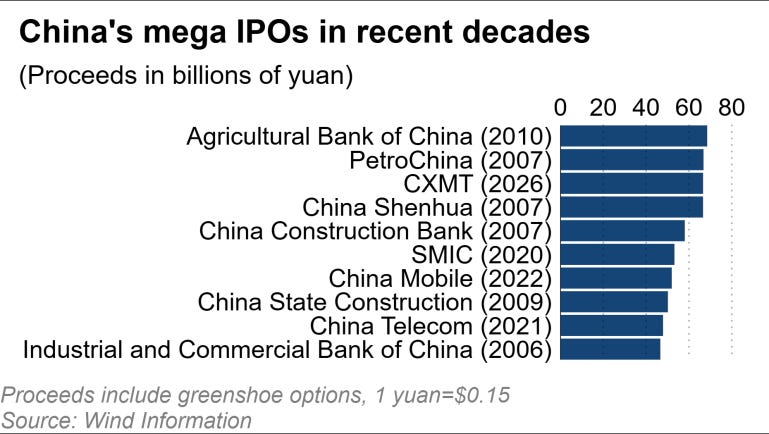
China’s Changxin Technology Group (CXMT), a memory chipmaker, made a blockbuster stock market debut on Shanghai’s STAR Market.
It became Asia’s biggest IPO this year as its shares surged more than 500% on listing day.
The numbers:
- IPO size: 57.92 billion yuan ($8.6 billion)
- Issue price: 8.66 yuan/share
- Listing-day price: over 52 yuan/share (+500%)
- Market value: around 3.5 trillion yuan ($490+ billion), making it China’s most valuable listed company.
The deets: founded in 2016 CXMT manufactures Dynamic Random Access Memory (DRAM) chips.
Think of DRAM as your phone or computer’s short-term memory. It temporarily stores the data your apps, games and AI tools need so everything runs smoothly.
Today, the global memory chip market is largely controlled by Samsung Electronics, SK Hynix and Micron Technology. For years, China depended heavily on these foreign suppliers for one of the world’s most critical technologies.
CXMT is Beijing’s answer to that problem.
4. AI healthcare gets fresh fuel 🧑⚕️
Healthtech startup CARPL.ai raised $10 million in a Series A funding round led by the International Finance Corporation (IFC), with participation from existing investor Stellaris Venture Partners and other investors.
What does the company do: think of a hospital where a radiologist has to review hundreds of X-rays, CT scans and MRIs every day. There are now hundreds of AI tools that can help detect problems like cancer, fractures, strokes or lung diseases, but most hospitals struggle to use them because each tool comes from a different company and needs separate integration.
CARPL.ai is building a single AI platform where hospitals can discover, deploy and manage all these medical imaging AI tools in one place.
The company plans to grow its partner network and expand further across North America, Latin America, Europe, Asia-Pacific and other emerging markets.
5. India’s most business-friendly states ranked for investors 💰

India has attracted over $1 trillion in cumulative Foreign Direct Investment (FDI) inflows since April 2000, making it one of the world’s leading investment destinations.
Meanwhile, Investment activity remains heavily concentrated in western and southern India. Gujarat tops the Investment Friendliness Index followed by Maharashtra & Tamil Nadu.
6. Stocks that kept us interested 🚀
What went up ⬆️
🏦 IDFC First Bank gained 5% after getting highest price target from Investec & stock upgrade from CLSA.
🏗️ Lodha Developers climbed 5% after the company reported strong June quarter earnings and reiterated its FY27 pre-sales guidance.
🧪 Dr Lal PathLabs, AU Small Finance Bank and P N Gadgil Jewellers rallied up to 7% on strong Q1 numbers.
🎯 Sigma Advanced Systems hit 5% upper circuit after bagging ₹1,013 crore export order for artillery shells.
What went down ⬇️
🏭 Nelcast nose-dived 13% after the company reported weak sets of Q1 earnings.
🚁 Zen Technologies slipped 5% after Q1FY27 profit dropped 28% & revenue declined 10% YoY.
What else are we snackin’ 🍿
🏦 Data breach: Bank of Baroda is investigating an alleged data breach after a hacker claimed to have leaked 1TB of customer data, including Aadhaar and banking records.
🏭 Pipe order: Welspun Corp secured a ₹960 crore order to supply coated line pipes from its US facility, taking its global order book to ₹25,750 crore.
💼 Privacy fine: Infosys was fined €175,000 by France’s data protection authority over shortcomings in its employee time-tracking system.
🤝 AI partnership: LTM partnered with Cognition to use autonomous AI for cybersecurity, aiming to automate vulnerability fixes and reduce cyber risks in financial services.
That’s a wrap! Don’t let the weekday blues get to you.

And if you’d like to place your brand on this newsletter, let us know.
Hit that 💚 if you liked this issue.