
 Newsletter

India’s infra output rises 7.9%, a cybersecurity wake-up call, and Eternal’s sunshine.
🗓️ Morning, folks!

Remember we had put up a poll a few days ago asking if you’d be interested in something new? Well, we’re working on it. We are cookin’ something.
Well, we’ve now created a space for you to sign up. Just drop your name and let us know, should we count you in?
Elsewhere on the internet, as if the wellness industry didn’t manipulate people enough already, a new Futurism article is flagging a disturbing new trend: apps being promoted by sobbing AI-generated women.
TikTok is filled with fake family drama, emotional texts from loved ones and sneaky app notifications, all designed to sell wellness tools.
From GLP-1 weight-loss trackers to mental health apps, these AI-generated sob stories often go undisclosed as ads. Yes, even your TikTok heartbreak could be sponsored content.
Some viewers are falling for the stories, while companies face questions over transparency.
One developer admitted the AI visuals should have been labelled, while another blamed unauthorised affiliates.
Our two cents: AI is supposed to take tasks off our plate, not add another one like figuring out what’s real and what’s just trying to sell us something.

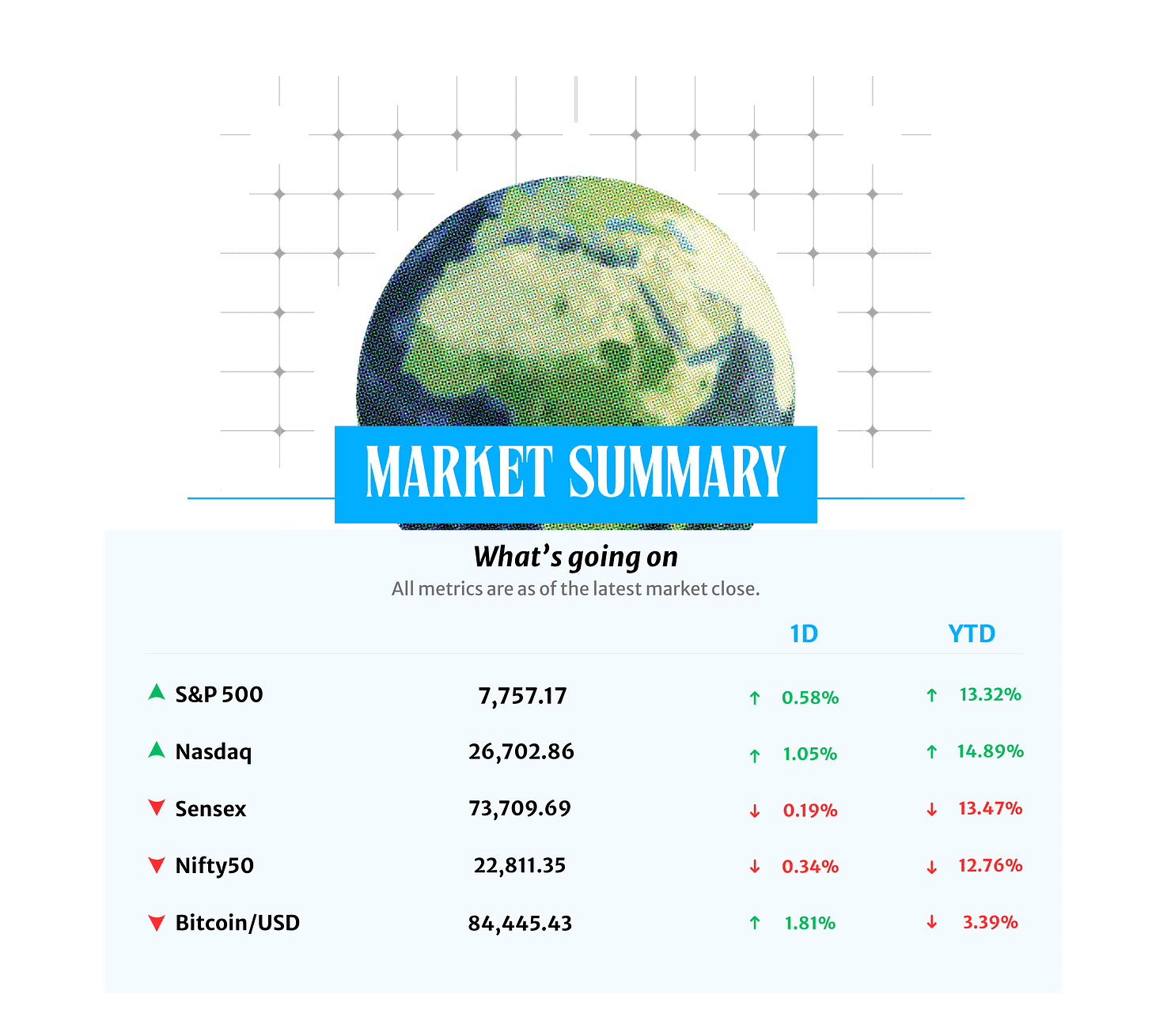
Moving on, Dalal Street ended the day in the red, with both the Sensex and Nifty retreating sharply from their intraday highs.
IT stocks were the only bright spot, with the Nifty IT index closing in positive territory. Selling in banking, auto and realty stocks weighed on the benchmark indices, while defence stocks also declined sharply.
Meanwhile, the rupee strengthened to ₹94.49 against the US dollar, its highest level in six weeks, supported by RBI measures.
💡Spotlight: a cybersecurity wake-up call 🫤
India’s biggest lender, the State Bank of India (SBI), has disclosed a suspected cyber incident involving the exposure of customer records on the dark web.
What’s happening: SBI said a preliminary analysis of about 3,75,000 records found on the dark web identified 3,897 customer records containing personally identifiable information (PII).
The exposed information reportedly included customers’ registered mobile numbers, dates of birth, names, gender, email addresses and residential addresses.
The bank said the incident had not materially affected its core operations, financial performance or business continuity.

Indian cybersecurity company eMudhra has also come under scrutiny.
The why: all eight security certificates it issued had a serious flaw. Researchers cracked their secret keys in less than a second.
Attackers could potentially have used those keys to pose as trusted websites and fool users into connecting to fake servers.
Apple, Google, Microsoft and Mozilla have since moved to block the affected certificates, while Cloudflare and other software providers have released security fixes. So far, there is no evidence that attackers exploited the weakness.
Let’s hit it! 💪🏻
1 Big Thing: Eternal had a very busy Wednesday 👀
Eternal announced a MyGate investment, entered the AI race with Dark.ai and reported strong revenue growth but its shares still fell after profit missed expectations.
First, a ₹156 crore acquisition: the company will acquire a 5.4% stake in MyGate through a share-swap deal valued at around ₹156 crore.
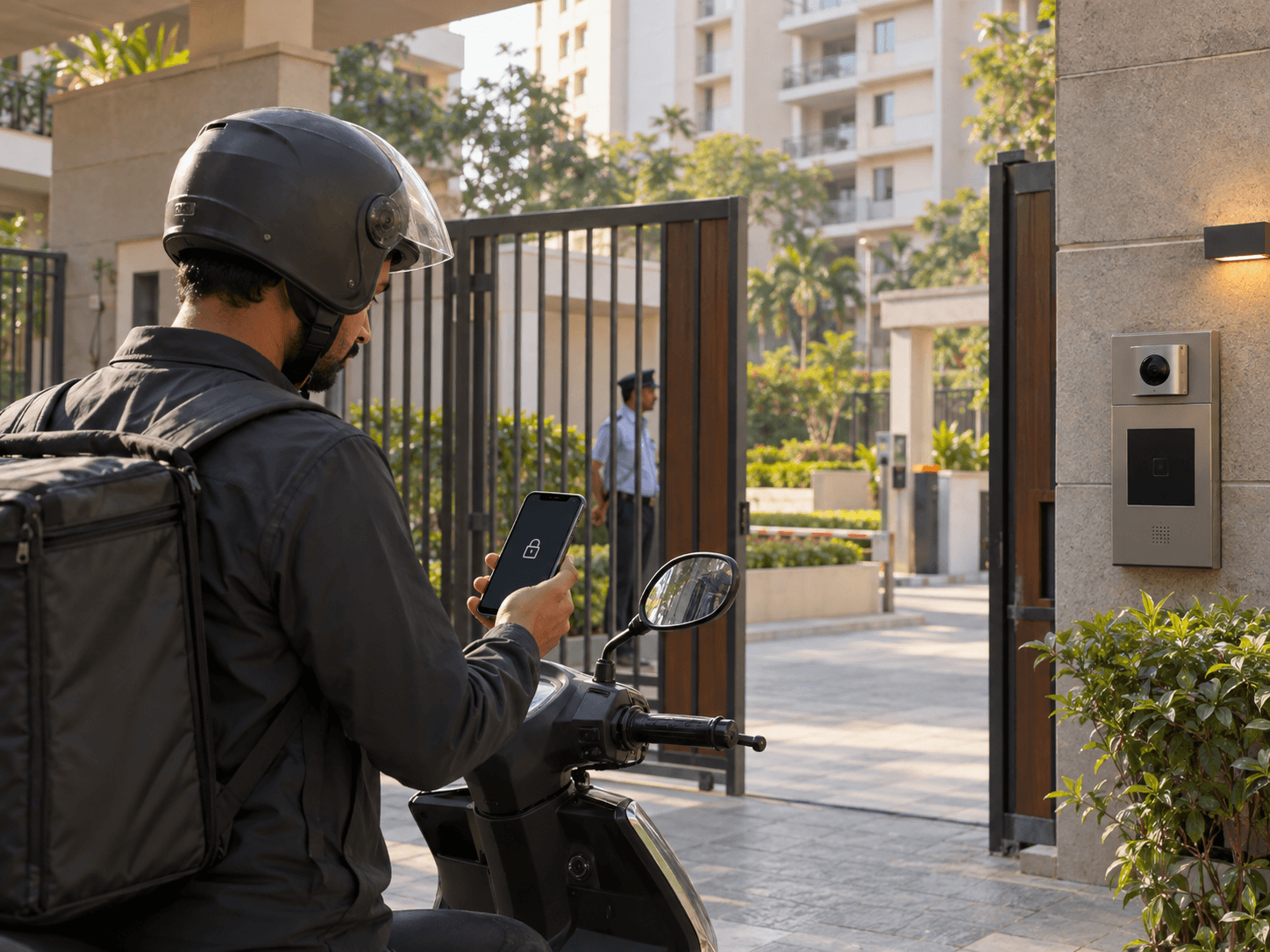
MyGate is a technology platform used by gated communities to manage visitors, deliveries, security and communication between residents.
Eternal will not pay cash for the stake. Instead, it will give MyGate shareholders some of the shares it owns in advertising technology company Adonmo.
The why: MyGate gives Eternal another entry point into urban households. Its apps already reach consumers through food delivery, groceries, restaurant bookings and events. MyGate adds residential communities to that list.
Deepi goes dark with AI: Deepinder Goyal is also taking Eternal beyond food and quick commerce.

The company plans to launch Dark.ai, a privacy-focused AI assistant, globally by the end of 2026.
Dark.ai is being designed for people who want to use AI without worrying that their conversations, research or business ideas could be accessed or retained by someone else.
How it works: the assistant will use fine-tuned open-weight AI models running on Eternal’s own infrastructure. Conversations will be protected using end-to-end encryption.
Q2 earnings: Eternal also reported its Q2 FY27 earnings, with revenue and profit rising sharply. However, the shares fell because the company’s profit was much lower than analysts had expected.
By the numbers 📊:
- Net profit: ₹125 crore, up 92% YoY
- Revenue: ₹24,138 crore, up 78% YoY
- Total expenses: ₹24,166 crore, up 75% YoY
- Expected profit: around ₹250 crore
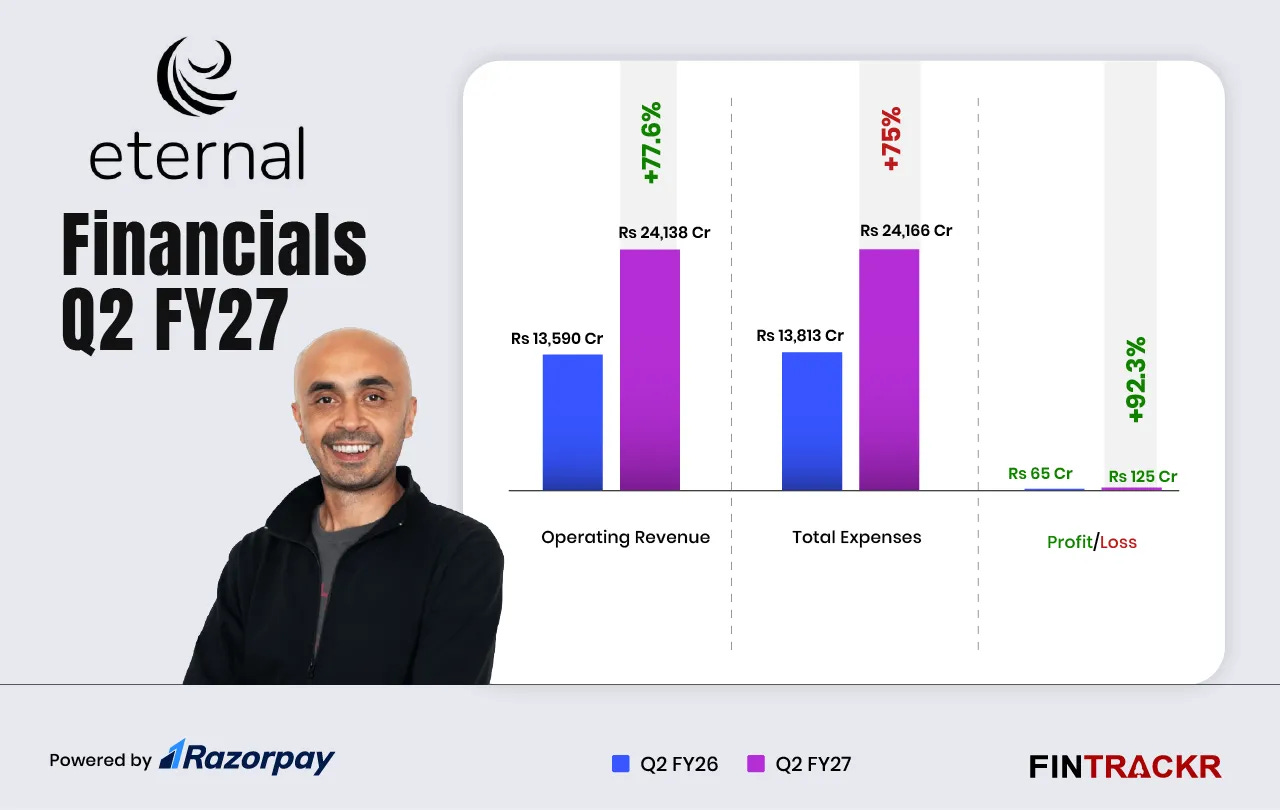
Eternal earned nearly twice as much profit as it did last year, but that ₹125 crore figure was only half of what the Street expected. That explains why the stock fell despite the impressive growth numbers.
A small catch: Eternal said its like-for-like revenue grew 58%, not 78%. The reported growth looks higher because Blinkit shifted to an inventory-led model, under which the full value of products sold is now counted as revenue.
Note: Blinkit now contributes the most reported revenue, although its accounting model makes a direct comparison with food delivery less straightforward.
2. Welcome to Elon Musk’s multiverse 🚀
Elon Musk’s companies may be preparing for their biggest crossover yet.
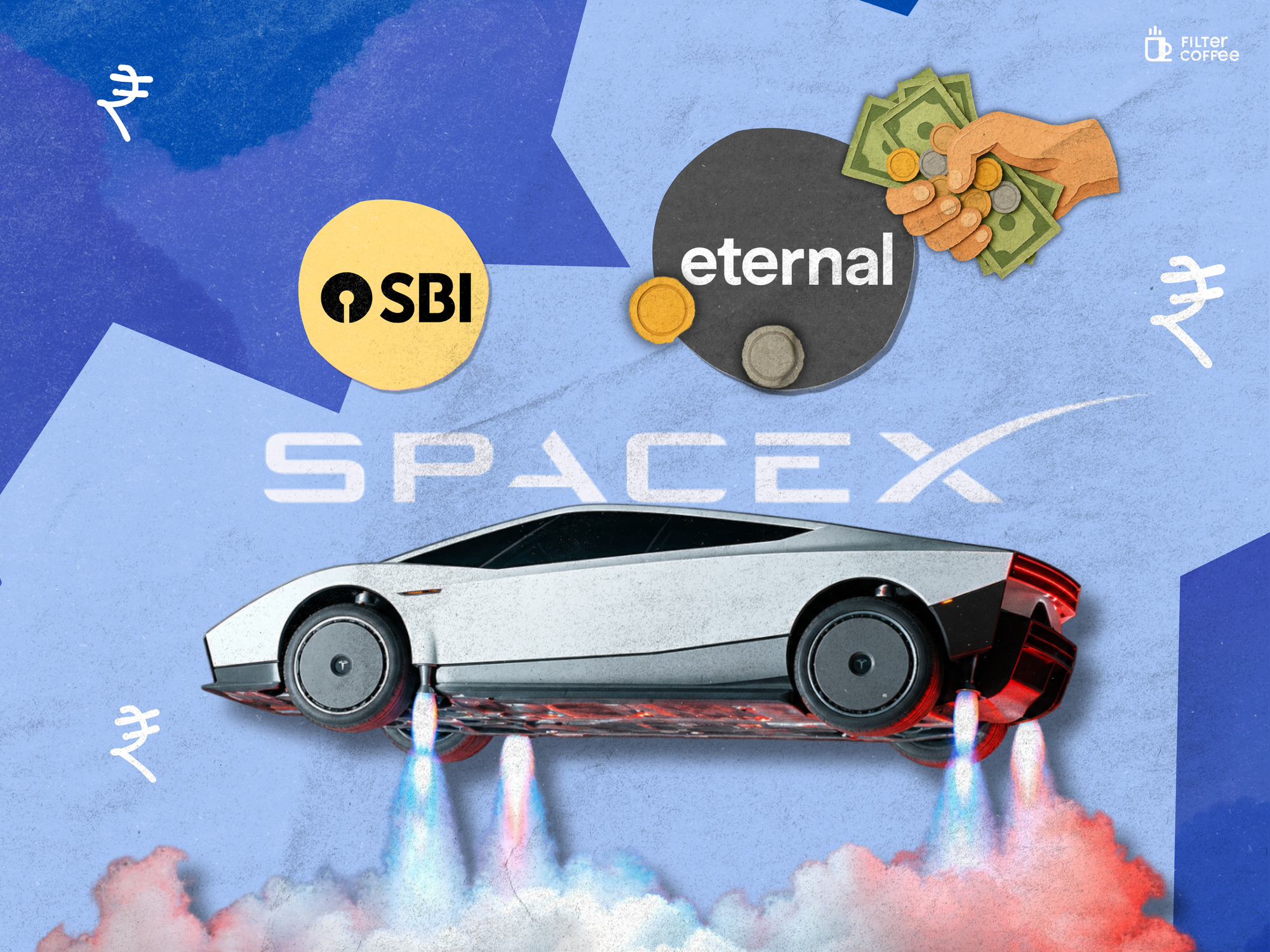
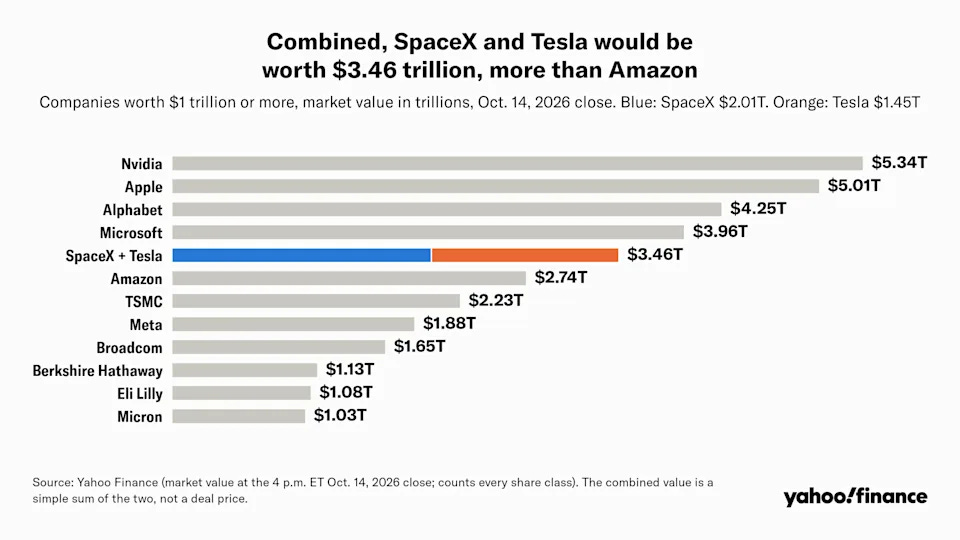
SpaceX and Tesla have formed separate committees of independent directors to explore a possible merger. Musk, who runs both companies and owns large stakes in them, believes combining the two would be a “good idea”.

No deal has been agreed. Musk is not participating directly in the discussions because he sits on both sides of the table. The committees must now decide whether a merger makes financial and strategic sense for shareholders.
The why: on the surface, electric cars and rockets have little in common. Look deeper, and Musk sees the two companies as pieces of the same technology machine.
- Tesla needs AI to power self-driving vehicles and humanoid robots. SpaceX is building large computing systems and already rents computing power to other AI companies.
- Both companies require powerful, specialised chips. Developing some technology together could reduce duplication and speed up production.
- Tesla is developing its Optimus humanoid robot, while SpaceX needs automation for factories, launch sites and possible operations in space.
- Starlink’s satellite network could provide internet connections to Tesla vehicles, robots and other devices almost anywhere.
Tesla investors could help finance extremely expensive space and AI projects. SpaceX investors would inherit Tesla’s exposure to the competitive car industry, manufacturing problems and demand cycles.
3. Why is Flipkart entering food delivery now? 👀

Flipkart is preparing to enter India’s food-delivery market, taking on Zomato and Swiggy with a proposed 10% restaurant commission, compared with the usual 20-25%.
Its new service, Eat-in by Minutes, is reportedly being tested with over 8,000 employees in Bengaluru.
But why food delivery now? As Blinkit, Zepto and Swiggy Instamart expand into traditional e-commerce, Flipkart wants customers opening its app more frequently. Food delivery could help it achieve that, while its existing logistics network gives it a head start.
Amazon tried something similar and shut down its food-delivery business in 2022. Can Flipkart succeed where Amazon failed?
4. Stocks that kept us interested 🚀
What went up ⬆️
💸 Transrail Lighting rallied 4% after the company announced that it had secured orders worth ₹927 crore.
🫡 L&T Technology Services surged over 10% after reporting Q2 net profit of ₹548 crore, up 66% from last year.
🏝️Mahindra Holidays and Resorts India gained after profit rose 11.8% to ₹19.95 crore and revenue increased 9.3% to ₹784 crore.
What went down ⬇️
🤒 ABB India fell up to 6% after parent company ABB Global released its latest quarterly business update.
🫤 Gallantt Ispat reported a 31.95% decline in Q2 profit to ₹60.5 crore, while revenue rose 13.1% year-on-year to ₹1,146 crore. Its shares tumbled over 7%.
👎🏻 Bajaj Finance slipped over 3%, emerging as the biggest Nifty loser amid investor concerns about the company’s margin outlook.
What else are we snackin’ 🍿
📈 IPO plans: Carlsberg is preparing to file for an IPO of its India business, potentially raising up to $700 million.
🏗️ New orders: Kalpataru Projects International secured ₹2,349 crore in domestic EPC orders across power transmission, distribution and building construction.
🤖 IPO losses: Anthropic’s first-half net loss widened to $80.7 billion, largely due to accounting adjustments on convertible bonds, ahead of its planned November IPO.
📱Jio IPO: Jio Platforms’ ₹30,200 crore IPO saw its institutional investor portion subscribed nearly 2 times, after raising ₹8,110 crore from 212 anchor investors.
☀️ Solar acquisition: Transrail Lighting acquired a 49% stake in NOPL Pace Green Energy, which is developing a 990 MW solar portfolio in Maharashtra under the PM-KUSUM scheme.
⚡️Powering ahead: India’s core sector output grew 7.9% in September, a 30-month high, driven by coal production, electricity generation and refinery products.
That’s a wrap! Don’t let the weekday blues get to you.
And if you’d like to place your brand on this newsletter, let us know.
Hit that 💚 if you liked this issue.
Disclaimer: this newsletter is for informational and research purposes only. Nothing here should be considered financial, investment, legal, or professional advice.