
 Newsletter

Word of the year is here, desi defence’s winning streak, and shopping gets a caffeine boost.
🗓️ Morning, folks! ☀️
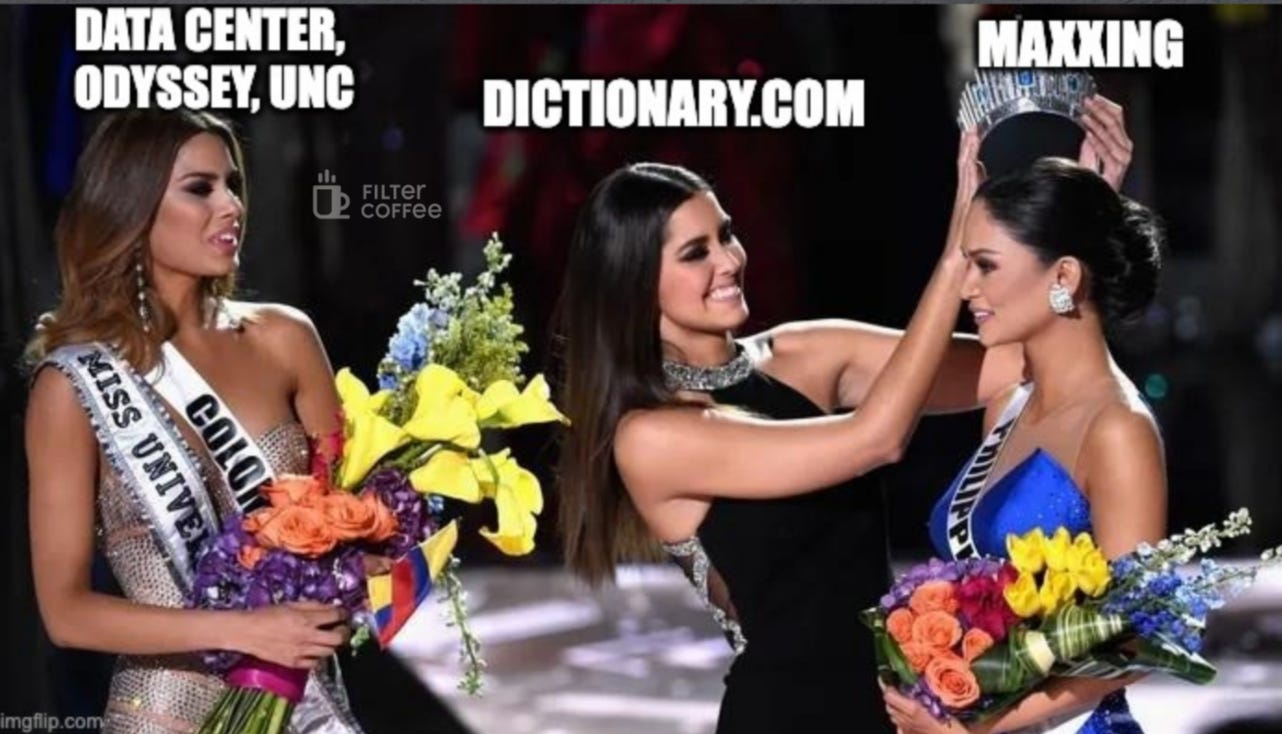
We should celebrate. We maxxed it out. What, you ask? The suffix-maxxing.
So much so that Dictionary.com has named it its Word of the Year. From proteinmaxxing and sleepmaxxing to “tokenmaxxing” (making the most of AI tools), the internet is finding ways to optimise just about everything.
Is there anything we won’t try to max out? But maxxing has roots in gaming lingo.
Dictionary.com found that digital media use of “maxxing” surged to nearly 19 times its 2025 monthly average in August 2026, while “looksmaxxing” appeared over 900% more often this year.
We also made our own spin of this story on video. Check it out here.
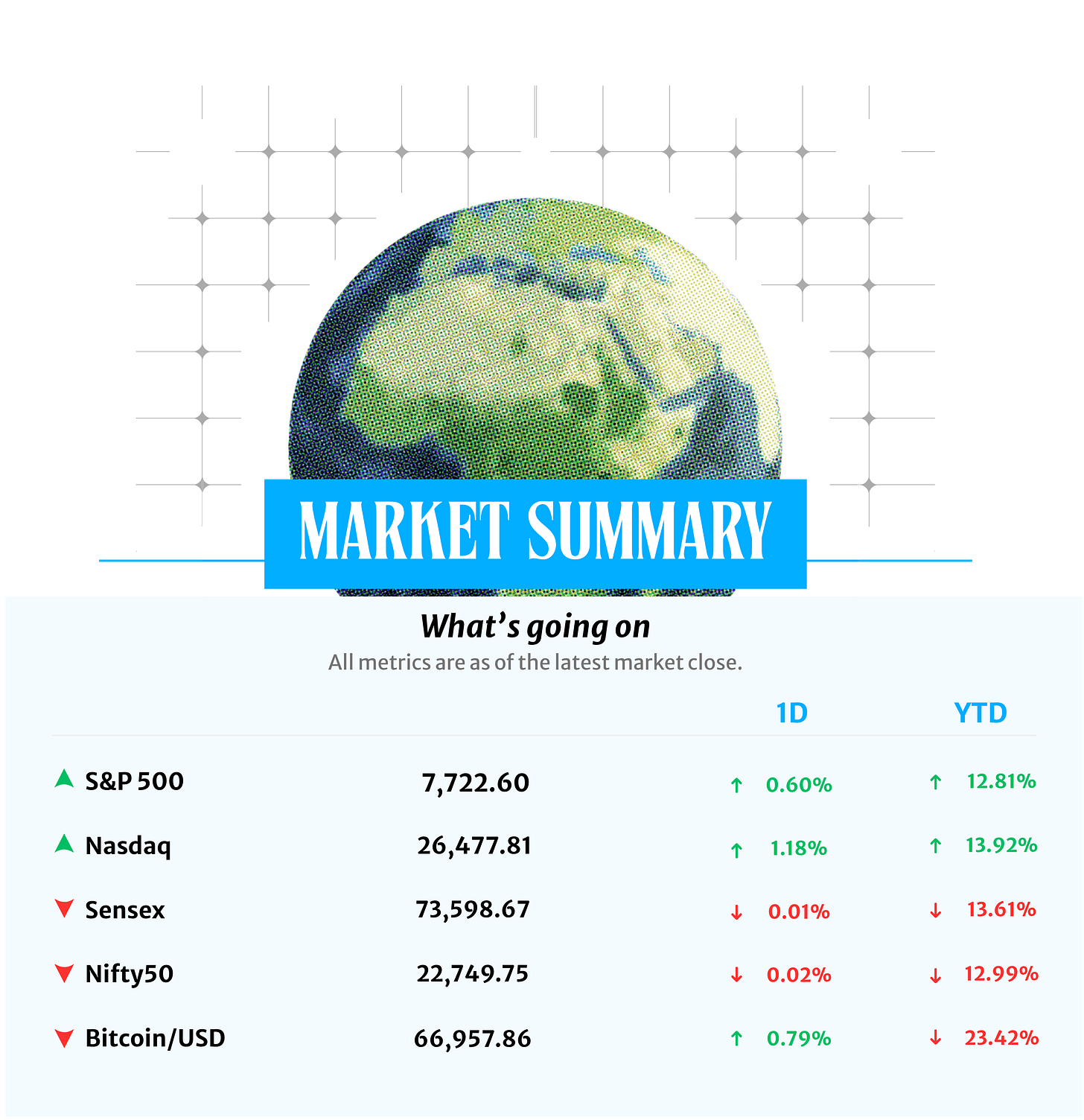
A quiet finish for Dalal Street. Nifty and Sensex ended flat as profit booking in IT stocks and continued pressure on financials kept gains in check.
Realty, pharma and auto stocks led the gains, while banking and financials remained under pressure.
The broader market had a livelier session, with midcap and smallcap indices rising 1% and 2.7%, respectively.
💡 Spotlight: No reason to not cheer for defence stocks ☀️
Defence stocks were flying high on Tuesday after the government cleared a fresh round of military purchases.
Apollo Micro Systems rose 3.5%, Data Patterns gained 9% and Paras Defence climbed over 2%. Astra Microwave Products was up 4.6%, while defence giants like HAL and BEL also rose nearly 1-2%.
Overall, 21 of the 22 stocks in the Nifty India Defence index traded higher, pushing the index up 2.8% intraday.
So, what got investors excited: the Defence Acquisition Council approved military procurement proposals worth ₹2.12 lakh crore. The news also gave the sector a boost after defence stocks had fallen 5.6% over the previous month.
Let’s hit it! 💪🏻
1 Big Thing: Sarvam AI goes big on India’s defence 💪
AI startup Sarvam signed a five-year deal with the defence ministry to develop and deploy artificial intelligence applications for the armed forces.
What does the deal cover: Sarvam will build AI tools to support military operations, training and decision-making, and provide technical support for these projects.
The work will cover the Army, Navy and Air Force, with Headquarters Integrated Defence Staff (HQ IDS) coordinating efforts.
The agreement will also give the three services and joint organisations access to a shared set of AI technologies. These include models that power AI applications, systems that carry out tasks, and tools that analyse maps and visual information.
The partnership is part of the government’s broader push to develop defence technology in India and reduce dependence on foreign suppliers.
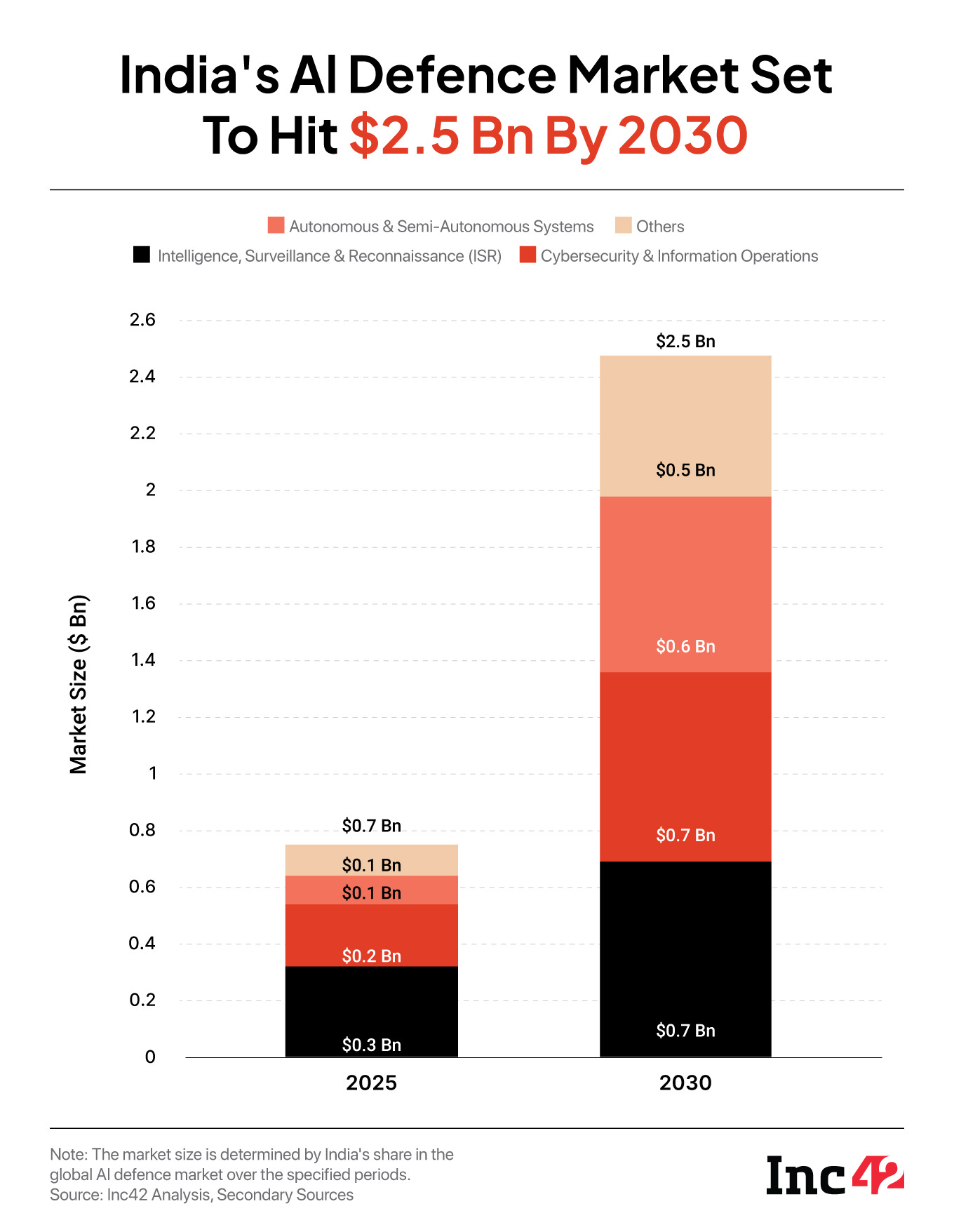
According to Inc42’s estimates, India’s defence AI market is projected to grow from $0.7 billion in 2025 to $2.5 billion by 2030.
Why does defence need AI: armed forces collect huge amounts of information from drones, satellites and ground sensors. AI can analyse this data quickly, helping personnel spot threats and understand what is happening on the ground.
India has already initiated more than 75 AI projects across its armed forces and defence organisations.
2. Tata’s Iveco chase reaches the finish line 🚛
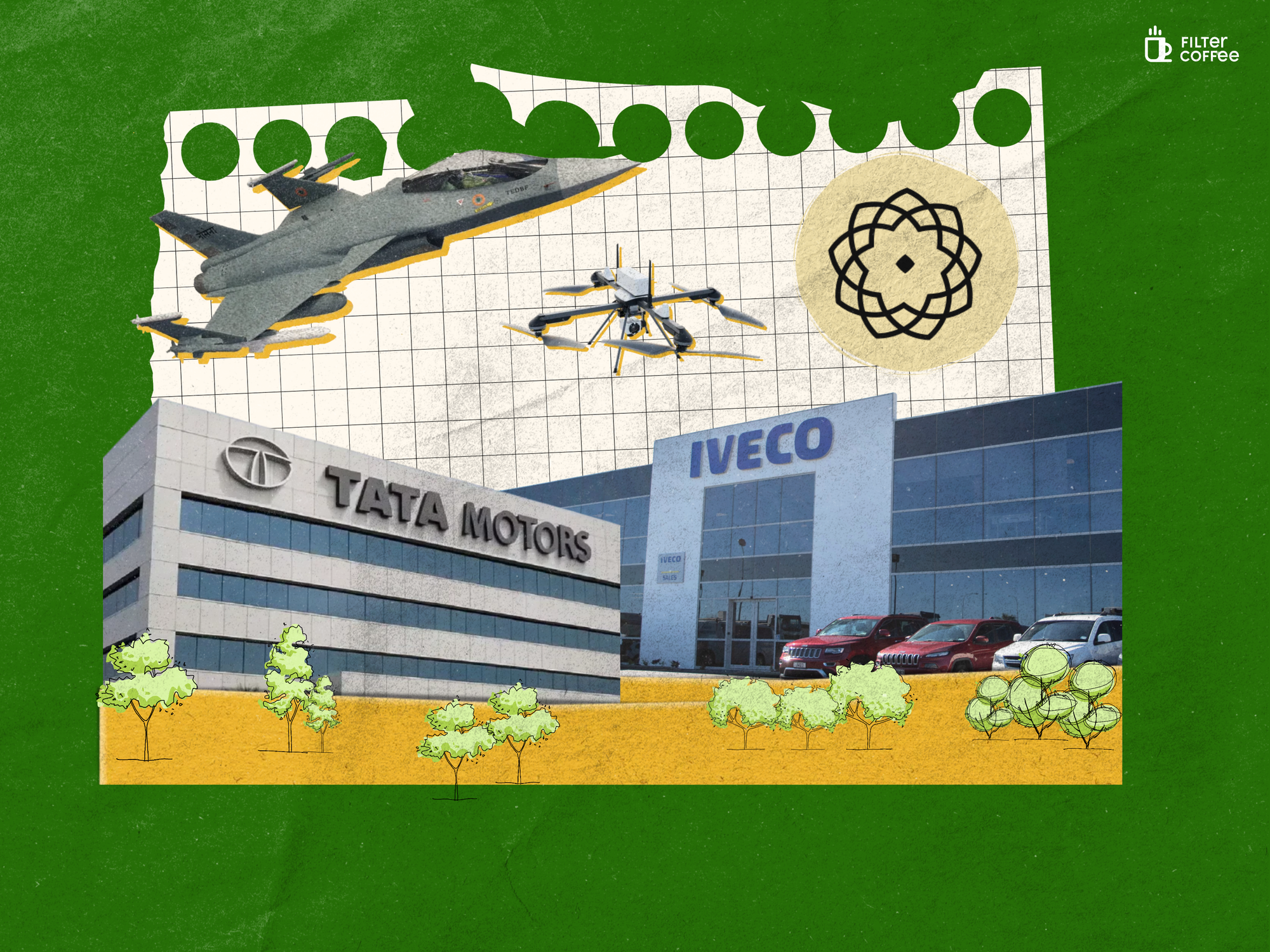
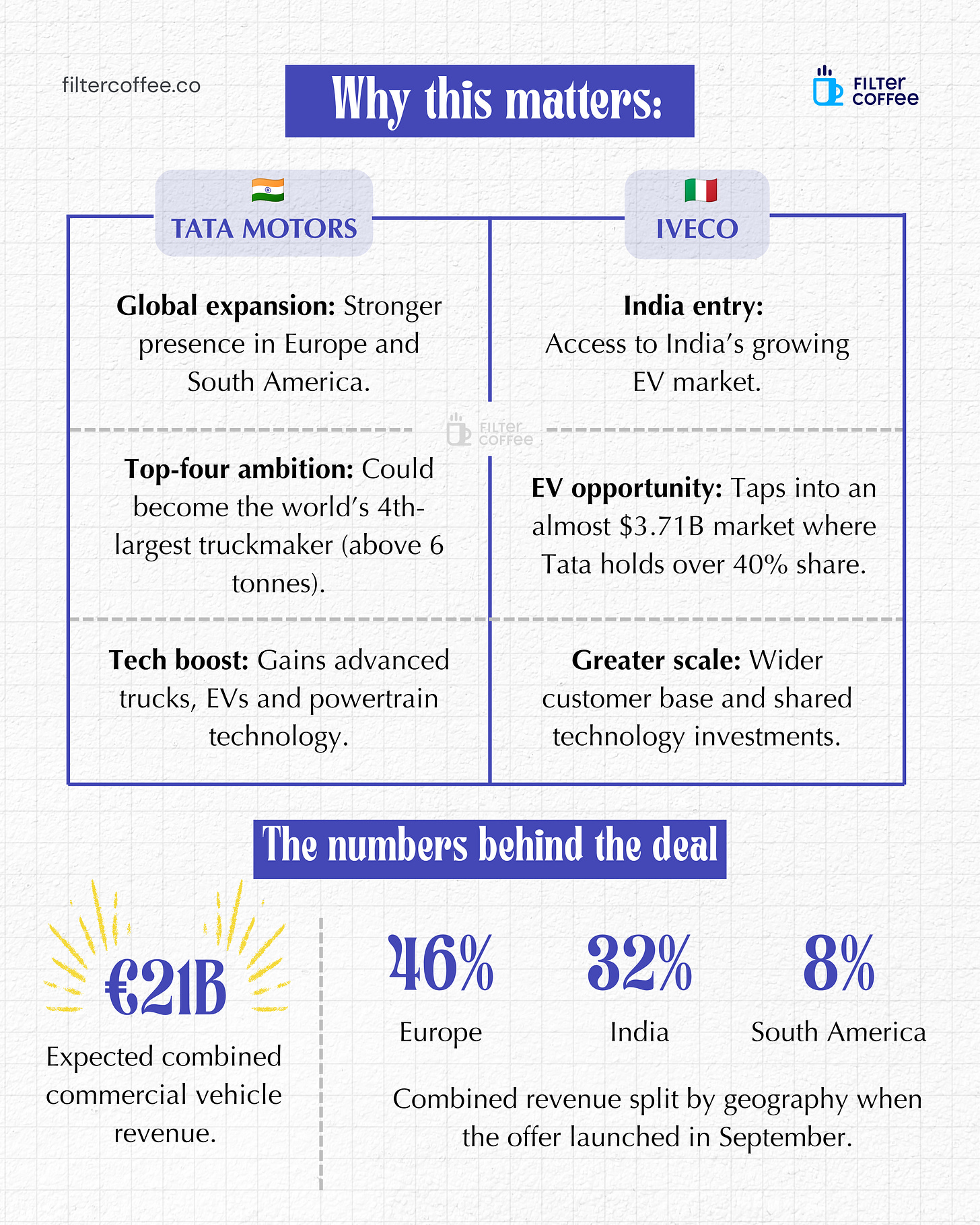
After 15 months of regulatory delays, shareholder resistance and one improved offer, Tata Motors has cleared the biggest hurdle in its takeover of Italian truck maker Iveco.
Shareholders representing 87.81% of Iveco’s shares accepted Tata’s offer by the October 26 deadline. Tata needed at least 80% support for the transaction to proceed.
All about the deal: Tata Motors wants to acquire Iveco’s commercial-vehicle business, which makes trucks, buses, engines and other transport equipment.
The company offered to purchase Iveco shares entirely in cash. Its latest offer values the deal at around €3.91 billion.
What was the hurdle: Iveco is owned by many shareholders. Tata could not simply decide to buy the company and take control. Initially, they wanted investors holding at least 95% of Iveco to accept the offer.
Reaching that level would have allowed it to use a simpler legal process to buy the remaining shares and remove Iveco from the Milan stock exchange.
But some minority shareholders resisted.
Activist investor Petrus Advisers argued that Tata’s offer was too low and undervalued Iveco. Later, it increased the price to €14.40 per share, adding €0.30 and taking the total potential payment to €3.91 billion. The new price was around 33% higher.
Shareholders approved a proposal that reduced the minimum acceptance requirement from 95% to 80%. They also cleared an alternative legal route that could eventually help Tata reach full ownership.
Nearly 97 million shares were offered on October 26 alone, pushing total acceptance to 87.81%. Including shares held by Iveco itself.
This late surge was not entirely unexpected. Investors in tender offers often wait until the final hours to see whether the buyer will increase the price.
Tata did not blink again. Shareholders eventually accepted the €14.40 offer.
3. Anthropic’s IPO gives Indian IT the blues 💻
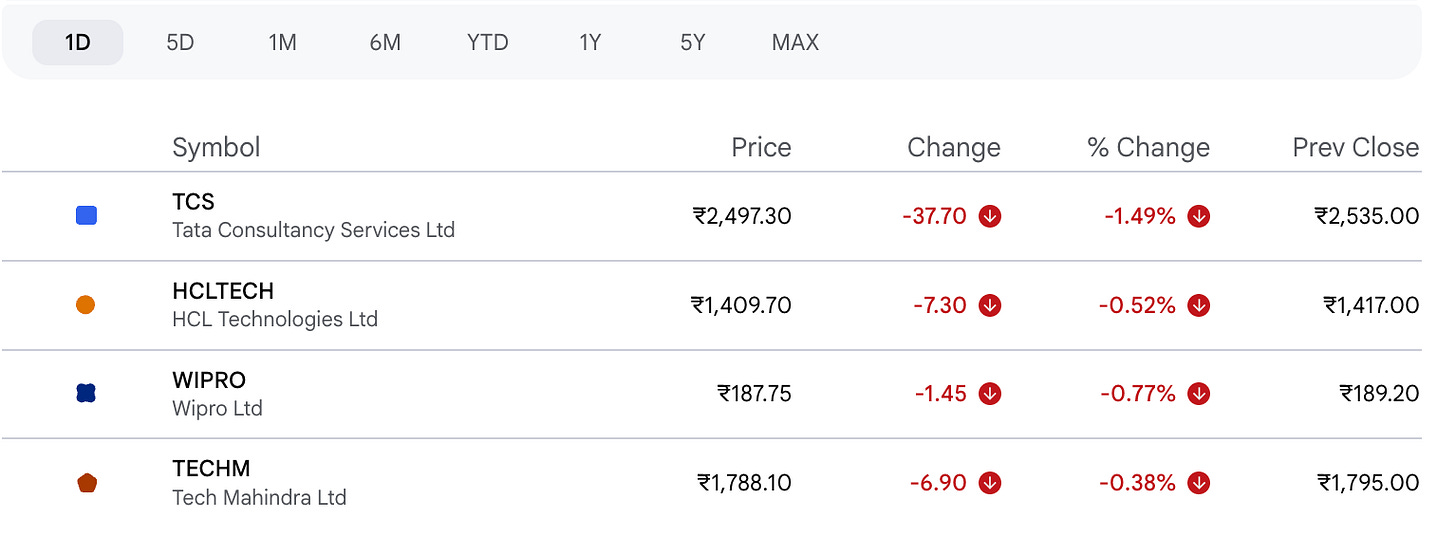
The Nifty IT index fell on Tuesday, making it the day’s worst-performing sector. Infosys, TCS, Wipro, HCLTech and Tech Mahindra declined by as much as 3% as investors reconsidered the sector’s growth prospects.
First, Anthropic’s IPO: the IPO itself does not directly take business away from Indian IT companies. Instead, it has put the global AI boom and the threat it poses to traditional technology services back under the spotlight.
Second, crude oil enters the chat: India imports most of the crude oil it uses. When oil becomes more expensive, the country must spend more dollars on those imports.
Third, the US Fed: the US is the biggest market for most large Indian IT companies. Their clients include American banks, retailers, manufacturers, healthcare companies and technology firms.
If US interest rates stay high, borrowing remains expensive for these businesses.
4. Microsoft offers voluntary exits to 60,000 employees! 🙇🏼♀️
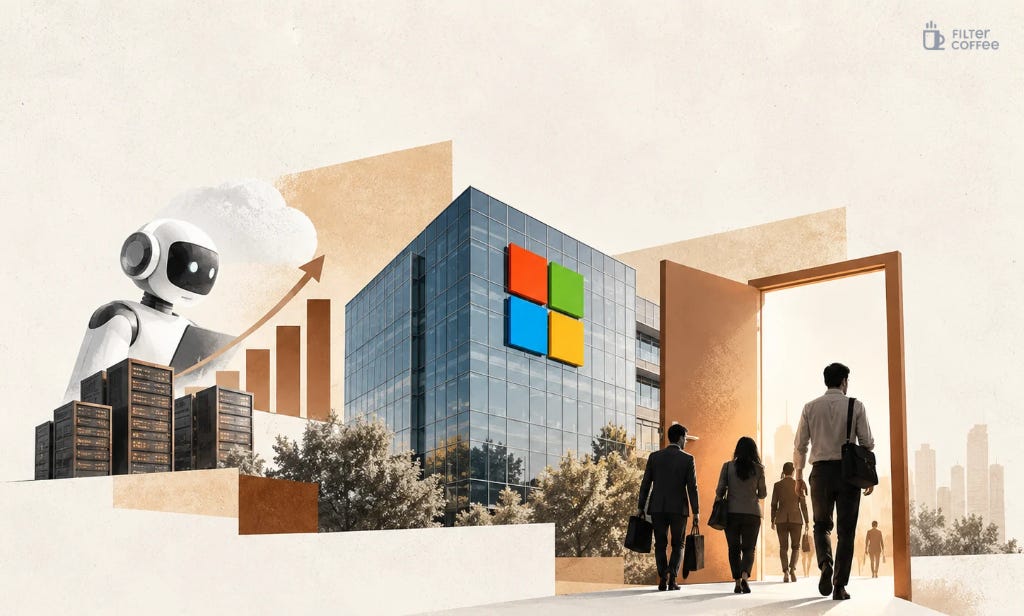
Microsoft is offering voluntary exit packages to around 60,000 eligible employees, including staff working on Copilot, Xbox and Windows.
That’s more than a quarter of its workforce, although it doesn’t mean 60,000 people are being laid off.
Meanwhile, Microsoft spent a whopping $41 billion on capital expenditure in the June quarter, much of it on computing infrastructure.
So why would a highly profitable company investing billions in its future pay employees to leave?
5. Why wasn’t Starbucks Trent’s cup of coffee? ☕️
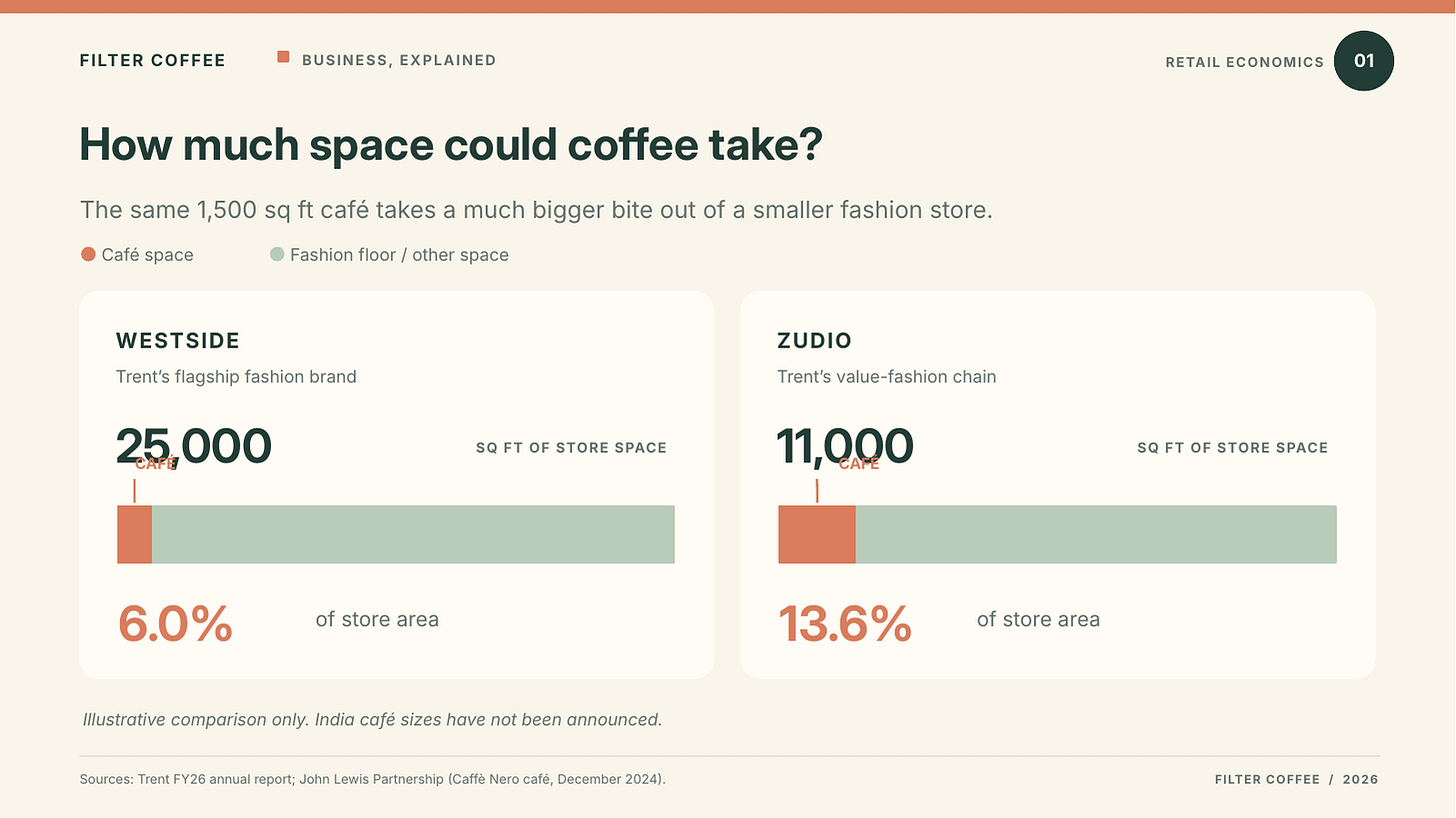
Tata Group’s Trent is reportedly bringing British coffee chain Caffè Nero into Westside and Zudio stores, even though Tata already operates Starbucks in India.
According to reports, Trent initially explored a partnership with Tata Starbucks, but talks fell apart over store locations, formats and branding. Starbucks wanted prominent space, while Trent wasn’t willing to give up control of its store layouts.
For Trent, cafés could bring in more shoppers, encourage longer visits and make better use of retail space.
We break down why Tata chose an outside coffee brand and the business logic behind selling cappuccinos alongside clothes.
6. Stocks that kept us interested 🚀
What went up ⬆️
💪 VA Tech gained over 7% after winning Reliance’s ₹1,000 crore plus order for a 302 MLD desalination and remineralisation plant in Jamnagar.
📈 Jubilant Ingrevia rose over 4% after its Q2 net profit jumped 61.4% to ₹111.4 crore and revenue grew 24.4%.
😮💨 Sigma Advanced Systems hit the 5% upper circuit after the company secured an order worth ₹973 crore from NATO.
⚡️ Transformers & Rectifiers jumped over 4% after announcing a ₹1,250 crore investment in three manufacturing plants at its Chiyada complex in Gujarat.
What went down ⬇️
☹️ Mazagon Dock Shipbuilders fell over 6% after Q2 net profit plunged 54.1% to ₹344 crore and revenue declined 16.5% year-on-year.
❌ Paytm slipped 3% despite Q2 revenue rising 28.5% and EBITDA surging 91.5%, amid higher costs and slowing payment volumes.
🫣 Aequs tumbled nearly 10% as Q2 consolidated loss widened to ₹52.3 crore despite revenue rising 45.3% YoY to ₹409.1 crore.
What else are we snackin’ 🍿
💍 Jewellery acquisition: Senco Gold signed agreements to acquire a 68% stake in Melorra’s parent company for ₹68 crore, with the deal expected to be completed by February 2027.
🏦 Leadership change: Anup Bagchi took charge as HDFC Bank’s MD and CEO, becoming the first outsider to lead the bank in its over 30-year history.
🤝 Strategic deal: LTM secured a two-year engagement worth up to $100 million with a major global banking and financial services firm, with an option to extend it by another year.
🌐 AI infrastructure: Tata Communications plans to invest over ₹4,000 crore to build a 10,000 km fibre network connecting AI and data centre hubs across India.
That’s a wrap! Don’t let the weekday blues get to you.
And if you’d like to place your brand on this newsletter, let us know.
Hit that 💚 if you liked this issue.
Disclaimer: this newsletter is for informational and research purposes only. Nothing here should be considered financial, investment, legal, or professional advice.