
 Newsletter

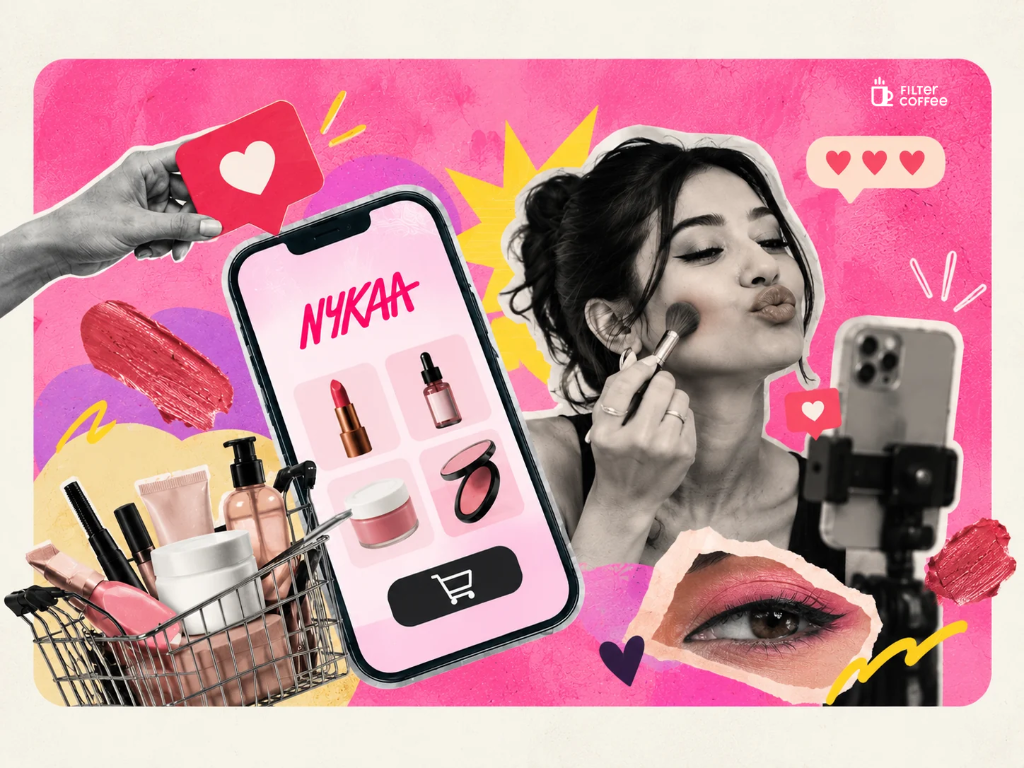
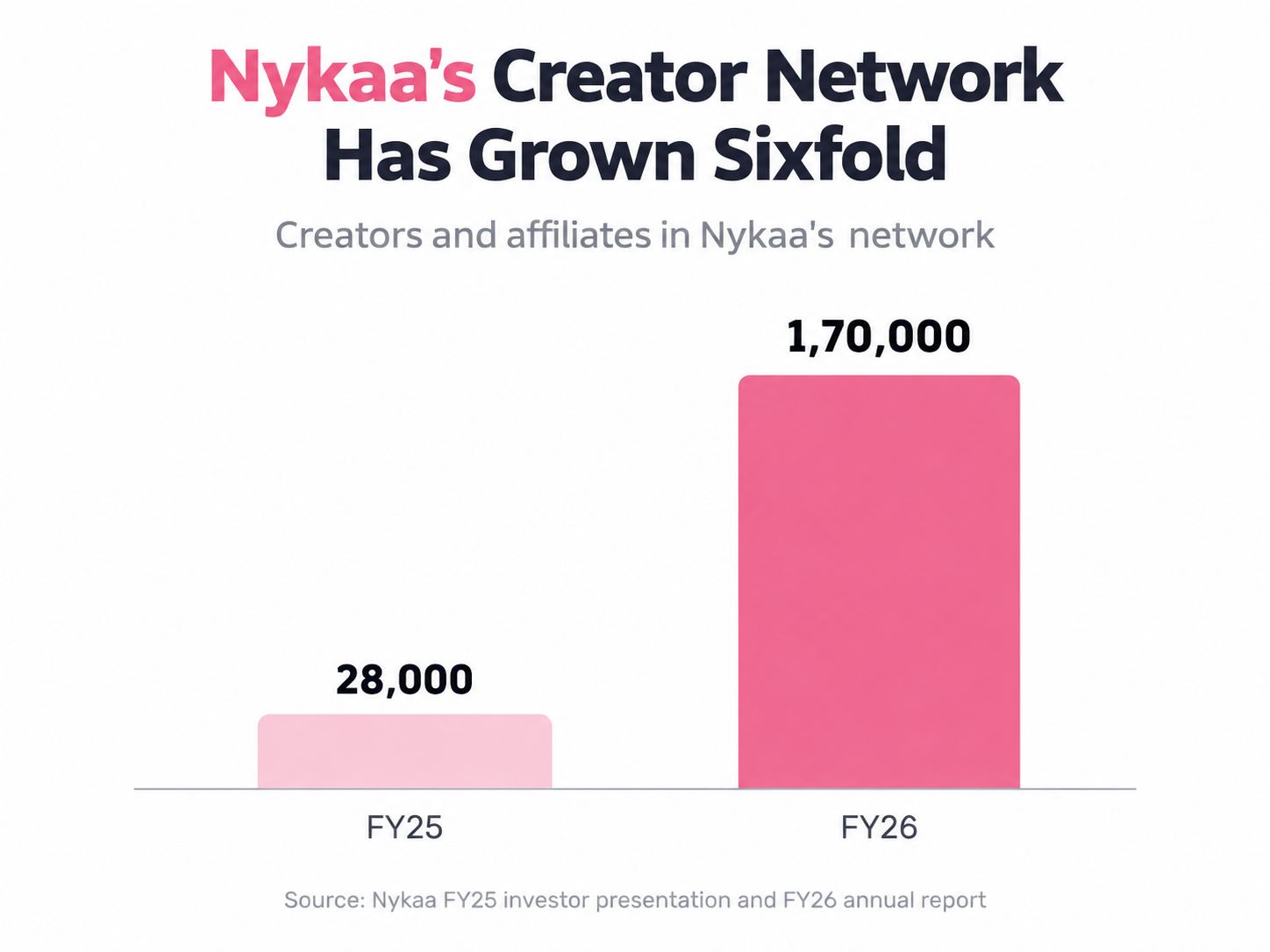
Nykaa now has more than 1.7 lakh creators and affiliates in its network, producing around 23 lakh pieces of content annually. Just over a year ago, it reported 28,000 affiliates and influencers producing more than five lakh pieces of content. The network has grown roughly sixfold in about 15 months, and its purpose goes well beyond keeping Nykaa's Instagram feed busy.
It gives the beauty retailer thousands of people who can explain a product, demonstrate it and direct a potential buyer to checkout. Nykaa is effectively building a sales channel in the space between someone's social media feed and their shopping cart.
The company discussed this shift ahead of its Nykaaland festival, held in Delhi from 23 to 25 October. Nykaa says Indian beauty shoppers are becoming more attentive to ingredients, skincare routines and what suits their skin. And those are things a product listing, however beautifully photographed, often struggles to explain.
Consider shopping for foundation online. The product page gives you a shade name, a price and perhaps a few photographs. A creator with a similar skin tone can show how it looks in daylight, how it blends and whether it survives a day outdoors. A sunscreen video can show texture and white cast in seconds. That demonstration may answer the buyer's question before they even search for the product.
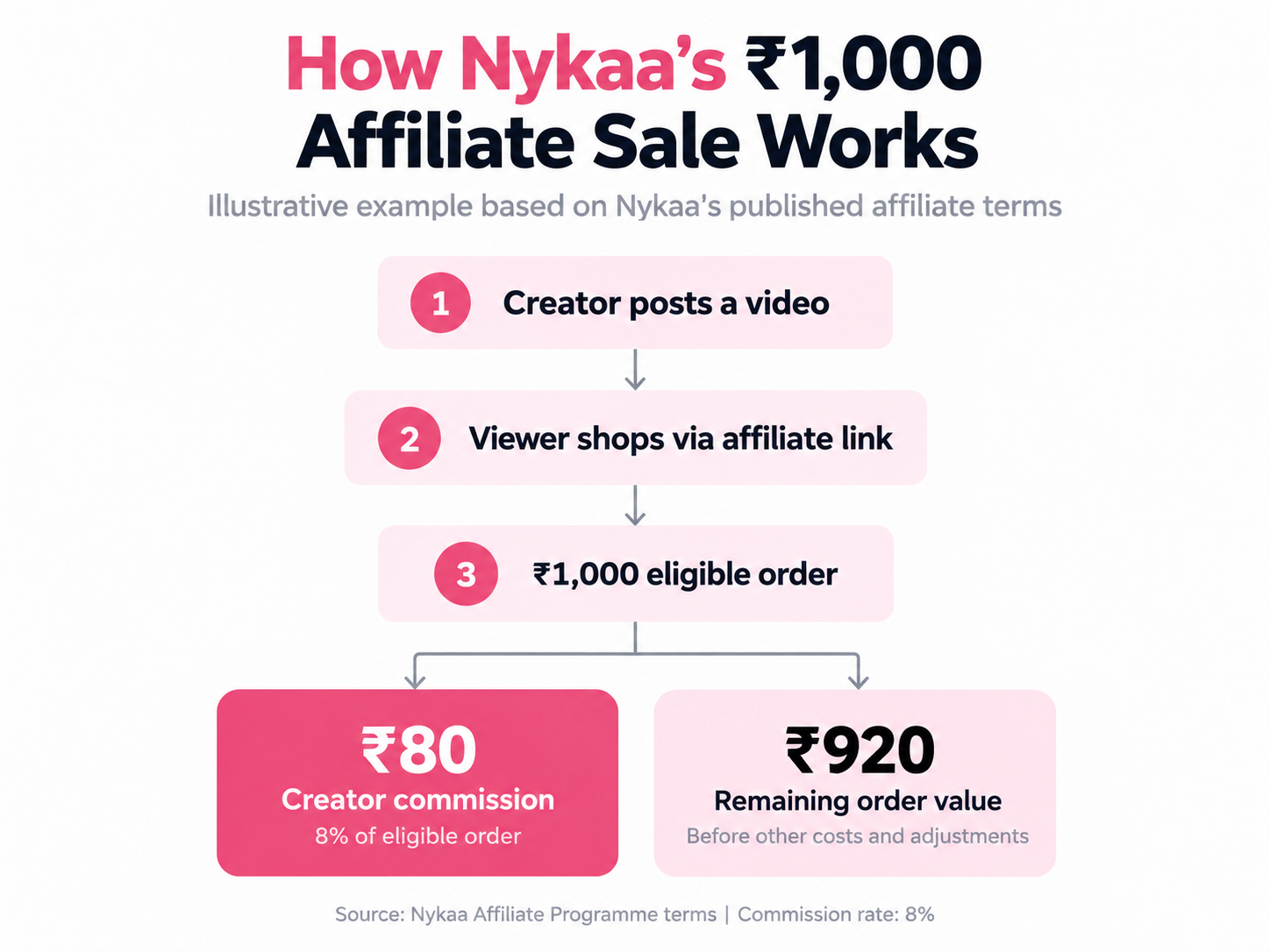
Nykaa has spent years turning these recommendations into a business system. Through its Nykaa Affiliate Programme, creators can make links to products and share them in Instagram reels, YouTube descriptions, blogs or WhatsApp messages. If someone buys through an eligible link, the creator earns a commission.
Nykaa's published affiliate terms specify 8% on successful purchases. So a qualifying ₹1,000 order would earn the affiliate ₹80, before applicable adjustments. Returns and cancellations do not count.
For Nykaa, that means part of the marketing bill is tied to actual transactions rather than simply paying for views. For a creator, a recommendation can generate income without having to secure a traditional brand sponsorship. The trade-off is that a video can get thousands of views and still earn nothing if nobody buys. The company also runs separate product seeding, brand collaborations and creator events, so its total content spending is not captured by the affiliate commission alone.
Scale changes what such a programme can do. According to its FY26 annual report, 66% of Nykaa's creators are based in Tier 2 and Tier 3 cities. Instead of relying entirely on a handful of celebrities talking to the same urban audience, the retailer can work with people who speak different languages, serve specific communities and explain products in ways their followers understand. A customer looking for a moisturiser may prefer a familiar local voice to another big-budget campaign.
Nykaa is also trying to shorten the distance between watching and buying. Its annual report describes easier link creation, performance analytics and tools that help creators respond to product enquiries through social media. Inside the app, Nykaa Play brings together shoppable videos and live shopping. The platform recorded more than 1.5 crore visits in FY26. A beauty tutorial can now lead directly to a product page, rather than leaving viewers to remember the brand name and search for it later.
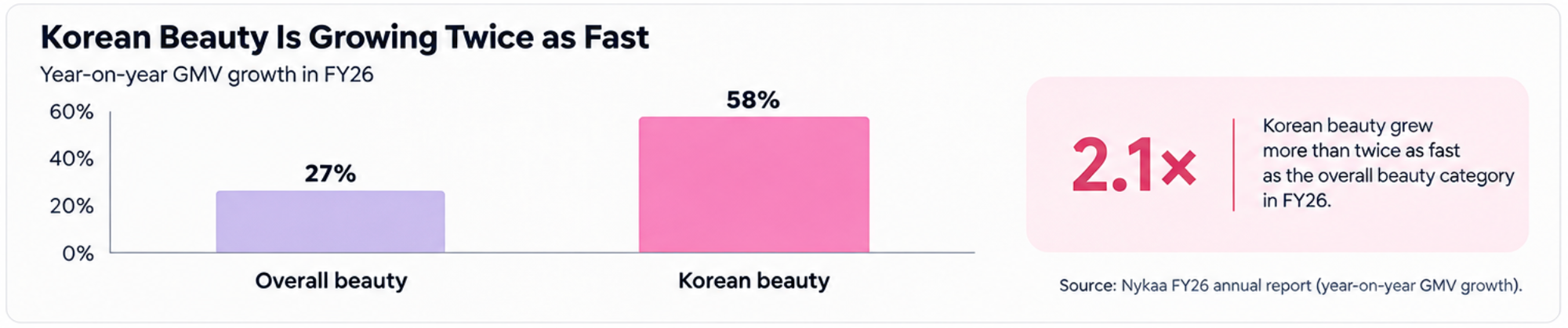
Korean beauty offers a good example of why this approach fits the category. Nykaa's K-beauty portfolio grew 58% year-on-year in gross merchandise value, or the value of products sold, in FY26 and includes more than 70 brands.
Many of these products arrive with unfamiliar ingredients, routines and textures. A review or tutorial can help customers understand what a toner, essence or cushion foundation does. The sales growth is real, but Nykaa has not disclosed how much of it was generated by creator referrals, so it would be a stretch to credit the entire boom to influencers.
Nykaaland adds a physical layer to the same discovery process. At the Delhi festival, visitors could try products, attend masterclasses and meet beauty experts and creators. Its previous edition brought together more than 3,000 creators and other industry personalities and generated over 10,000 pieces of content, according to event organisers. A three-day event can therefore keep reaching potential shoppers online long after the product-testing booths have closed.
There is competition for those recommendations, though. YouTube has been expanding its Shopping affiliate programme in India, with Nykaa, Purplle and Tira among the participating retailers and Amazon and others joining the wider catalogue.
A creator who influences somebody's purchase is not obliged to send that customer to Nykaa. And where recommendations are paid or rewarded, India's advertising guidelines require creators to make that relationship clear. For viewers, knowing whether a review is independent or commercially linked is part of deciding how much to trust it.
Nykaa is still primarily a retailer, and its disclosures do not establish a separate, profitable content business. Nor do they reveal how many of its 1.7 lakh registered creators are active, what share of purchases comes through their links or how much those customers cost to acquire. Content volume measures output, not the audience reached, sales or profit.
The next test is whether these recommendations bring in customers who return even when there is no reel telling them what to buy. That would make Nykaa's growing creator network more than a busy marketing machine. It would make it a durable way to sell beauty.