
 Newsletter
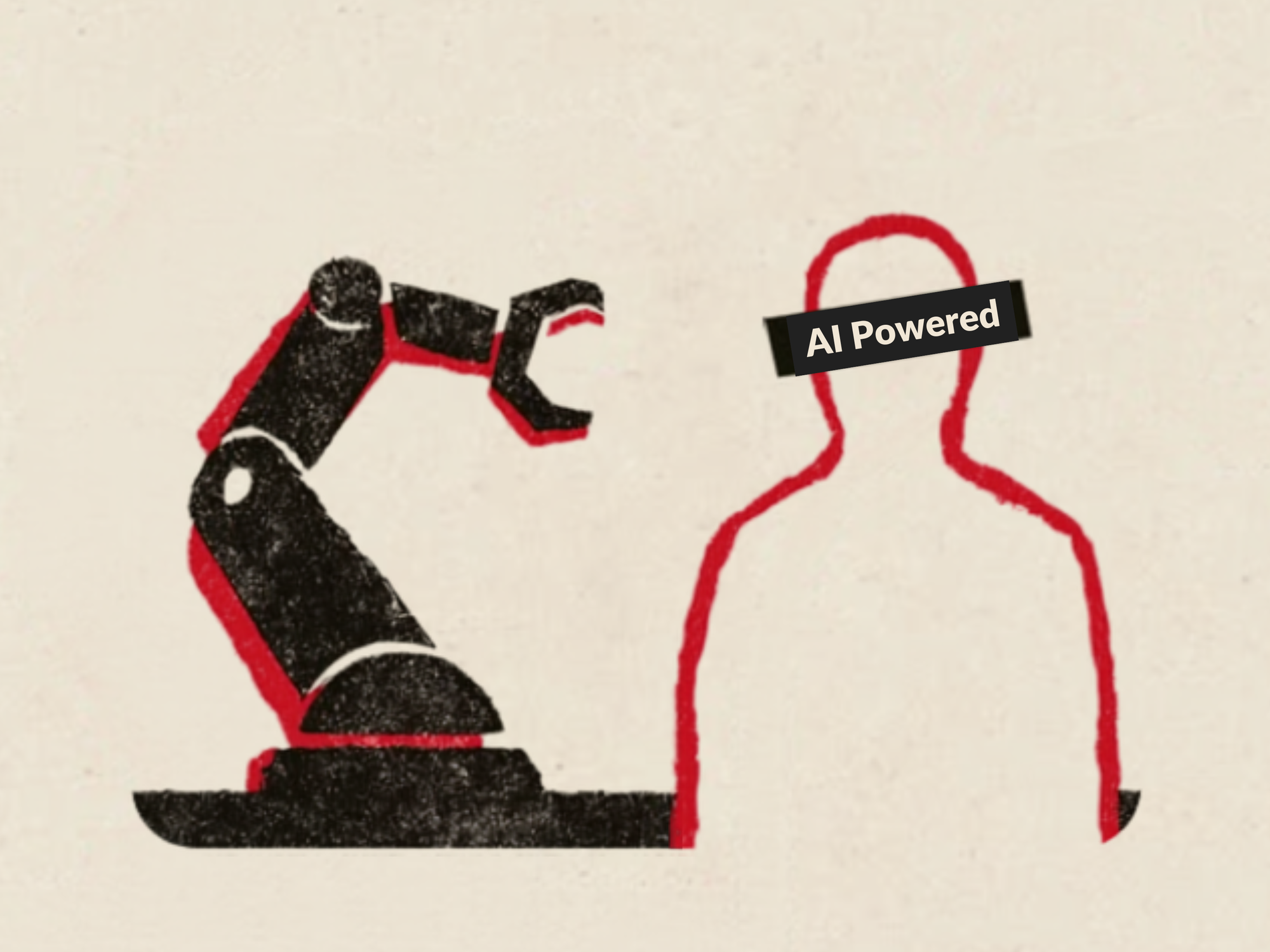
A few years ago, AI meant chatbots, image generators and tools that could write your emails. Today, investors are chasing something very different.
They want AI that can see, move and interact with the real world. Think warehouse robots, autonomous drones, security systems and smart machines that don't just think, but actually do.
That's where Physical AI comes in. And it's slowly becoming one of the fastest-growing corners of India's startup ecosystem.
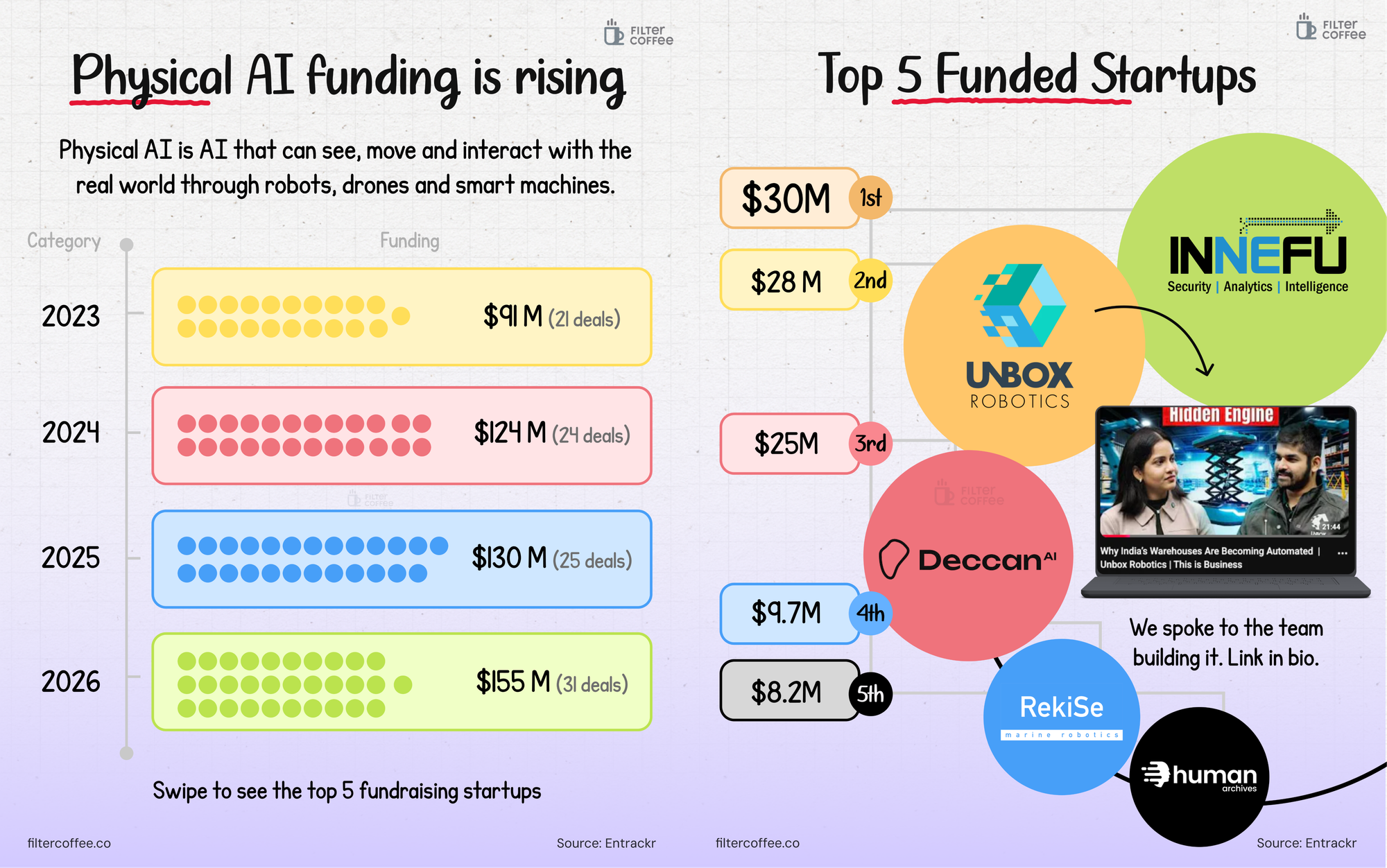
According to Entrackr, funding into India's Physical AI startups has climbed from $91 million across 21 deals in 2023 to $155 million across 31 deals in 2026. In fact, the sector has already attracted more funding in 2026 than it did in all of 2025, a sign that investor confidence is only getting stronger.
The companies attracting the biggest cheques aren't all building the same thing.
Unbox Robotics is automating warehouses. INNEFU builds AI-powered defence and security solutions. RekiSe is developing marine robotics, while Deccan AI is applying AI to industrial use cases. Different sectors, different problems, but all betting on the same idea: AI is leaving the screen and entering the physical world.
The momentum isn't slowing down either.
Unbox Robotics recently raised $28 million, while startups like INNEFU, Deccan AI, Human Archives and RekiSe have also secured significant funding this year.
Investors aren't just backing better software anymore. They're backing machines that can sort parcels, inspect equipment, automate warehouses and assist workers on factory floors.
And the timing makes sense. AI models have become dramatically better over the past few years. Sensors have become cheaper. Hardware is becoming more accessible. At the same time, manufacturers are under pressure to improve productivity, warehouses are handling record volumes, and demand for intelligent automation continues to grow across industries.
All of those trends are colliding at once.

Building a Physical AI company is also very different from building a software startup. You need hardware engineers, manufacturing capabilities, supply chains and years of product development. It's slower, more expensive and much harder to scale.
Which is exactly why investors are paying attention. Anyone can launch another AI chatbot today. Building a robot that can reliably work inside a warehouse, inspect industrial equipment or support critical operations is a much higher barrier to entry.
Generative AI gave computers a voice. Physical AI is giving them hands and feet.