
 Newsletter

Every few years, the electric vehicle industry discovers a new buzzword. A decade ago, it was lithium. Then came LFP batteries, solid-state batteries, and battery swapping.
This week, the spotlight shifted to sodium-ion batteries after China's CATL, the world's largest battery maker, announced that it is bringing the technology into commercial use. Its batteries will soon power electric cars, commercial vehicles and large energy storage systems, while Chinese automaker Changan has already unveiled what it calls the world's first mass-produced passenger car using a sodium-ion battery.
China is already preparing for the next phase of the global battery race even before the current one has fully played out. Over the past decade, lithium-ion batteries became the backbone of the EV revolution. Governments scrambled to secure lithium mines, companies invested billions in battery factories, and countries competed to build supply chains around a single technology.
China emerged as the clear winner by dominating battery manufacturing, processing of critical minerals and cell production. Now, instead of defending that lead, it is investing aggressively in what could become the next important battery chemistry.
To understand why sodium-ion batteries matter, it helps to understand the biggest challenge with lithium. Lithium itself is not particularly rare, but extracting, processing and refining it is expensive and geographically concentrated. Countries have spent years trying to reduce their dependence on a handful of suppliers because batteries have become as strategically important as oil once was. Every electric car, grid-scale battery and renewable energy project depends on them. That has made battery supply chains vulnerable to price swings and geopolitical tensions.
Sodium offers a very different proposition.
It is one of the most abundant elements on Earth and can be sourced far more easily than lithium. In theory, that should make batteries cheaper to produce once manufacturing reaches scale. Industry experts estimate sodium-ion batteries could eventually cost 20% to 30% less than comparable lithium-ion batteries because of lower raw material costs.
However, there is an important catch. Sodium batteries are not automatically cheaper today because the industry is still in its early stages. Factories, suppliers and production volumes have not yet reached the scale that lithium-ion batteries enjoy after decades of investment. In other words, sodium has cheaper ingredients, but not yet a cheaper finished product.
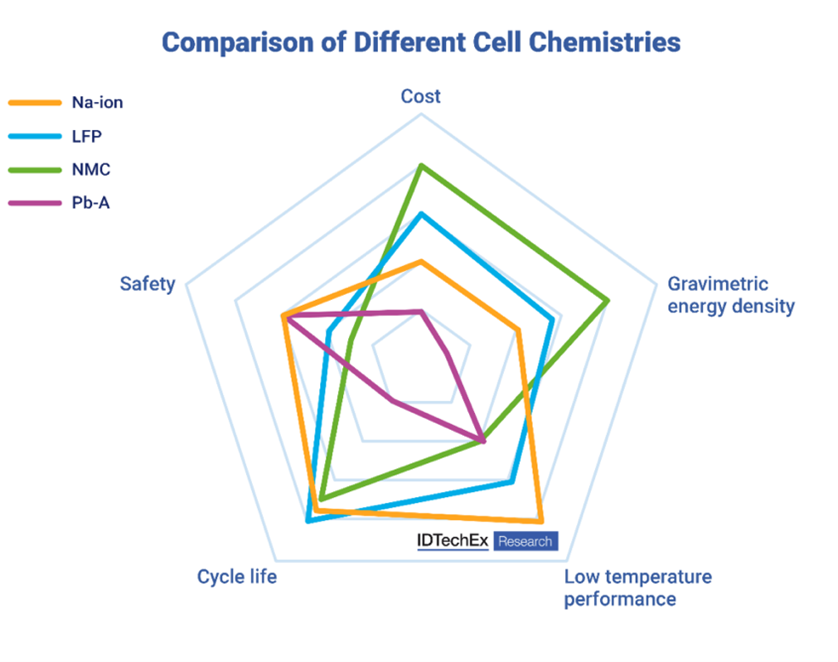
For years, that trade-off made sodium batteries difficult to commercialise because they stored less energy than lithium batteries. Battery makers measure this using energy density, or how much electricity a battery can store for every kilogram of weight.
Higher energy density means longer driving range without making the battery heavier. This is why lithium became the preferred choice for premium electric cars. Earlier sodium batteries lagged significantly behind, but that gap has narrowed rapidly.
CATL says its latest Naxtra sodium-ion battery has reached an energy density of 175 Wh/kg, approaching many lithium iron phosphate, or LFP, batteries that power millions of EVs today. It can also deliver more than 400 km of driving range, while future versions are expected to improve further.
That improvement changes the conversation. The question is no longer whether sodium batteries work. It is where they make the most sense. Premium electric sedans and SUVs that promise the longest possible driving range will likely continue using lithium-based batteries for years.
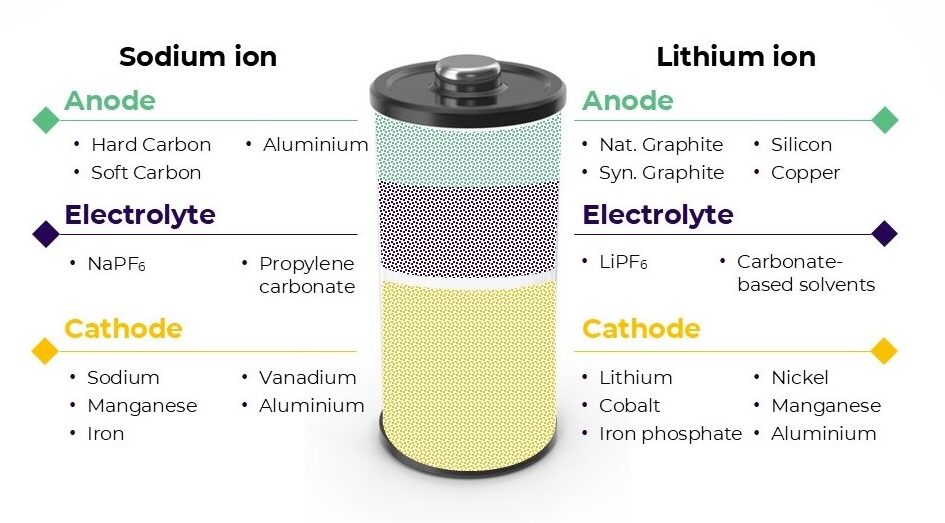
Sodium is more likely to find its place in affordable electric cars, scooters, three-wheelers, commercial vehicles and buses, where lower costs matter more than squeezing every extra kilometre from a battery pack. For countries like India, where two-wheelers account for the overwhelming majority of vehicle sales, that distinction is particularly important.
The even bigger opportunity may not be electric vehicles at all. It may be energy storage. As countries build more solar and wind farms, they need massive battery systems to store electricity when the sun is shining or the wind is blowing, and release it later when demand rises.
Unlike cars, these batteries do not need to be compact or lightweight because they remain fixed in one location. Instead, buyers care more about safety, lifespan and cost. Sodium-ion batteries perform well across all three. They are generally considered less prone to thermal runaway, work better in extreme temperatures and are expected to become cheaper as production scales.
Recognising this, CATL has already launched a commercial sodium-ion energy storage system and says it has secured one of the world's largest sodium battery storage contracts worth 60 GWh over three years.
China's speed is no accident. CATL first unveiled its sodium-ion technology in 2021. What looked like a research project then has quietly become a commercial product in 2026. The company has invested billions of yuan in dedicated sodium battery manufacturing lines and plans production capacity running into hundreds of GWh.
That mirrors the strategy China used to dominate lithium batteries over the past decade. Rather than waiting for a technology to mature elsewhere, it scales manufacturing early and lets costs fall through volume.
So where does India stand? The good news is that India has not ignored sodium-ion batteries. Reliance Industries strengthened its position by acquiring UK-based Faradion, one of the earliest companies working on sodium-ion technology. Other companies such as KPIT Technologies, GODI Energy and INDI Energy are also developing the chemistry.
The government's ₹18,100 crore Production Linked Incentive scheme for advanced chemistry cells is chemistry agnostic, meaning sodium-ion batteries are eligible for incentives alongside lithium-ion batteries. Yet, almost all major investments announced so far continue to focus on lithium manufacturing because that market already exists at scale.
That creates both a challenge and an opportunity. India entered the lithium race relatively late and still depends heavily on imports for battery materials and technology. Sodium offers a rare chance to participate much earlier in a technology that is only beginning to move beyond laboratories.
If Indian companies can successfully commercialise sodium-ion batteries over the next few years, they could build manufacturing expertise before the market becomes as concentrated as lithium is today. But the window may not stay open for long. China is already moving from research to factories, from pilot projects to commercial deployment.
None of this means lithium is going away. Just as petrol, diesel, CNG and hybrid vehicles coexist today because each serves a different purpose, battery chemistries are also likely to become more specialised.
Lithium batteries will continue powering long-range passenger cars and consumer electronics where energy density remains critical. Sodium batteries may dominate applications where affordability, safety and abundant raw materials matter more.
Solid-state batteries, if they eventually mature, could open yet another chapter.
For India, this is a reminder that the next industrial race has already begun. The country missed the opportunity to shape the global lithium ecosystem, but sodium-ion batteries may still offer a second chance. Whether India can turn promising research into large-scale manufacturing will determine if it becomes a serious player in the next generation of batteries, or once again ends up buying technology that someone else commercialised first.