
 Newsletter
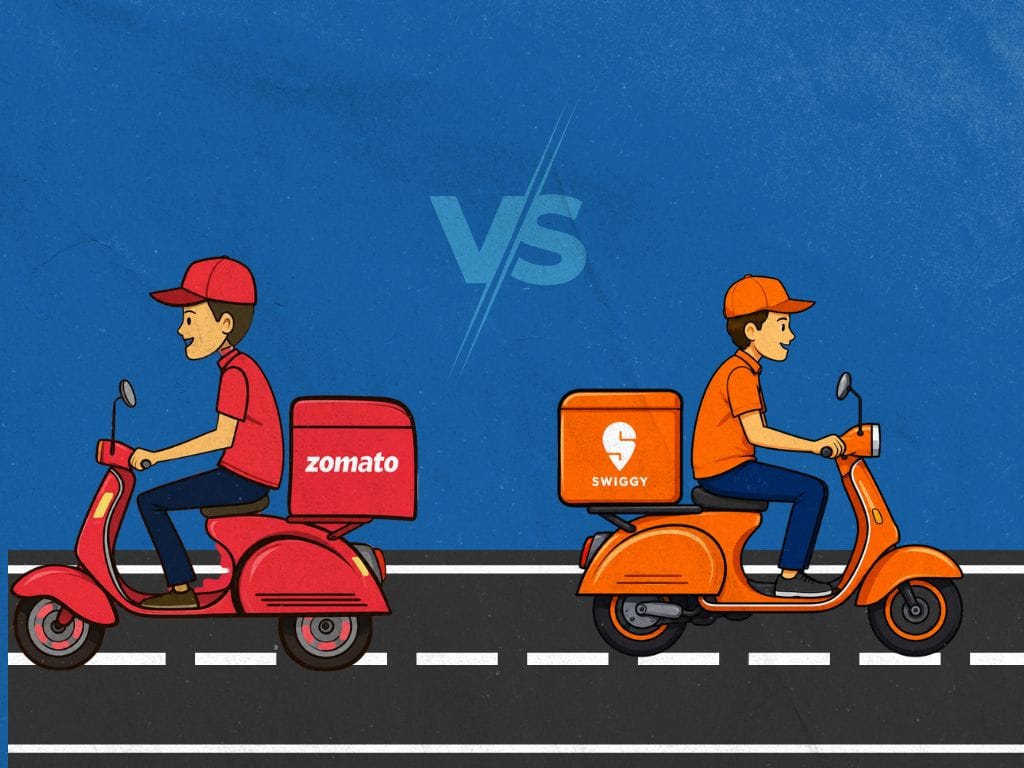
Everyone expected Swiggy and Zomato to keep competing with each other. What few expected was that they would eventually stop fighting over the same customers.
In their latest quarterly updates to shareholders, Swiggy and Eternal, the parent company of Zomato, made one thing clear. The next phase of growth in India's food delivery market will not come from making existing users order more frequently.
Instead, it will come from convincing millions of Indians who rarely order food online to start doing so. Both companies agree on where the opportunity lies, but they have completely different ideas about how to capture it. Swiggy believes affordability is the biggest obstacle and has introduced a separate app called Toing to address it. Eternal believes lower prices alone cannot solve the problem and is instead investing in Bistro, a business built around rethinking how affordable meals are produced.
At first, this may look like another product launch or another round in the Swiggy versus Zomato rivalry. It is actually something much bigger. It marks a turning point in how India's food delivery industry is thinking about growth.
For almost a decade, more restaurants meant more choices. More delivery partners meant faster deliveries. More discounts attracted more users. As smartphones became cheaper, digital payments became common and internet access improved, millions of Indians started ordering food online for the first time. The market expanded naturally because there were still plenty of first-time users waiting to be acquired.
That stage is gradually coming to an end. Swiggy now serves an average of 19.2 million monthly transacting food delivery users, while Zomato serves around 27 million. Both companies continue to report healthy growth in their core businesses. Swiggy's food delivery Gross Order Value, which measures the total value of food ordered through its platform, grew 17.4% to ₹9,490 crore during the June quarter.
Eternal's Net Order Value, a similar metric after adjusting for discounts and certain charges, crossed ₹10,769 crore after growing more than 20%. These numbers show that food delivery in India is still expanding. The challenge is that adding every new customer has become more difficult than it was five or six years ago.
Think about someone who already orders food online every weekend. There is only so much more that person can order in a month. Convincing them to place one extra order adds only limited growth. The much bigger opportunity lies with people who still feel that ordering food is expensive, unnecessary or simply not worth the extra cost. Those consumers represent the next growth engine for the industry.
Swiggy believes affordability is the key to unlocking that market. Instead of changing its main app, it launched Toing as a completely separate platform focused on lower-priced meals. According to the company, two out of every three new Toing users are either people who had never used Swiggy before or customers who had stopped ordering through the platform. That suggests the app is bringing new consumers into the ecosystem instead of simply shifting existing Swiggy users from one app to another.
The economics behind Toing are equally important. Swiggy is not building a new logistics network or creating an entirely new delivery company. It is using infrastructure that already exists. The restaurants are already connected to its platform. Delivery partners are already operating across cities. The technology, payment systems and customer support functions are already in place.
That means the company can experiment with affordability without making massive new investments. Most of its spending goes towards acquiring users, giving it the flexibility to increase or reduce investments depending on how the business performs.
Eternal sees the same opportunity but believes Swiggy is solving only part of the problem. Deepinder Goyal has argued that lowering commissions or delivery charges cannot permanently make ₹50 to ₹150 meals profitable because someone in the chain eventually absorbs that cost. Restaurants earn less, platforms sacrifice margins or delivery partners face pressure. Instead of adjusting prices, Eternal wants to change the economics of food production itself.
That is where Bistro comes in. Unlike Toing, Bistro is not simply another marketplace that connects customers with restaurants. It is built around company-operated kitchens, standardised cooking processes, specialised equipment and tighter control over the supply chain. The objective is to produce meals more efficiently so that affordable pricing becomes commercially sustainable instead of depending on continuous discounts. Put simply, Swiggy is trying to make restaurant food cheaper for customers, while Eternal is trying to make food cheaper to produce.
Although both companies are chasing the same opportunity, their strategies reveal very different beliefs about the future of food delivery. Swiggy believes its existing marketplace has enough scale to reach millions of budget-conscious consumers with the right pricing and product design. Eternal believes the marketplace model itself has limitations and that meaningful affordability requires controlling more of the cooking process.
There is another interesting similarity between the two companies. Neither wants to reposition its flagship app around cheap meals. Swiggy introduced Toing as a separate app. Eternal positioned Bistro as a separate business. That decision is unlikely to be accidental. Both companies have spent years building brands around convenience, restaurant discovery and choice. Filling those apps with only ultra-budget meals could weaken that positioning. Separate brands allow them to serve different customer segments without changing what their core platforms represent.
This strategic shift is also being shaped by new competition. Rapido has entered food delivery through Ownly, a zero-commission platform that promises lower prices. Flipkart is preparing to enter the category later this year.
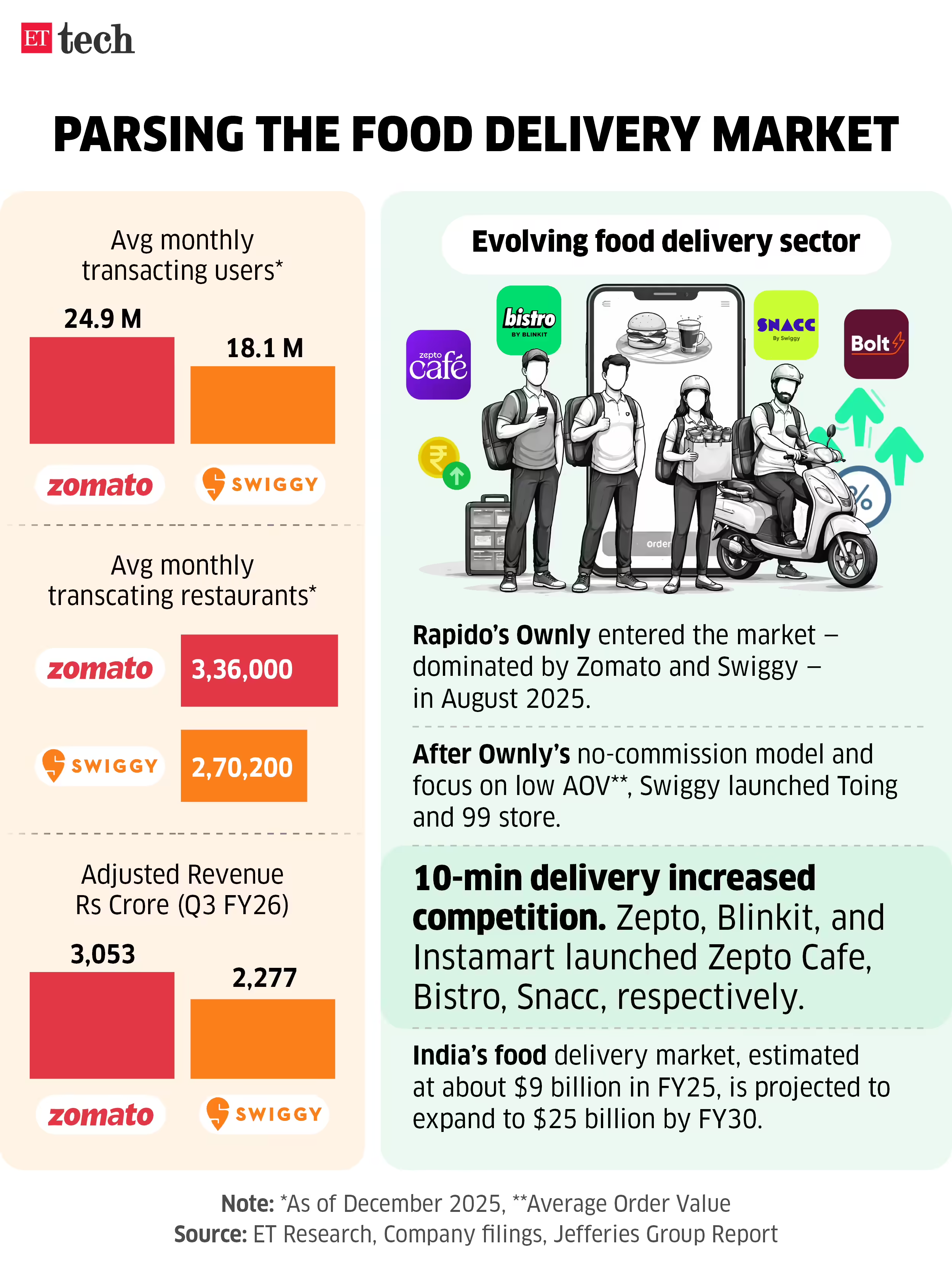
Startups such as Swish are expanding aggressively after raising fresh capital. Interestingly, almost every new entrant has identified the same opportunity. They all believe India's next wave of food delivery users will be more price-sensitive than the first generation of customers. The difference lies in how each company plans to serve them profitably.