
 Newsletter
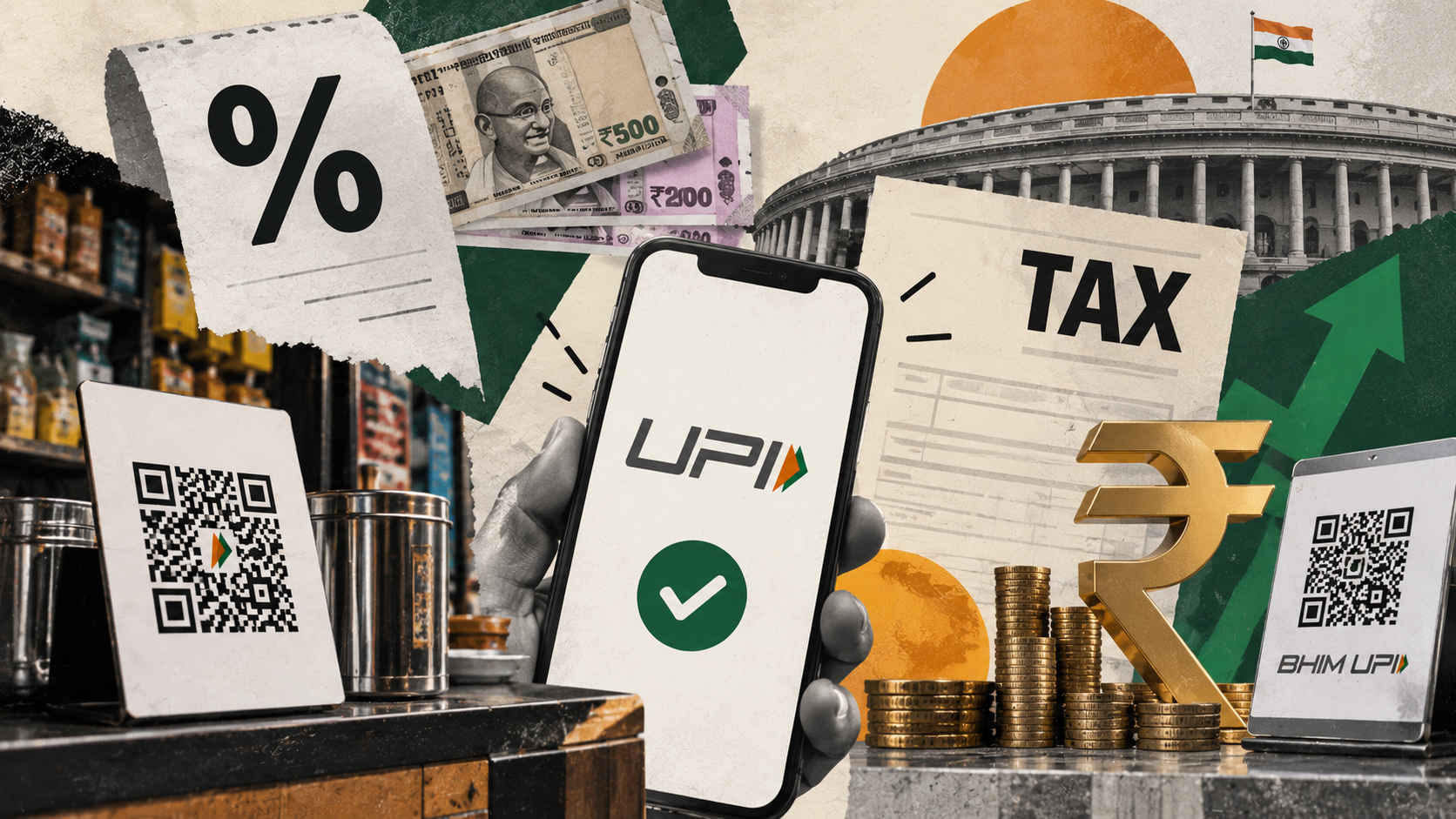
There is a slightly strange thing about UPI that we have become so used to that we rarely think about it.
You can pay a shop ₹10,000 from your bank account and the shop can receive the money digitally without paying the kind of merchant fee that usually comes with card payments. The customer pays nothing extra. The merchant pays nothing extra. Yet banks, payment apps and other companies still have to keep the system running.
From October 15, 2026, that changes for some transactions.
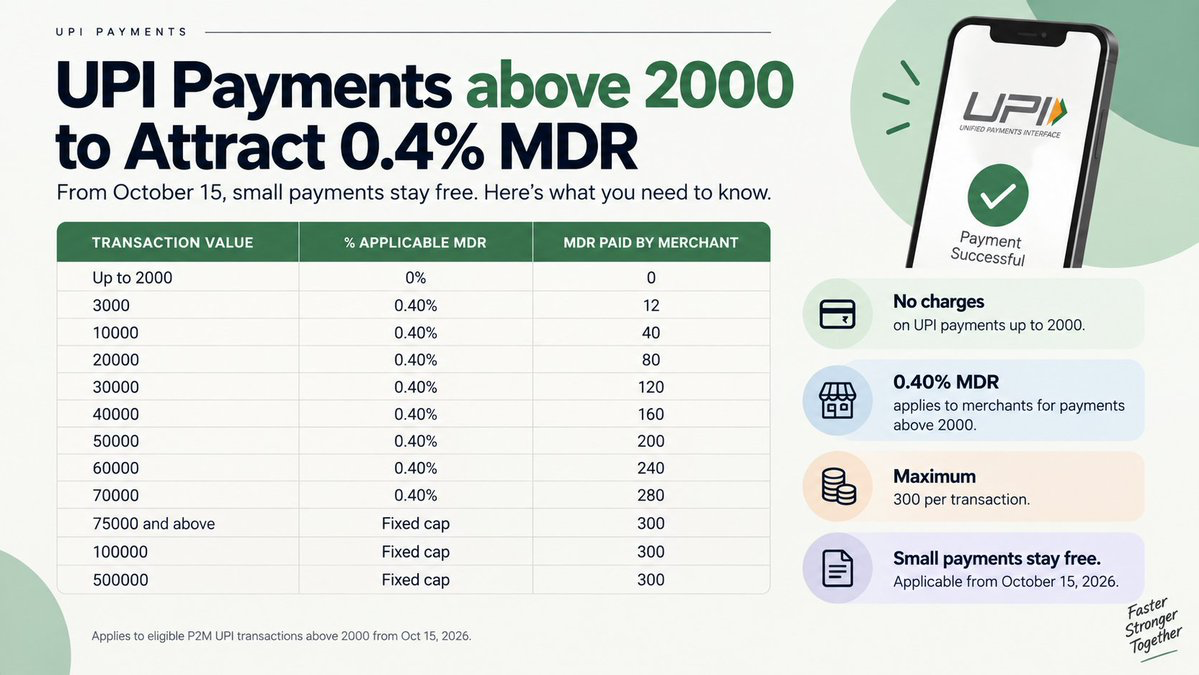
The new framework introduces a 0.4% Merchant Discount Rate, or MDR, on eligible UPI payments made to merchants above ₹2,000. MDR is simply the fee charged for processing a merchant payment. It is paid by the merchant, not the person making the payment. A ₹10,000 eligible transaction would therefore carry an MDR of ₹40. For transactions of ₹75,000 or more, the MDR is capped at ₹300.
But this does not mean that UPI is suddenly becoming a paid service.
Payments between two people remain completely free, regardless of the amount. Merchant payments up to ₹2,000 remain free too, as do transactions covered by the zero MDR framework for small merchants. The government says around 96% of P2M transactions will remain unaffected.
That distinction matters because UPI is enormous.
In August 2026 alone, UPI processed around 24 billion transactions worth $311 billion, according to Reuters. Most of those transactions will not generate the new fee. The change applies to a much smaller portion of the system: larger merchant payments.
And the ₹40 from that hypothetical ₹10,000 payment does not go to the government.
That is an important part of the new system. MDR is not a tax. The money is shared between the banks and payment companies involved in processing the transaction. The government says the revenue will help support UPI infrastructure, cybersecurity, innovation and other costs involved in running the network.
There are also some exceptions.
Railways, telecom, insurance, fuel and agricultural inputs will pay a flat ₹5 MDR on eligible transactions above ₹2,000 instead of the standard 0.4%. Capital market payments, including payments to mutual funds, securities, stockbrokers and dealers, will carry 0.02% MDR, capped at ₹300.
So why introduce the fee now?
UPI has grown at a scale where the cost of maintaining the network has become difficult to ignore. For years, the government has supported the economics of digital payments through incentives while merchants paid zero MDR on UPI. The new system gives banks and payment companies a way to earn directly from some of the payments they process.
There is a downside for merchants, though.
A restaurant receiving a ₹10,000 payment would now have ₹40 of MDR. A ₹50,000 payment would mean ₹200. For a business that receives hundreds of large UPI payments, the cost can add up. The government has said customers should not be charged MDR directly, but merchants will still have to account for the additional cost.
This is also why investors are looking at the announcement.
Banks that issue UPI accounts or acquire merchants now have a new revenue stream. Payment companies and merchant platforms can also earn from these transactions. Yes Bank, Axis Bank, ICICI Bank, HDFC Bank and SBI are among the banks that could benefit, while Paytm and Pine Labs also have exposure through their payment businesses. Reuters reported that Paytm and Pine Labs were among the stocks investors are watching after the announcement.
For most people, however, very little changes.
You can still send money to a friend for free. You can still pay a small shop through UPI without an MDR. The person paying does not suddenly get a 0.4% charge on their screen.
What changes is the economics behind some larger merchant payments. After years of building India's biggest digital payments network without a merchant fee, the banks and companies operating the system will now have a way to earn from a portion of those transactions.