
 Newsletter
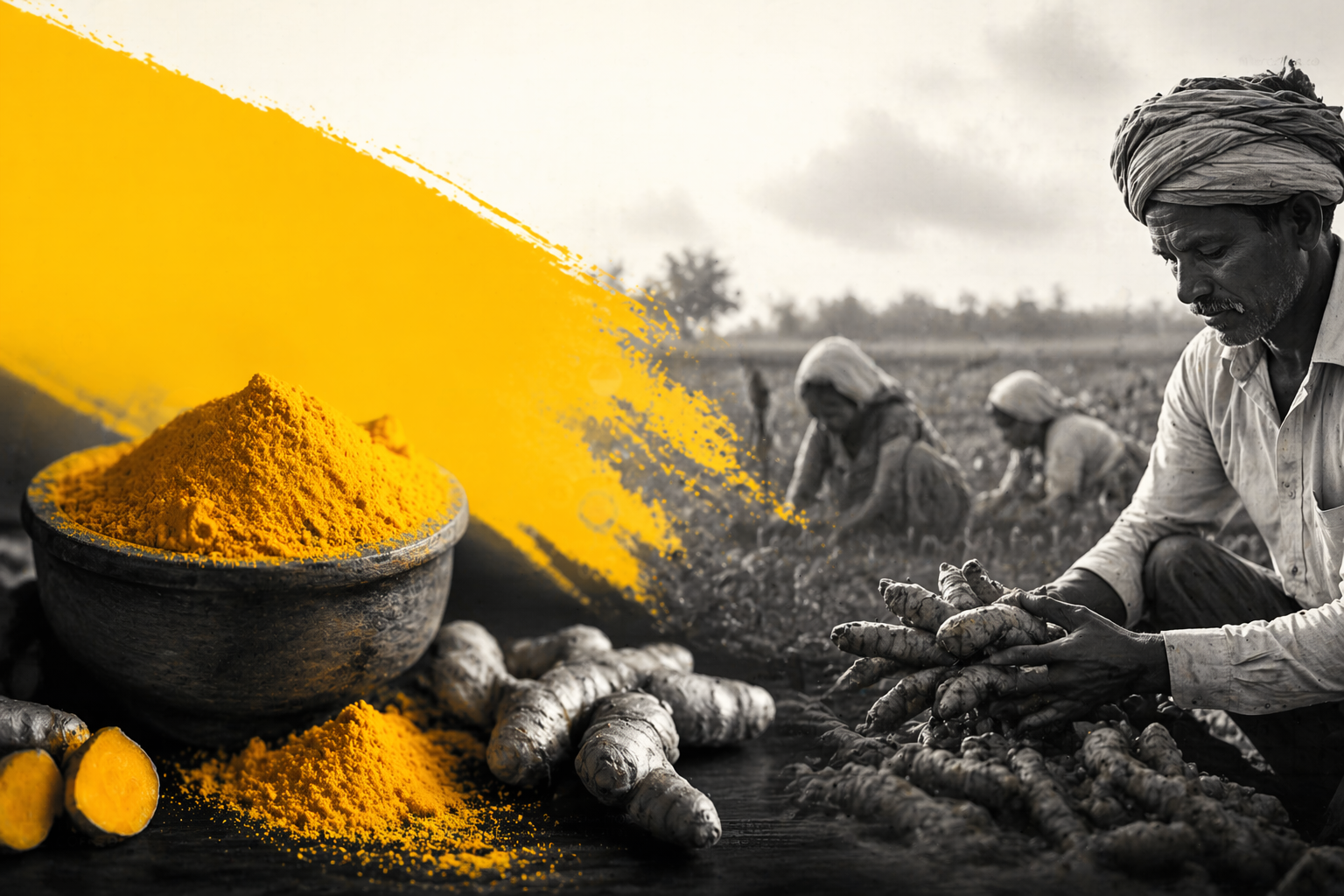
India has just made a quiet but important move in one of its oldest export stories.
In January 2025, the government set up the National Turmeric Board in Nizamabad, right in the heart of one of the country’s biggest turmeric belts.
At first look, it may seem like just another commodity board, but it points to something bigger as India moves beyond growing turmeric to shape its global journey.
To understand why this matters, start with the scale.
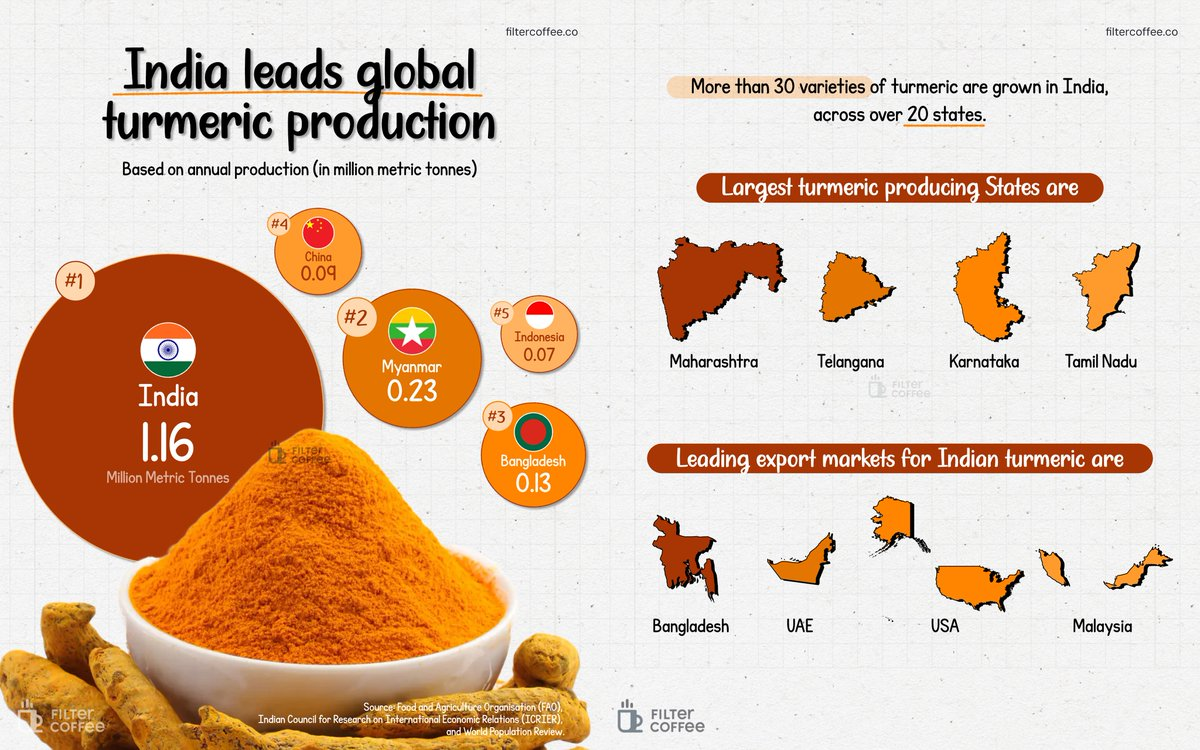
India produces about 1.16 million metric tonnes of turmeric every year, making it the undisputed global leader.
Myanmar, the second largest producer, is at around 0.23 million tonnes, followed by Bangladesh at 0.13, China at 0.09 and Indonesia at 0.07.
In simple terms, India produces more turmeric than the next few countries combined.
It is not just one crop grown in a corner either.
More than 30 varieties are cultivated across over 20 states, with Maharashtra, Telangana, Karnataka and Tamil Nadu forming the core production belt.
But here is where the story gets interesting.
For years, India dominated production but did not fully dominate value as much of the turmeric exported was raw or minimally processed, which meant lower margins.
However, that is slowly changing.
In 2024 to 25, India exported about 176,000 tonnes of turmeric, up from around 162,000 tonnes the previous year.
In value terms, exports stood at roughly 341 million dollars which already makes India the largest exporter, accounting for close to two thirds of global turmeric trade by both volume and value.
The demand side is also evolving.
Traditional buyers like Bangladesh and the UAE continue to import large volumes, but markets like the US and Malaysia are gaining importance as turmeric becomes a mainstream health ingredient.
From immunity drinks to supplements and skincare, curcumin based products are now a global trend. That shift is crucial because it pushes turmeric out of the commodity bucket and into the wellness and lifestyle space where margins are much higher.
This is exactly where policy plays its role.
The National Turmeric Board has been given a wide mandate and is expected to improve supply chains, standardize quality, promote Indian turmeric globally, support research and even push clinical validation of its health benefits.
Alongside this, the Spices Board has been working on improving post harvest quality, certification, and value addition under its SPICED scheme.
The idea is simple. If India already controls production, it should also control branding, processing and pricing.
There are early signs of this shift on the ground. Buyer seller meets are now being organized in production clusters like Jabalpur, Mysuru and Nanded to directly connect farmers, processors and exporters.
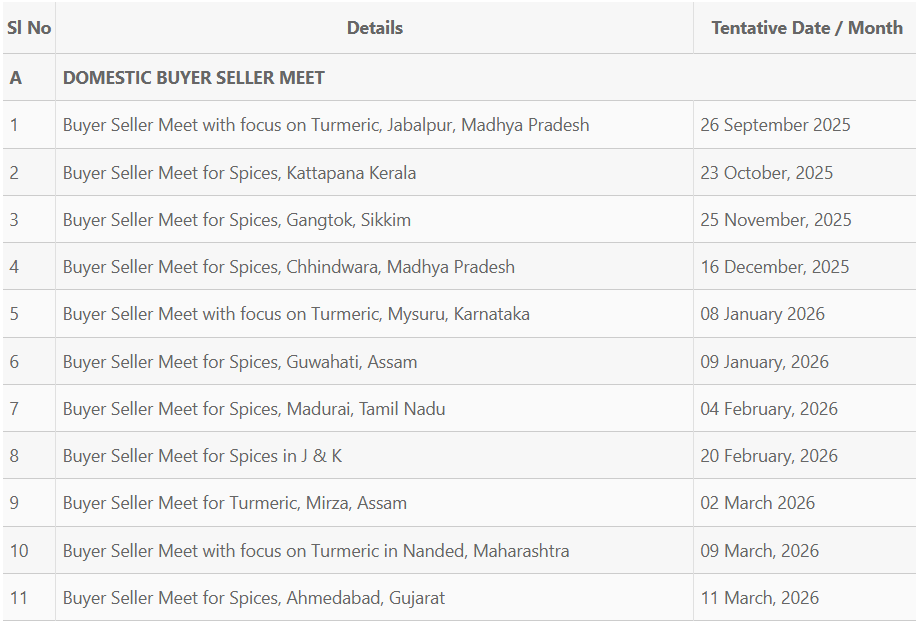
Image Source: Spices Board India
Research institutions like ICAR are working with stakeholders to improve varieties and promote new products. Even the push for geographical indication tags is gaining pace, with applications like Armoor turmeric aiming to create premium identity and traceability.
At the same time, turmeric is becoming more financially visible.
Prices on commodity exchanges like NCDEX have been active, with contracts trading in the 15,000 to 16,000 range in early 2026.
Put it all together and the story becomes clear.
India has long been the world’s turmeric powerhouse, but mostly sold in bulk, and is now shifting towards greater control across the value chain.
If the strategy works, turmeric could follow the path of other Indian exports like basmati rice where branding, origin and quality command a premium.
So now the real question is whether India can turn that advantage into global pricing power, and that is the bet India is now actively making.