
 Newsletter

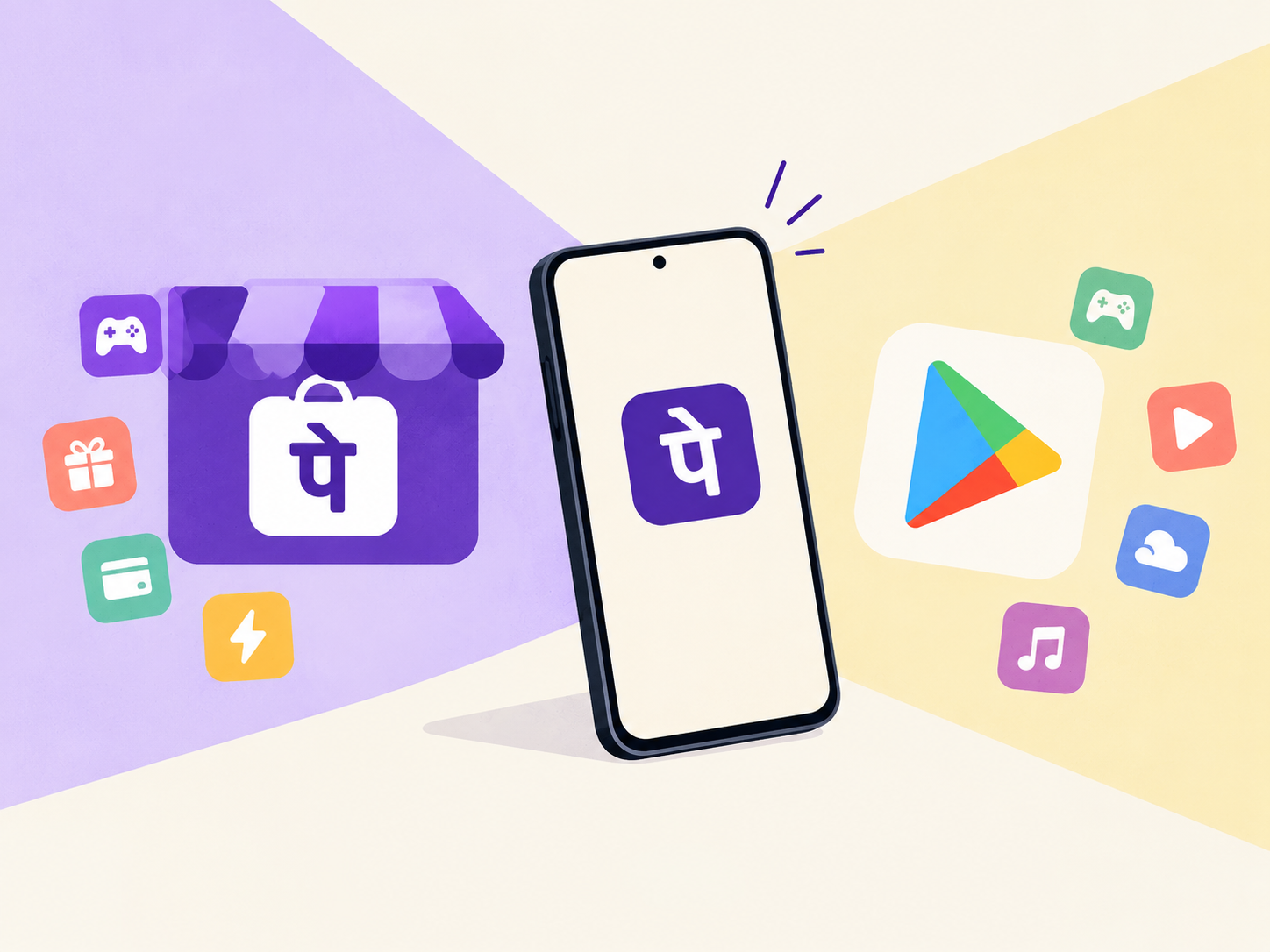
PhonePe now has an app store on more than 20 crore devices in India. On 28 October, the company renamed Indus Appstore to PhonePe Appstore and expanded into gift cards and other digital purchases, with gaming top-ups planned next. It has also launched a website where people can buy digital goods without installing the store.
That's an ambitious move for a company best known for UPI payments. But competing with Google's Play Store means taking on a business that already sits on millions of Android phones and has become the default place to download apps.
PhonePe has been building towards this since February 2024, when it launched Indus Appstore as an Indian alternative to Google Play. The pitch had two parts. Users could discover apps in 12 Indian languages, while developers were offered a way to distribute apps without paying PhonePe a commission on in-app purchases made through external payment gateways.
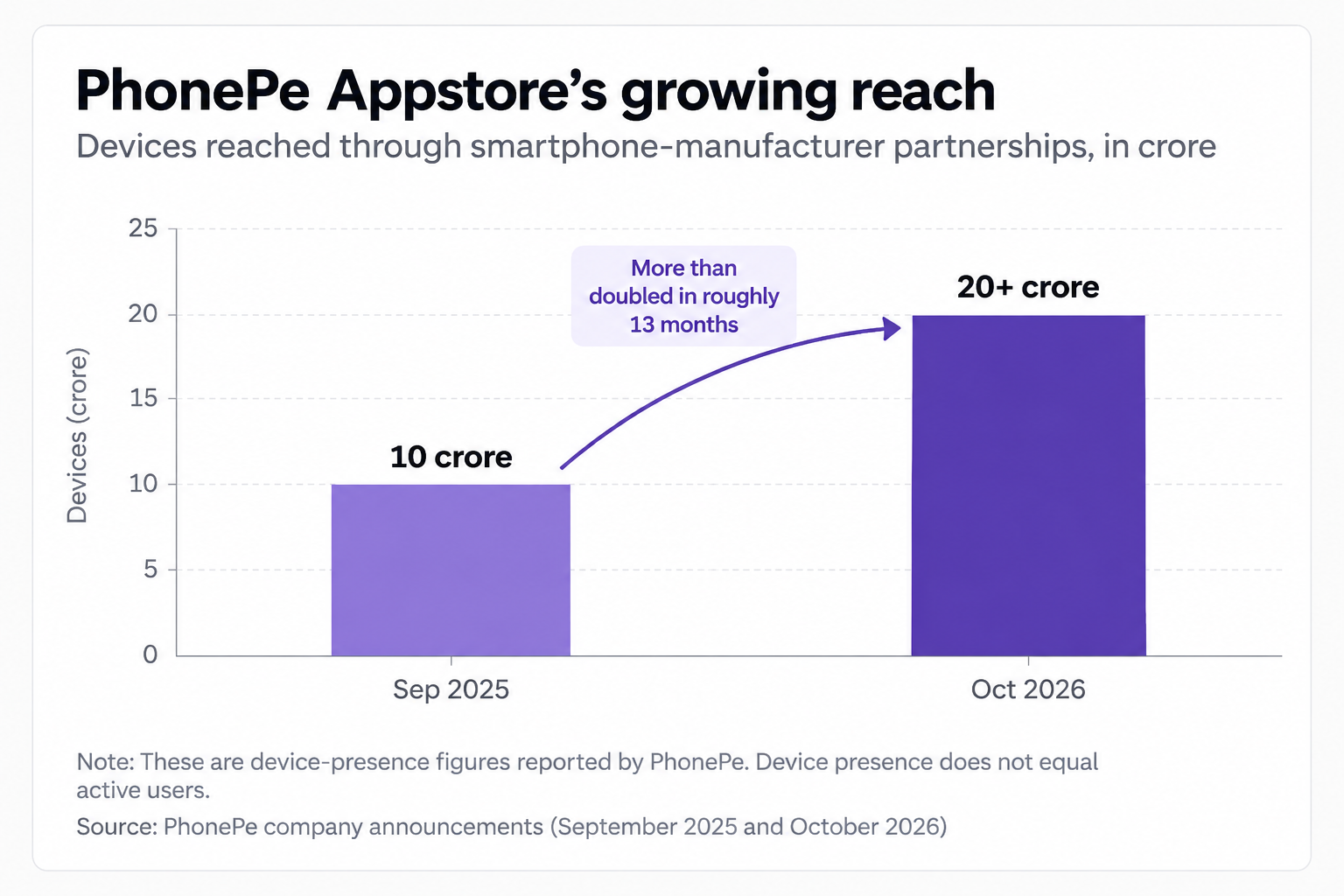
The second promise addressed a longstanding complaint among app developers. Suppose you pay ₹1,000 for a subscription or gaming credits inside an app. If the transaction attracts Google's 15% service fee, ₹150 goes to Google before other costs. Some developers face higher fees, depending on the programme and transaction.
Even when Indian users choose an alternative billing system on Google Play, Google says its applicable service fee falls by four percentage points rather than disappearing. A 15% fee, for instance, becomes 11%.
PhonePe's launch offer was different: developers could choose their own payment gateway without paying an app-store commission to PhonePe. They would still incur payment-processing costs, but potentially keep more from each purchase. PhonePe also waived app-listing fees for its first year, although it said a nominal annual fee would follow.
India's competition regulator had already challenged Google's grip on this market. In October 2022, the Competition Commission of India fined Google ₹936.44 crore over its Play Store policies and directed it to allow third-party billing. Google subsequently introduced alternative billing options in India, while retaining service fees. PhonePe saw an opening for a rival distribution channel.
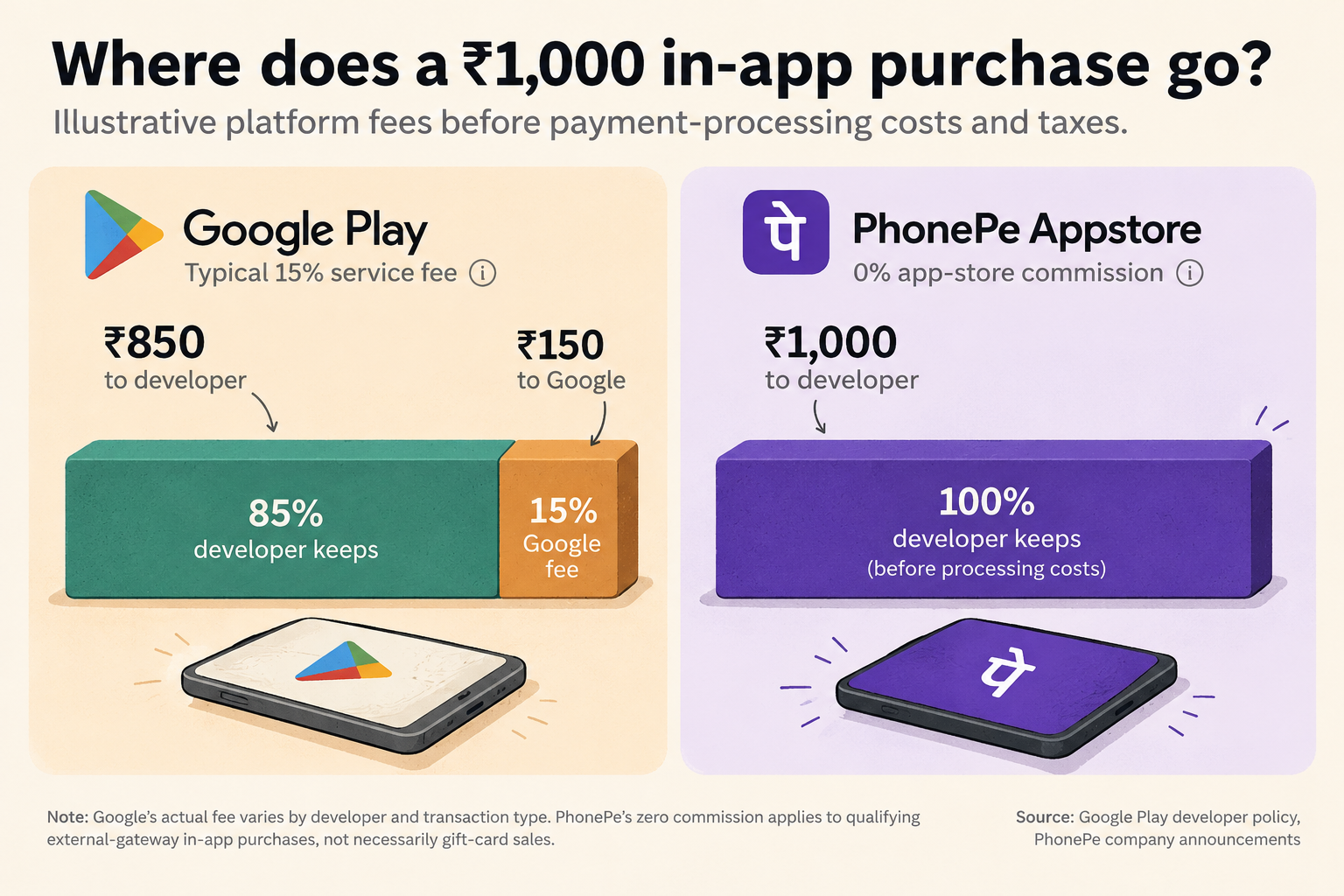
Its biggest hurdle was getting onto people's phones. Google Play is familiar and usually pre-installed; persuading someone to install another app store manually is a much tougher ask. So PhonePe went directly to smartphone manufacturers. A 2025 deal with Xiaomi provided for Indus Appstore to be pre-installed on new devices in India and replace Xiaomi's GetApps on existing ones. Partnerships with Motorola and Alcatel added further distribution.
That's how PhonePe says its store reached more than 20 crore devices. But device presence is not the same as active usage. The company hasn't disclosed how many people regularly open the store, download apps or spend money there. Without those figures, its scale is impressive but its competitive position remains difficult to judge.
The latest expansion hints at how PhonePe wants to change that. People don't download new apps every day, but they may purchase gift cards, gaming credits or other digital products more often. The new webstore already offers gift cards, while direct purchases of in-game currencies and other top-ups are planned, with gaming first. PhonePe can use its payments infrastructure to support those purchases and potentially build advertising and other revenue streams around the marketplace. It hasn't disclosed the margins it expects from these products.
Google still has a formidable advantage: consumer habit, a vast app ecosystem and established systems for updates, security and payments. Developers may like lower commissions, but they also need customers who actually spend.
PhonePe has solved part of the distribution problem by getting onto 20 crore devices. Taking on Google will depend on what happens after someone unlocks the phone: whether they open PhonePe Appstore, find what they need and return to buy again.
Sources