
 Newsletter
#012: India’s retail landscape is quietly shifting beyond metros, as SuperK turns small-town kiranas into tech-enabled supermarkets run by local entrepreneurs.
TL;DR:
- SuperK is transforming small-town kiranas into smart, tech-enabled stores that look like supermarkets but still feel local.
- Started in 2019 in Kadapa by two BITS Pilani grads, it now has 130+ stores across 80 towns, with plans to hit 500 soon.
- The company empowers local entrepreneurs, offers consistent pricing, and builds trust through private labels like Triputi and Aha.
- With ₹198 crore in funding (including Binny Bansal and Shubman Gill), SuperK is proving that Bharat’s retail revolution isn’t in malls, it’s happening in mandis.
The Bite:
In most parts of India, buying groceries is still an errand, not an experience.
You walk into a store where the uncle behind the counter knows your entire family tree, you hand him a crumpled list, he disappears behind a stack of rice bags, and reappears with everything you need, plus one thing you didn’t ask for.
That’s small-town retail for you: built on relationships, not receipts. But somewhere between these dusty shelves and plastic jars of candy, a quiet revolution has been brewing.
That’s why, to understand this change unfolding far from the glass towers of Indian metros, we decided to travel to a small town in Andhra Pradesh called Kadapa, to see firsthand what’s really happening beyond the city walls.
Nestled between rocky hills and mango orchards, Kadapa isn’t the kind of place you’d expect to see on a business map or in a magazine spread. It’s known for its limestone mines, spicy cuisine, and the kind of heat that makes you respect ceiling fans a little more. Life moves at its own rhythm here — slow, familiar, and deeply local.
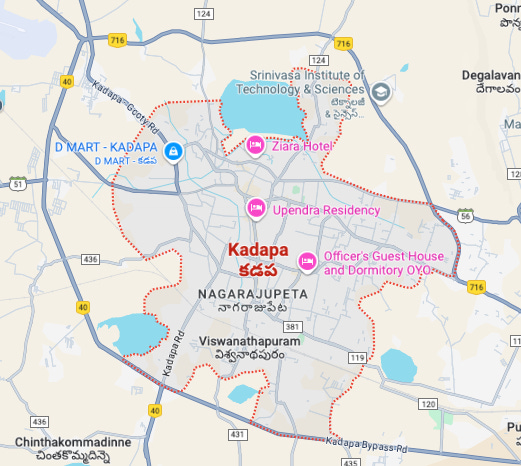
But lately, Kadapa has been making news for something unexpected: a retail experiment that’s changing how people here shop for their everyday needs. In a lane where you’d expect another kirana store with faded signage and handwritten bills, there stands a bright, well-organized convenience store called SuperK.
It’s not a mall or a big-city franchise.
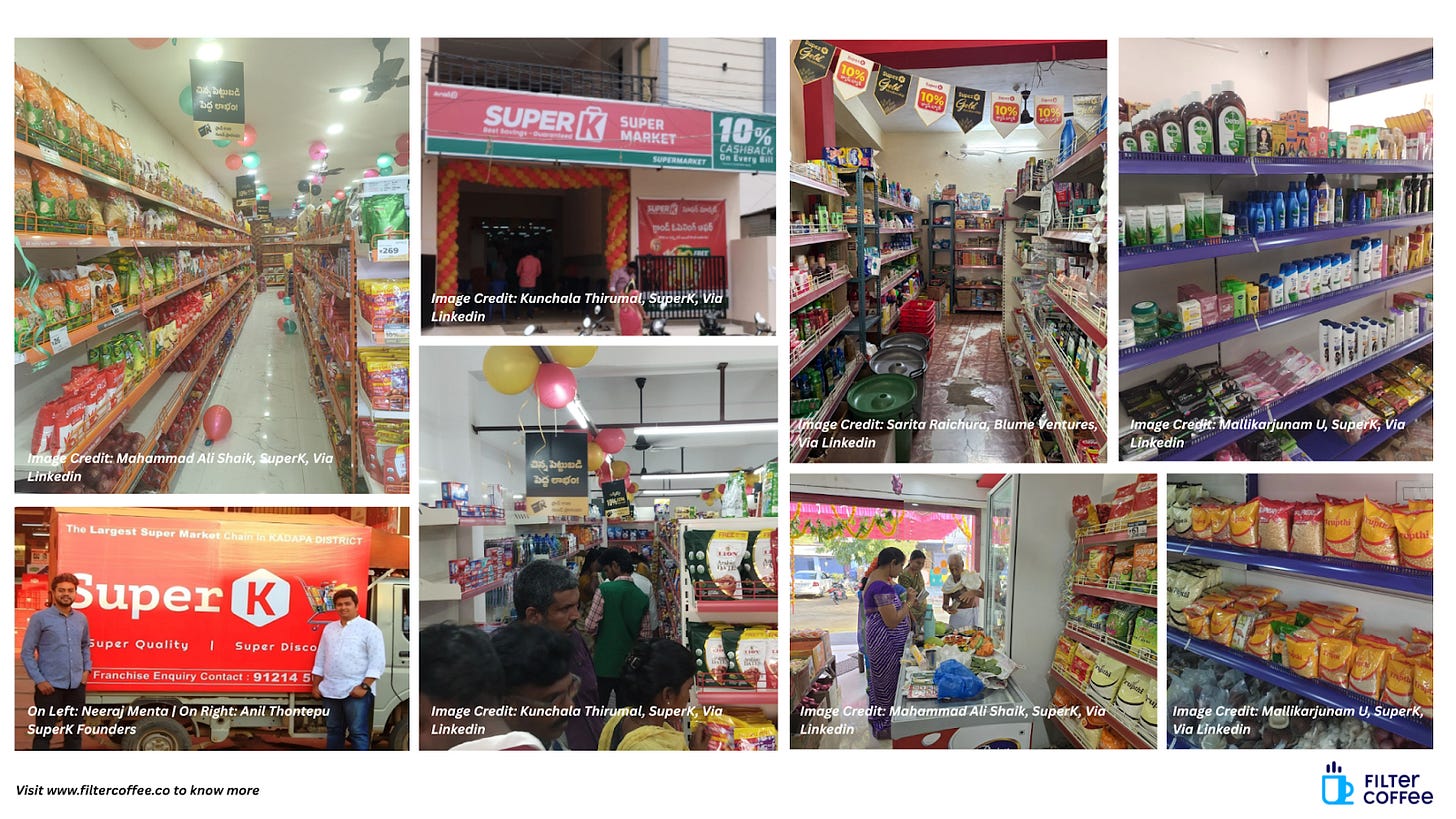
It’s a neighbourhood store, just done differently with clean aisles, digital billing, neatly stacked shelves, and prices that don’t make you raise an eyebrow. What makes it even more interesting is that it’s run not by a corporate chain but by a local business owner who’s been trained, tech-enabled, and backed by a young company with a bold mission: to bring modern retail to small-town India, without taking the small town out of it.
On the ground, we realized SuperK is reimagining what “value retail” means for Bharat and it’s doing so in a way that feels both familiar and futuristic. The idea sounds simple enough: a store that looks like a supermarket but feels like your neighbourhood kirana.
If you’ve grown up shopping at Big Bazaar, DMart, or Reliance Fresh, you might assume small towns already have their own versions. But the truth is, they didn’t. Not until SuperK showed up.
SuperK is a modern convenience store chain built for India’s smaller towns. It helps local shop owners run smarter, tech-enabled stores with better pricing, reliable supply chains, and a more organized shopping experience, all without losing that neighbourhood warmth. The name itself comes from a simple idea: give every kirana store a touch of “superpower,” and in the process, give Bharat a brand-new way to shop.
And the world’s taking note too. SuperK raised ₹100 crore in June this year, from Binny Bansal’s 3STATE Ventures, Mithun Sacheti of CaratLane, and even cricketer Shubman Gill, clearly indicating a fresh vote of confidence in how big small-town retail can really get.
To understand SuperK’s rise, we first need to understand the landscape it’s transforming, India’s retail market.
India is literally a nation of shopkeepers. But the way those shops operate is quietly evolving.
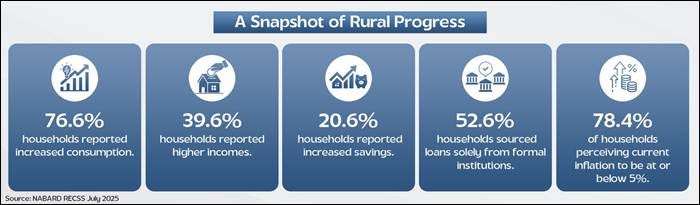
After years of runaway prices, inflation has cooled, rural India saw it fall to just 1.07% in September 2025, the lowest in eight years. And with incomes rising, consumption has followed. NABARD says 76% of rural households reported higher spending, and 40% saw income growth last year.
Translation: people are finally buying better, not just cheaper.
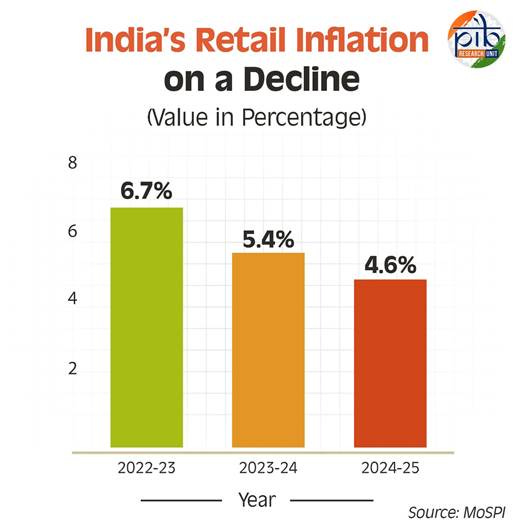
In simple terms, the thali got cheaper. Vegetables, pulses, and oils all cost less. But that’s just one part of the story, because while prices softened, incomes have also quietly climbed. The latest NABARD survey found that nearly 40% of rural households saw their income rise, while 76% reported higher consumption.
Families that once hesitated to spend are now upgrading to better groceries, branded goods, even the occasional indulgence.
And that spending confidence isn’t slowing down. Nearly 75% of rural households expect their income to rise again next year, a sign that Bharat’s optimism is finally matching its wallet.
For decades, India was a country of savers. Now, it’s slowly turning into a country of spenders. We’re not just buying what we need anymore, we’re buying what makes life easier, cooler, and maybe a little fancier.
The consequence? Retail is booming.
Over the last decade, the market has grown at a steady 8.5–9% annually, touching $950 billion in 2024, and is expected to triple to $3 trillion by 2033. But this surge isn’t coming from air-conditioned malls or high street stores; it’s coming from small-town India, where a quiet consumption wave is transforming the way people shop.
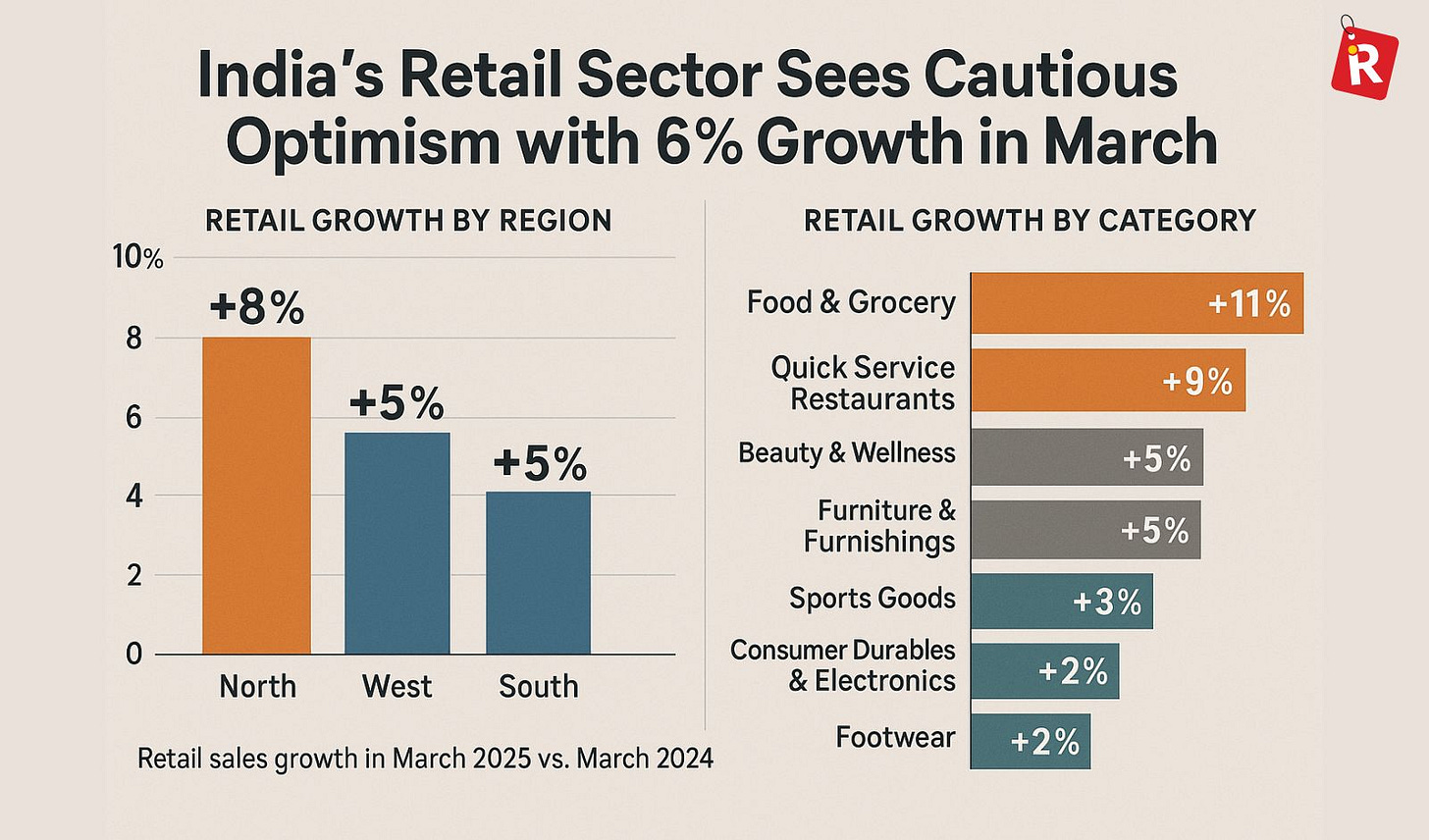
At the heart of this transformation are retail and FMCG (fast-moving consumer goods). Retail provides the shelves; FMCG fills them up with biscuits, shampoos, soaps, snacks; the small-ticket items that keep every store’s counter ringing.
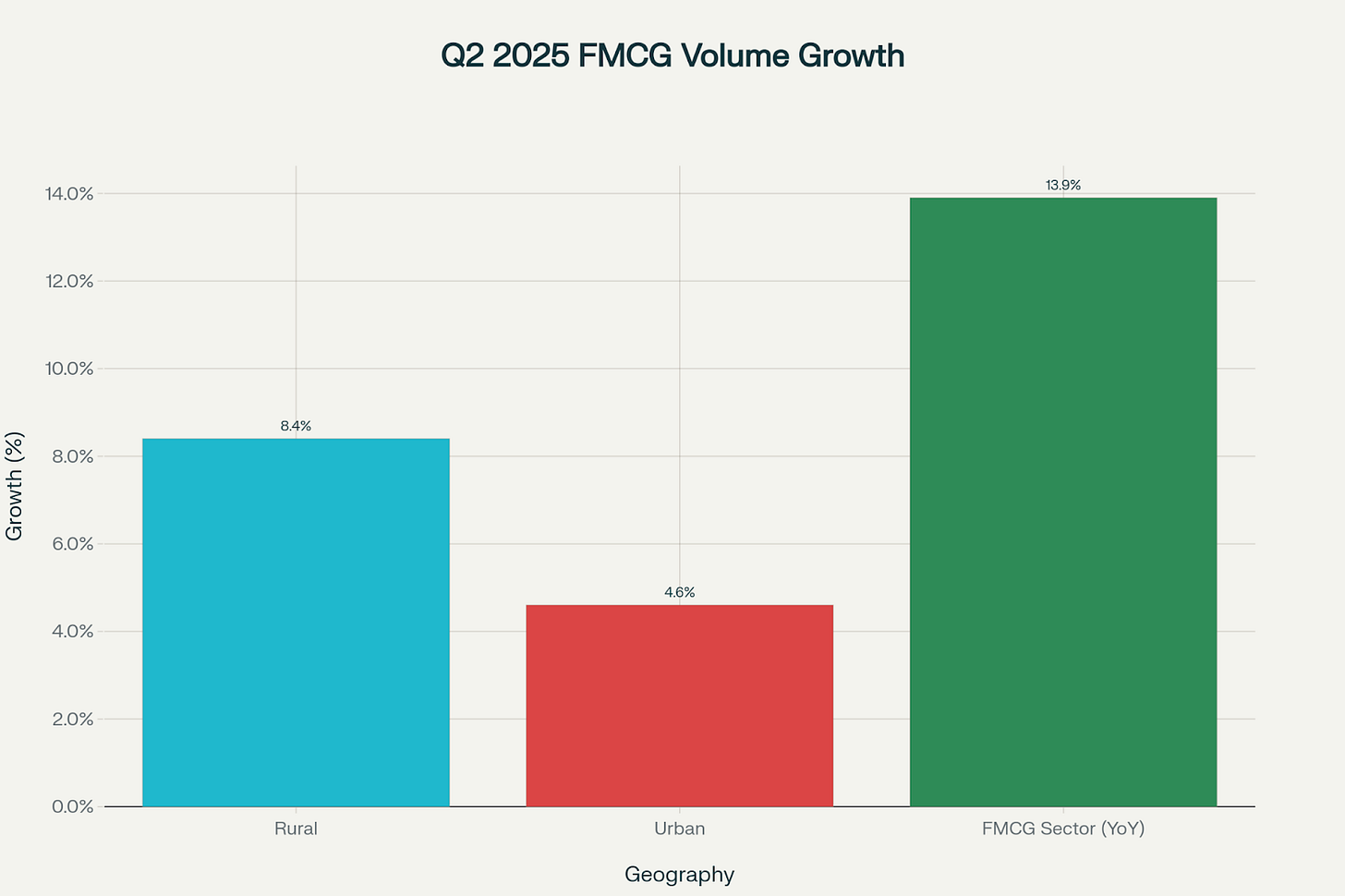
According to NielsenIQ’s Q2 2025 report, the FMCG sector grew 13.9% year-on-year, powered largely by rural demand. Rural markets clocked 8.4% volume growth, nearly double urban India’s 4.6% marking the sixth straight quarter where smaller towns outshopped cities.
Loose oil is being swapped for bottled labels. Unbranded rice is giving way to neatly packaged grains. It’s not extravagance, it’s aspiration meeting access.
The same kirana that once sold bulk rice now stocks cookies, cold drinks, and detergent sachets. The FMCG boom has nudged these shopkeepers to modernize, digitize, and think scale.
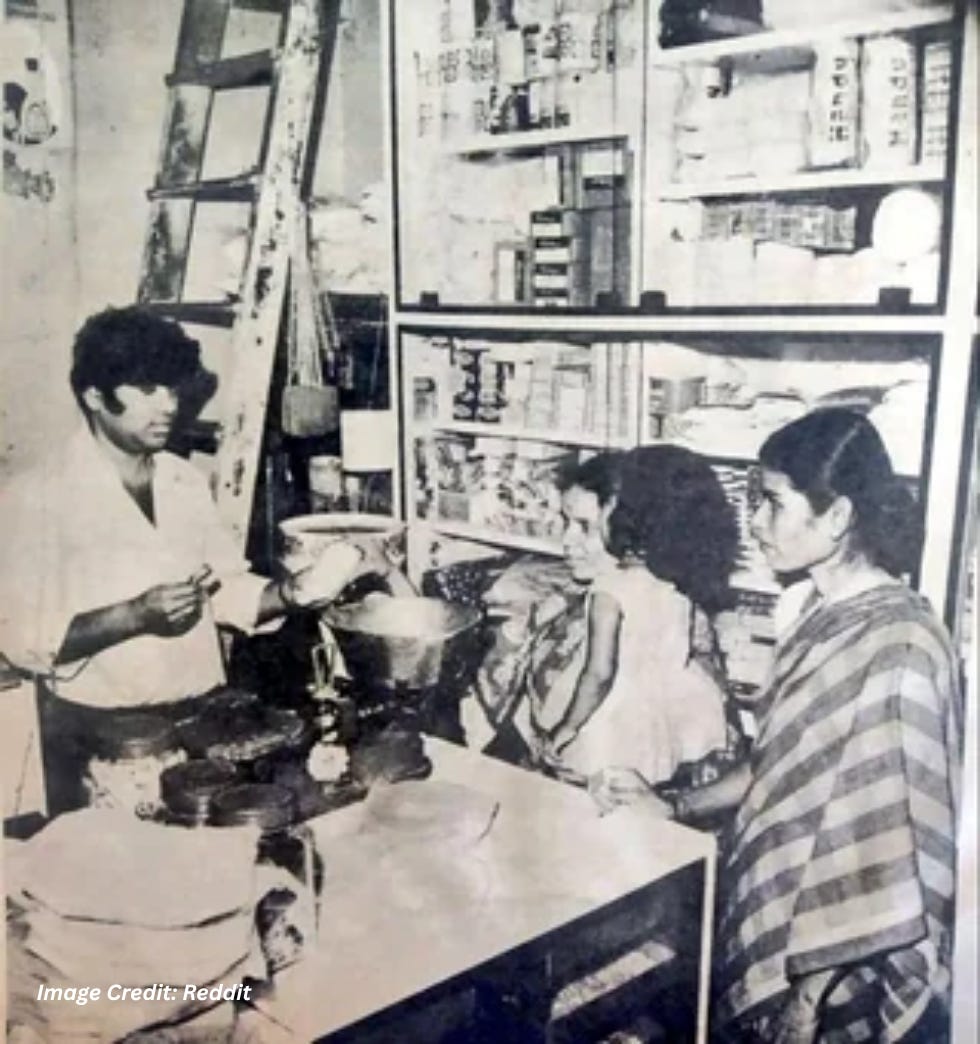
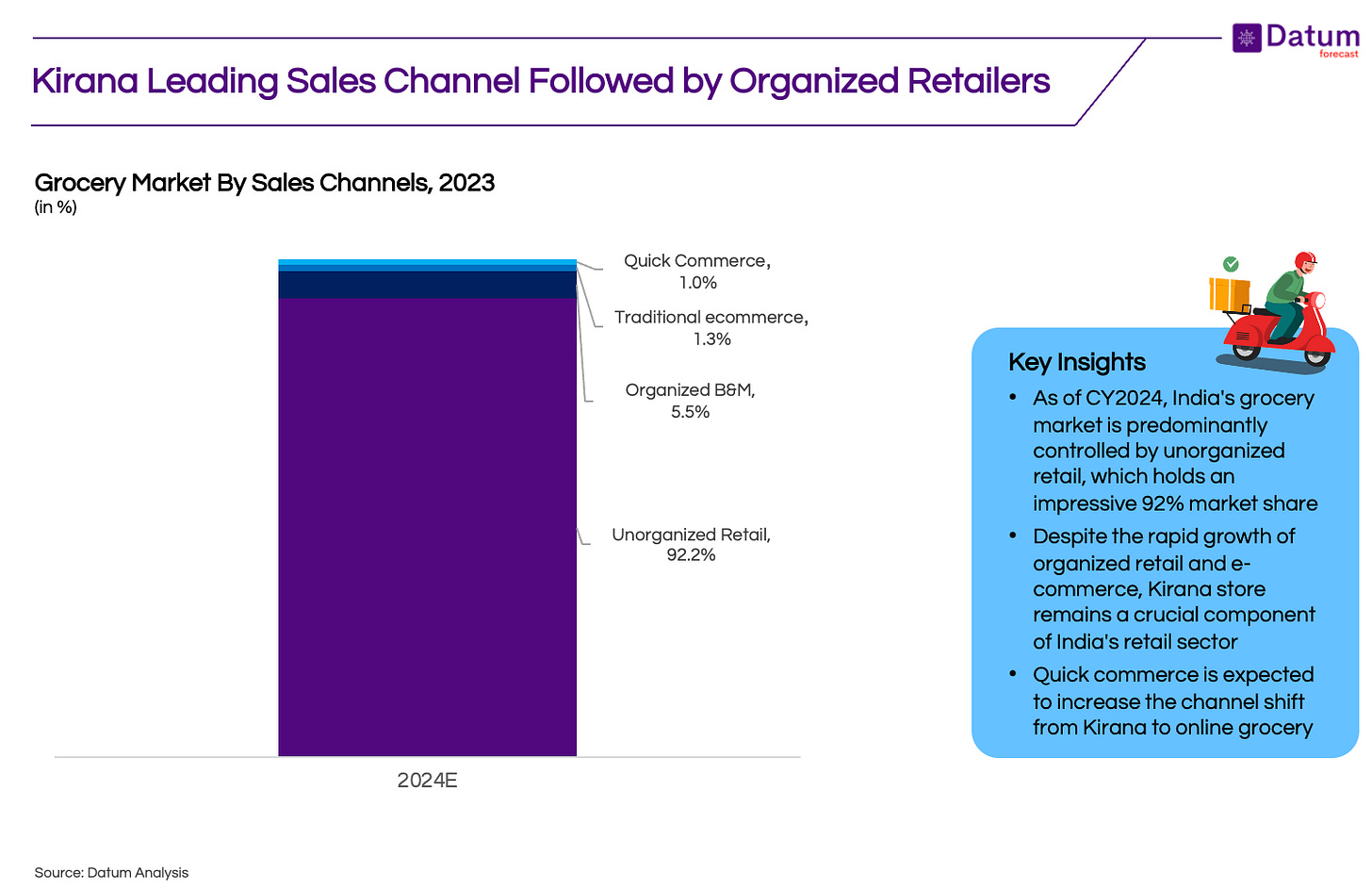
Of course, the good old kirana still runs the show, commanding nearly 70–80% of retail sales outside metros. These stores thrive on trust, familiarity, and that timeless promise of “baad mein de dena.”
But beyond the metros, modern trade and e-commerce lose steam. Grocery apps don’t deliver here, and the ten-minute promise doesn’t work when the nearest warehouse is fifty kilometres away. What people want isn’t lightning-fast delivery, it’s reliability. A store close by, stocked well, priced fairly, and run by someone who remembers their name.
That’s where the real retail revolution is happening, not in malls, but in mandis.
Today, Tier-3 and smaller towns make up nearly 38% of India’s online transactions, but the bigger story lies offline. And sitting right in the middle of this ₹600-billion grocery market, where organized players still reach less than 5% of consumers, is the opportunity of a lifetime; the one SuperK decided to seize.
The Business Model
For years, India’s 13 million kirana stores have quietly kept the country fed. But behind those counters of biscuit jars and rice sacks, shopkeepers were fighting a losing battle, thin margins, unreliable suppliers, and almost zero bargaining power. In fact, a retailer in Kadapa or Anantapur often paid more for a packet of atta than a supermarket in Hyderabad.
That’s where the idea for SuperK began to take shape.
Anil Thontepu and Neeraj Menta, two BITS Pilani alumni and second-time entrepreneurs, saw the pattern clearly. India didn’t need another urban supermarket. What it needed was a way to give its small-town kiranas the same muscle as big-city chains, better prices, smarter tech, and reliable supply, without losing the personal touch that made them special in the first place.
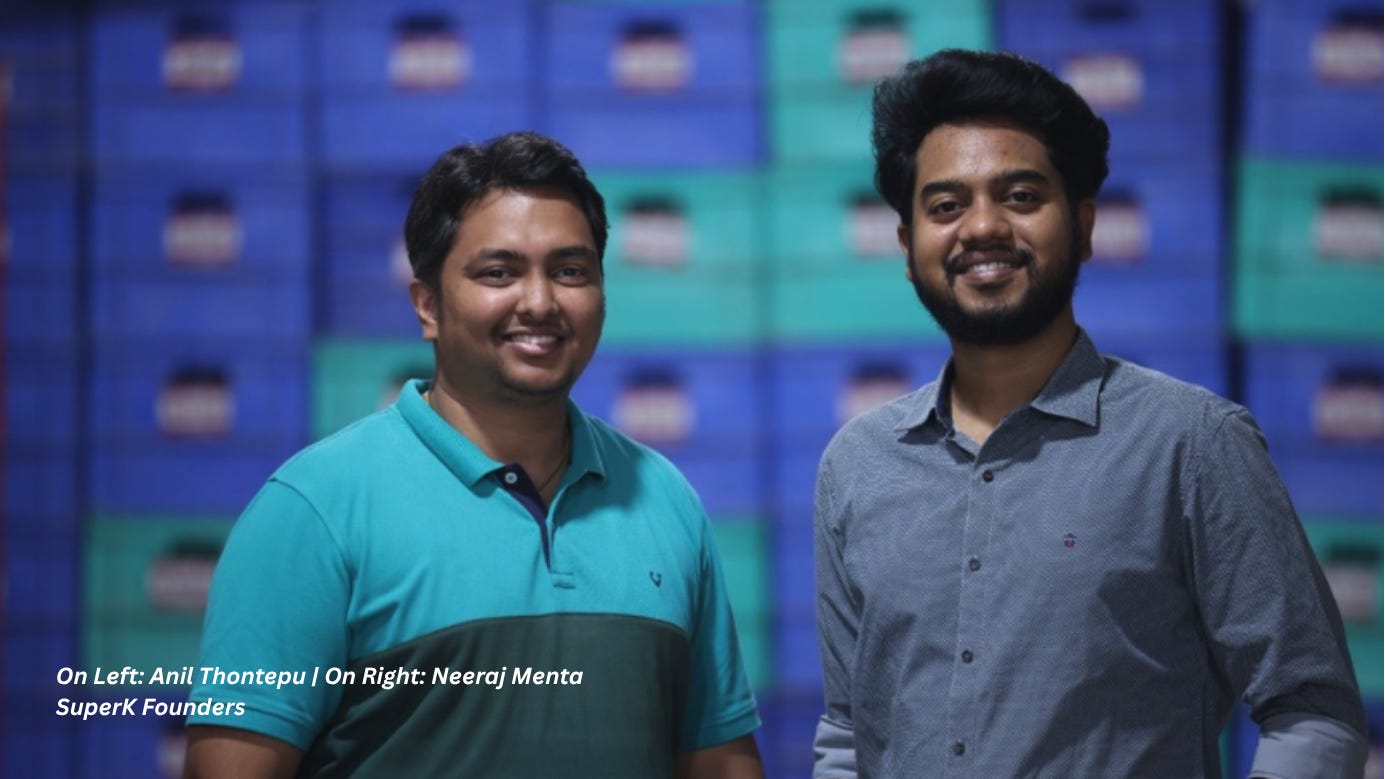
So, in 2019, they decided to test their hunch. Not in Bengaluru or Hyderabad, but right in Kadapa. The plan was simple: build a store that looked like a supermarket, priced like a kirana, and ran like clockwork.
When the first SuperK store opened its doors, people were curious. Some thought it was a big corporate chain; others assumed prices would be high. But once they stepped inside, the surprise was immediate with clean aisles, clear pricing, and shelves stocked with everything from Maggi to mops, all at familiar kirana prices. Word spread fast. Within weeks, SuperK became the talk of Kadapa’s lanes.
But the real innovation wasn’t in how the store looked, it was in who ran it.
Instead of hiring managers from cities, SuperK handed the reins to local entrepreneurs: people from the very community they served. It followed a “Franchise Owned, Franchise Operated” (FOFO) model where locals owned and ran their stores while SuperK handled procurement, tech, and backend systems.
What is “Franchise Owned, Franchise Operated”?
In a FOFO model, local entrepreneurs own and run the store themselves, while the parent company provides everything behind the scenes from supply and branding to technology and training.
It’s a partnership model where the company builds the system, and the franchisee brings local trust and ownership.
The company trained every partner to manage inventory, use POS systems, and make sense of sales data. For the first time, small-town shopkeepers could see what was selling, when it was selling, and how to restock smartly; insights usually reserved for metro supermarkets.
But more than data, SuperK gave them dignity. Many of these entrepreneurs had run mom-and-pop stores before; just without structure, consistency, or brand power. Now, they had all three.
And it didn’t start with an app or a dashboard, it started with trust. The founders didn’t just pitch a business model; they sat with families, answered every doubt, and made one promise: “You’ll never run out of stock or support.”
That human-first approach became SuperK’s real superpower.
Now, here’s where SuperK truly stands apart from the big guys. DMart and other organized chains work on a capital-heavy model: buying land, building stores, and managing everything from a corporate HQ. That works in metros, not in middle India. SuperK flipped that idea on its head. It didn’t want to own the market; it wanted to enable it.
As co-founder Anil Thontepu puts it, “We’re not here to replace kiranas; we’re here to upgrade them.” So while DMart is about scale and control, SuperK is about inclusion and participation. In short, DMart built retail from the top down. SuperK is building it from the ground up with one neighbourhood and one entrepreneur at a time.
Once the grocery aisles started running smoothly, SuperK began rethinking what went on the shelves. In smaller towns, most shoppers were used to buying grains and pulses loose: weighed out, bagged, and taken home without a second thought. SuperK didn’t want to change that habit; it just wanted to make it better.
So SuperK introduced its own range of private labels like SuperK, Triputi, and Aha; each designed to solve a real problem that small-town shoppers face: inconsistency. The rice, flour, or oil you buy in one store should feel exactly the same in another. These neatly packed, quality-assured staples don’t just stay fresh longer; they standardize trust.
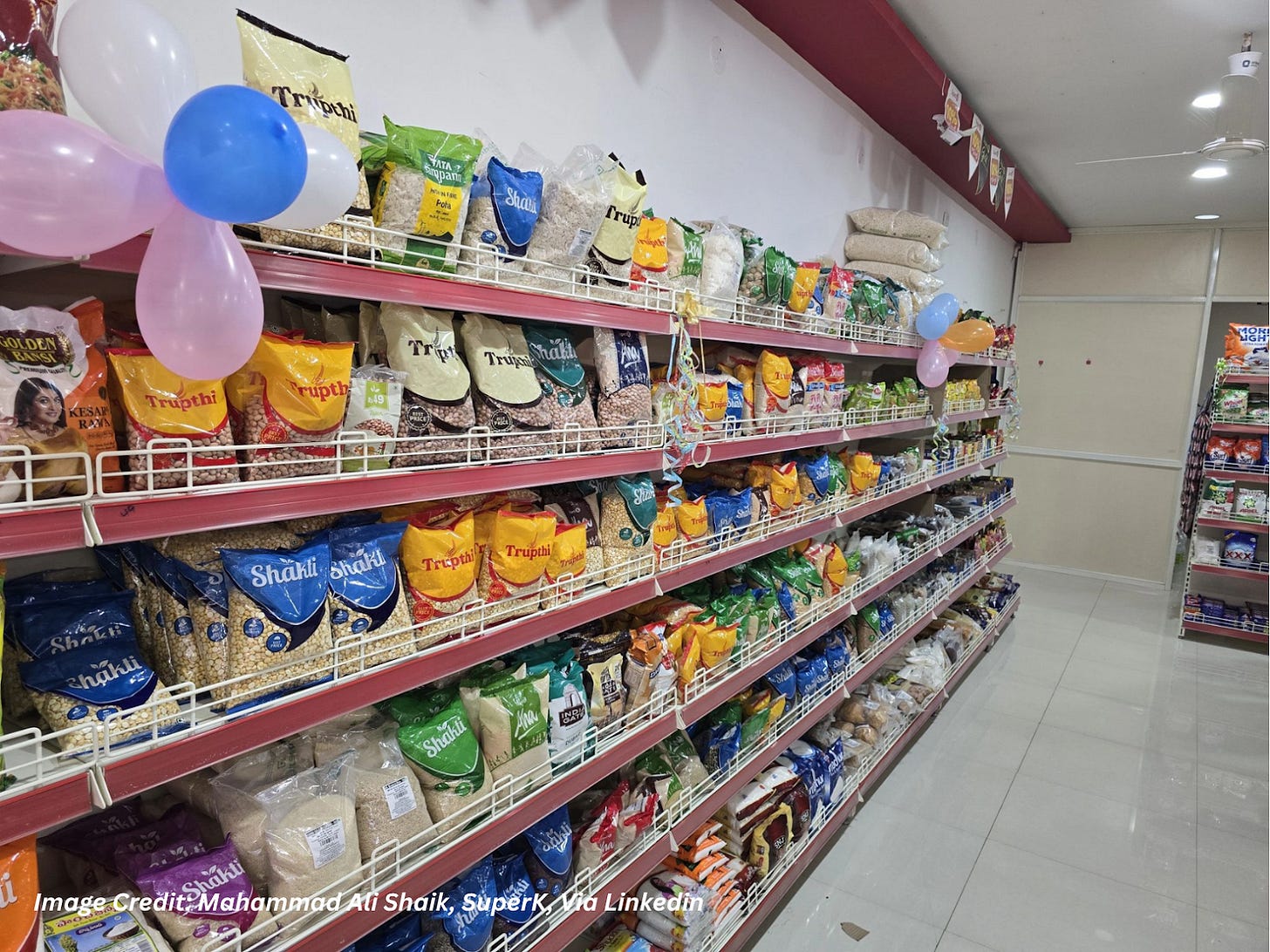
And here’s the interesting bit; in India, private labels are still an underdog story. They account for less than 10% of total retail sales today, compared to 40% for Costco’s Kirkland in the US and nearly 50% for Aldi and Lidl in the UK. Which means there’s massive headroom for growth; especially in value retail.
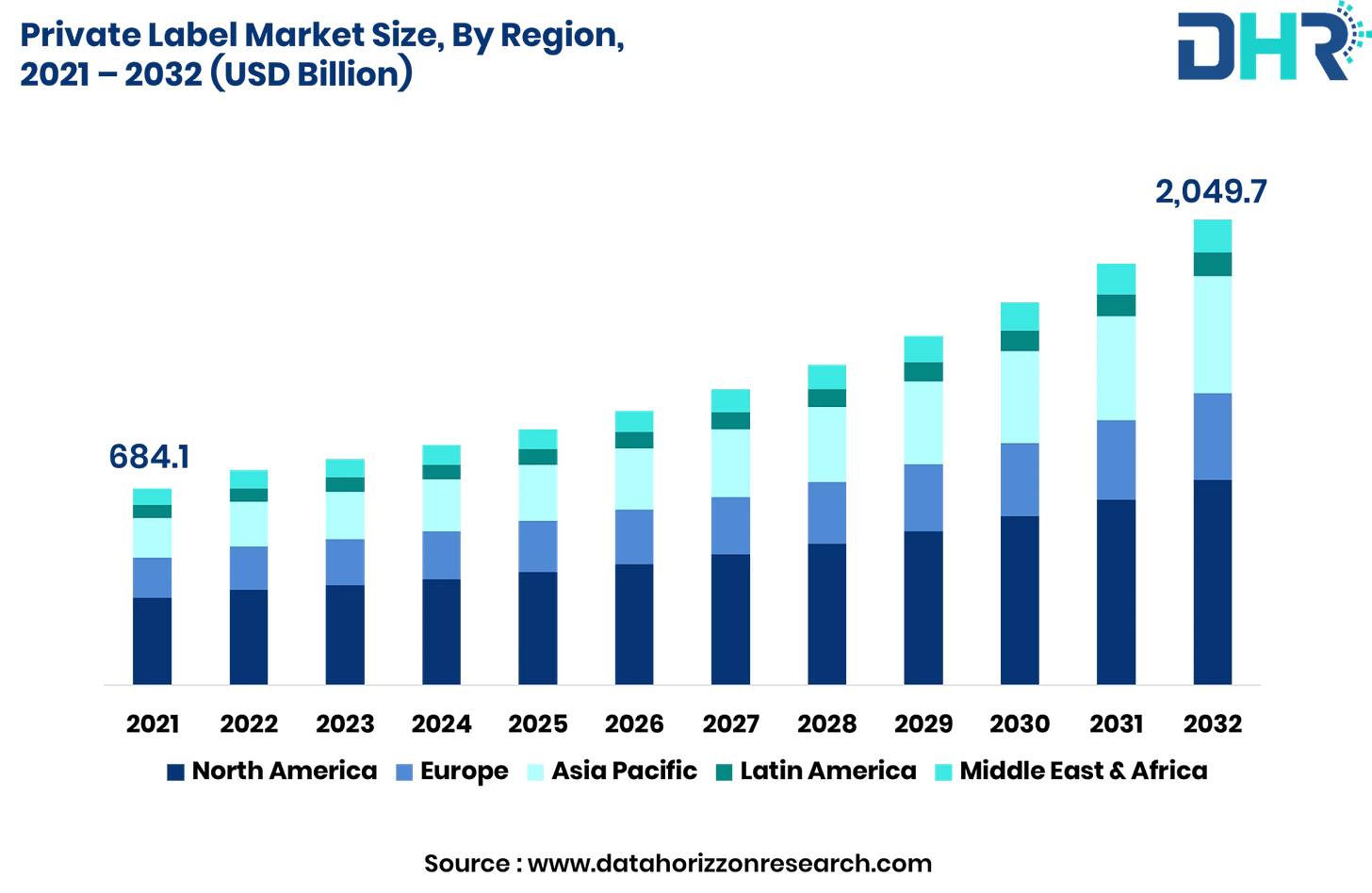
SuperK saw that gap as a bridge. By owning both the product and the shelf, it could control quality, pricing, and margins while keeping the experience local. So when someone in Kadapa picks up a Triputi pack or an Aha snack, they’re not just buying cheaper but better, from a brand that feels like it belongs to their town.
As the shelves filled with dependable staples, SuperK naturally grew beyond groceries.
Soon came snacks, fresh vegetables, cleaning products, footwear, and small home appliances, the kind people prefer buying face-to-face. Recently, it even added a bakery section, offering fresh bread and buns to locals. In small towns, trust is a safety net. If something goes wrong, customers want someone they can talk to, not a chatbot or a helpline.
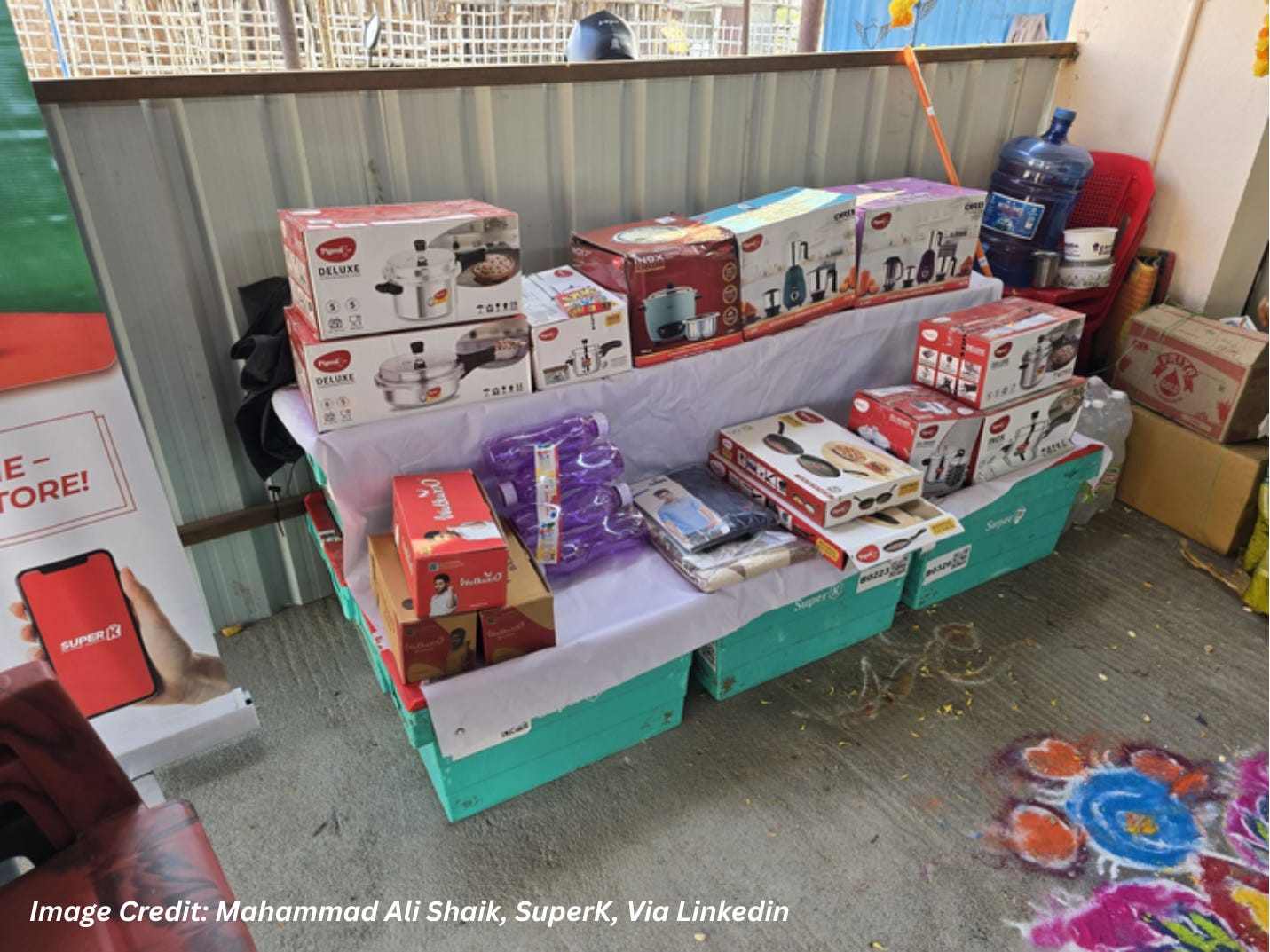
That hyperlocal trust soon turned into momentum. From a single store in 2019, SuperK now runs over 130 franchise-format outlets across 80 towns, mostly in Andhra Pradesh, and it’s expanding fast into Telangana, Karnataka, and parts of Eastern India. With fresh funding in hand, the goal is to enter 300 new towns and scale up to 400–500 stores in the next couple of years.
Some of these will be larger, 3,000 sq. ft. pilot stores designed to host shop-in-shop tie-ups with partner brands like mini-malls for middle India, where you can pick up groceries, test a new mixer grinder, and grab a cupcake on your way out.
Raising Money
If there’s one thing investors love, it’s spotting scale before everyone else does. And SuperK seems to have mastered that knack, of quietly building in Bharat while getting Bengaluru to notice.
Its funding journey reads like a timeline of conviction.
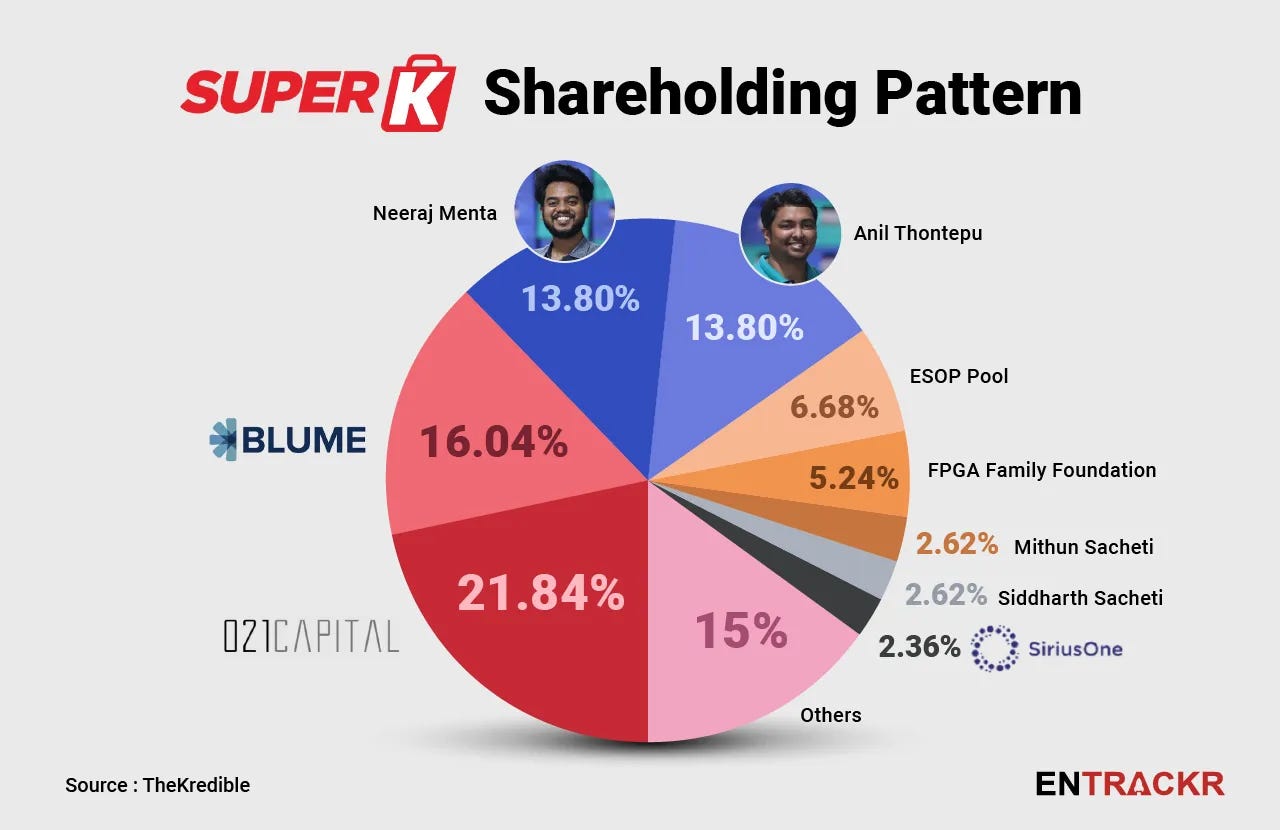
It began modestly in 2019 with seed backing from First Cheque, followed by Strive VC’s ₹6 crore in 2021. Then came $5.5 million (₹45 crore) from 021 Capital, along with early believers like Saikiran Krishnamurthy, Ankit Nagori, and Ashish Kacholia in 2022.
By 2023–24, Blume Ventures, Xeed Ventures, and STRIVE returned for another ₹16 crore, marking SuperK’s transition from pilot to powerhouse.
And in July 2025, came the headline round; ₹100 crore ($11.5 million) in Series B, led by 3STATE Ventures (Binny Bansal), Mithun Sacheti of CaratLane, and yes, cricketer Shubman Gill.
When a Flipkart co-founder, a jewellery entrepreneur, and India’s star opener all invest in your grocery chain, you know you’re doing something right.
In total, SuperK has raised ₹198 crore (~$24 million) and it’s putting that money exactly where it matters: into tech, brand building, and people.
At its core, SuperK proves modern retail doesn’t need noise to be revolutionary.
It’s not chasing disruption. It’s perfecting something that already works and making it better. For customers, it’s clean stores and fair prices. For shop owners, it’s training and technology without losing independence. It’s a modern trade with a local soul.
In a startup world obsessed with hype, SuperK is refreshingly ordinary and that’s what makes it powerful. Because building in Bharat isn’t about scale or speed. It’s about trust. From one store in Kadapa to hundreds across the South, SuperK has built what many startups only talk about: consistency, community, and credibility. It didn’t chase valuation. It earned validation from customers who came back the next day.
And somewhere between the sound of billing scanners and rustling grocery bags, you can almost hear it; the quiet promise that small-town India deserves great retail too.
Your weekend watch 📺
We sat down with SuperK’s founder to see how the next big retail story is unfolding in small towns.
This story is part of our new on-ground series where we cover India’s hottest businesses.
If you liked this read, the video brings it to life.
If you’ve made it this far, thanks for reading. We’ll be back next week, like clockwork.
Got a company, sector, or story you think we should dig into? Hit reply and tell us.
If we pick your suggestion, we’ll send some Filter Coffee merch your way.
Coffee Crew out.