

 Newsletter
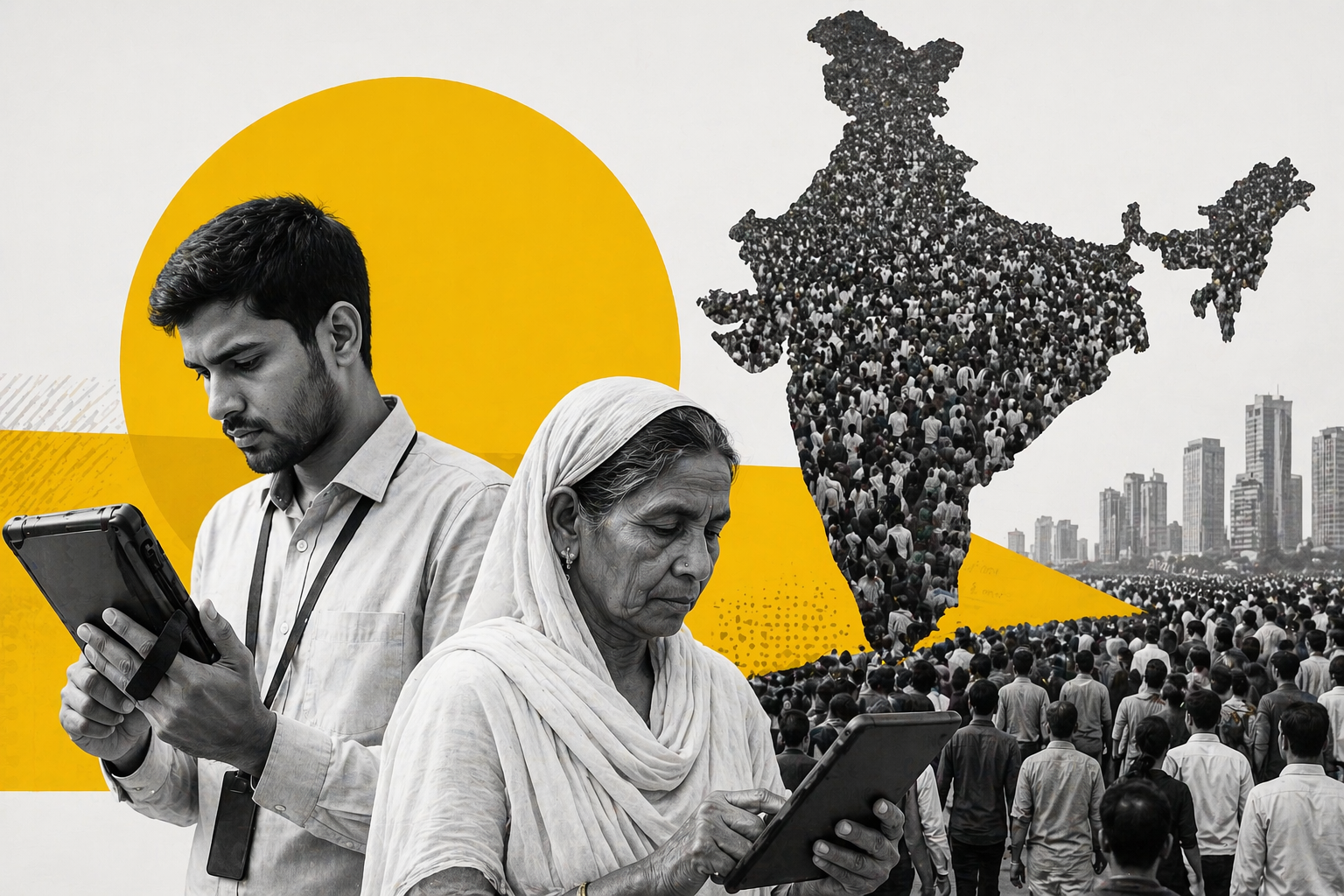
For something most of us barely think about, India’s census is back. After a gap of more than a decade, the government has officially kicked off Census 2027, with the first phase already rolling out in 2026.
It is India’s first fully digital census, it comes with a price tag of ₹11,718 crore, and it is expected to count over 1.4 billion people across the country.
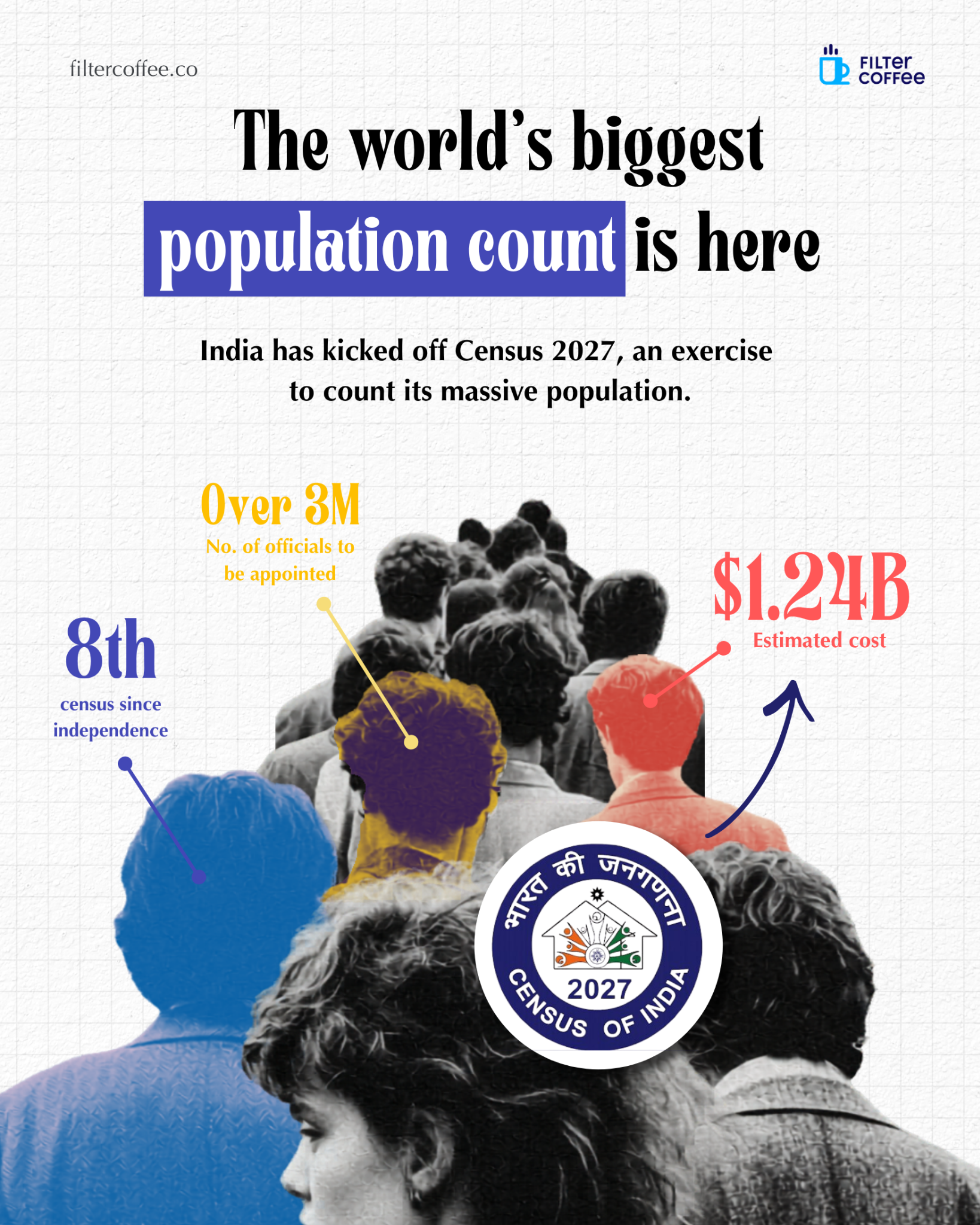
Let’s begin at the beginning!
India has been conducting a census every ten years since 1872 in some form, and since Independence it has maintained a strict decadal cycle.
> A census is the systematic, official procedure of collecting, compiling, and analyzing demographic, economic, and social data about every person in a country or region at a specific time.
The last full census was conducted in 2011. The next one was due in 2021, but COVID disrupted everything. Preparations had already started, fieldwork planning was in place, and then the entire exercise was paused.
This ten-year update stretched into a fifteen-year gap. And it is not trivial because a census is the backbone of how governments understand population trends, plan welfare schemes, design cities, and allocate resources.
Over the last few years, while the census remained delayed, India kept running on 2011 data.
Pause for a moment and consider this.
A country that has added tens of millions of people, experienced large-scale migration, urbanization, digital adoption, and economic change has continued to rely on data that is more than a decade old.
Policymakers have had to fill in the gaps using surveys and estimates, but nothing replaces a full census in terms of granularity.
Now fast forward to the present.
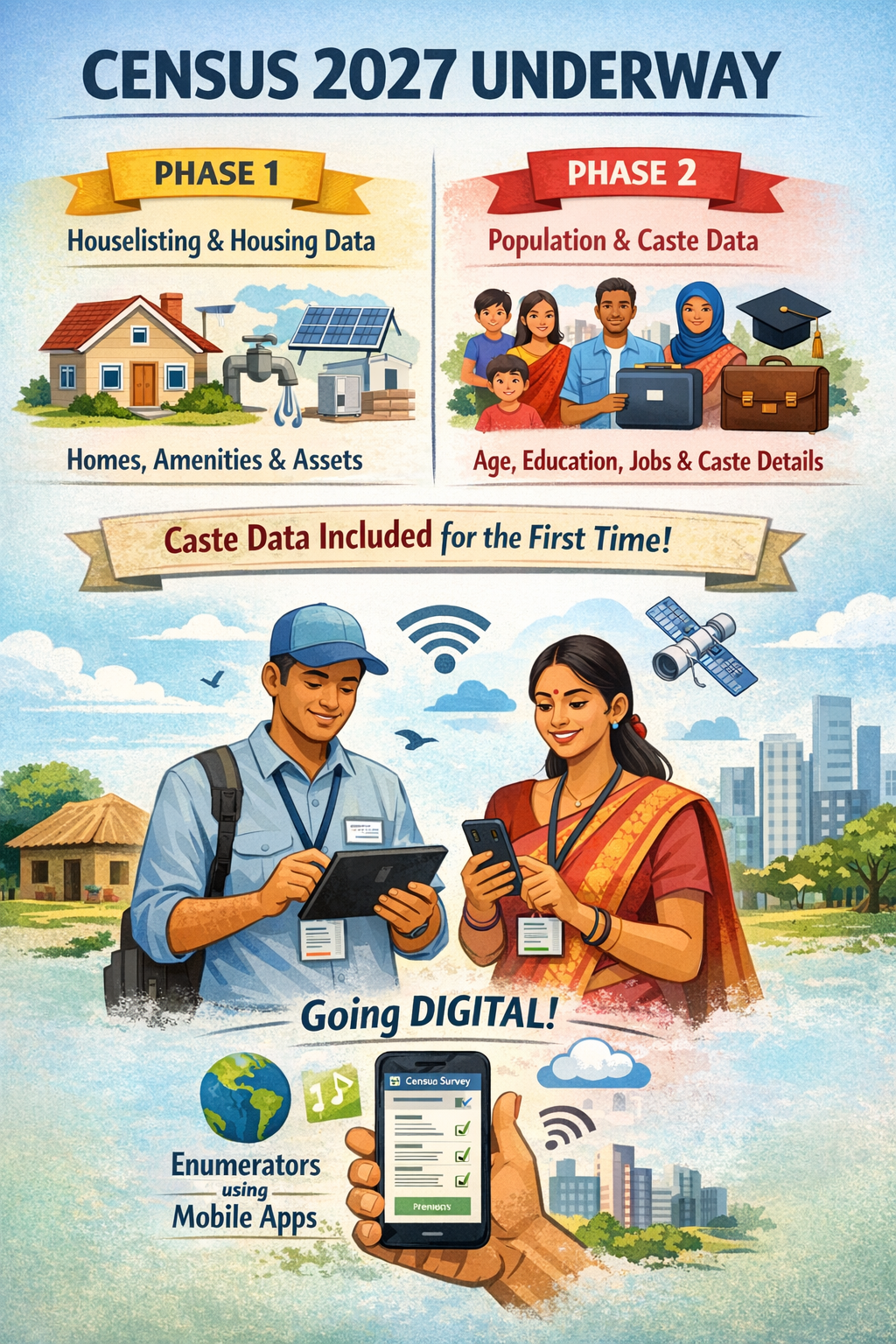
Census 2027 is finally underway, and it is being executed in two phases.
The first phase focuses on houselisting and housing conditions, capturing details about homes, amenities, and assets.
The second phase, scheduled for early 2027, will focus on population data such as age, education, jobs, migration, and more.
For the first time, caste data will also be included in this phase, adding a layer of complexity and significance that has not been seen in decades.
But the biggest visible shift is the move to digital.
Enumerators will use mobile apps instead of paper forms. Citizens will have the option to self-enumerate through an online portal available in multiple languages. Data will be uploaded in real time and monitored through a central system.
But the spending patterns suggest otherwise, with most of the money going into operations rather than infrastructure.
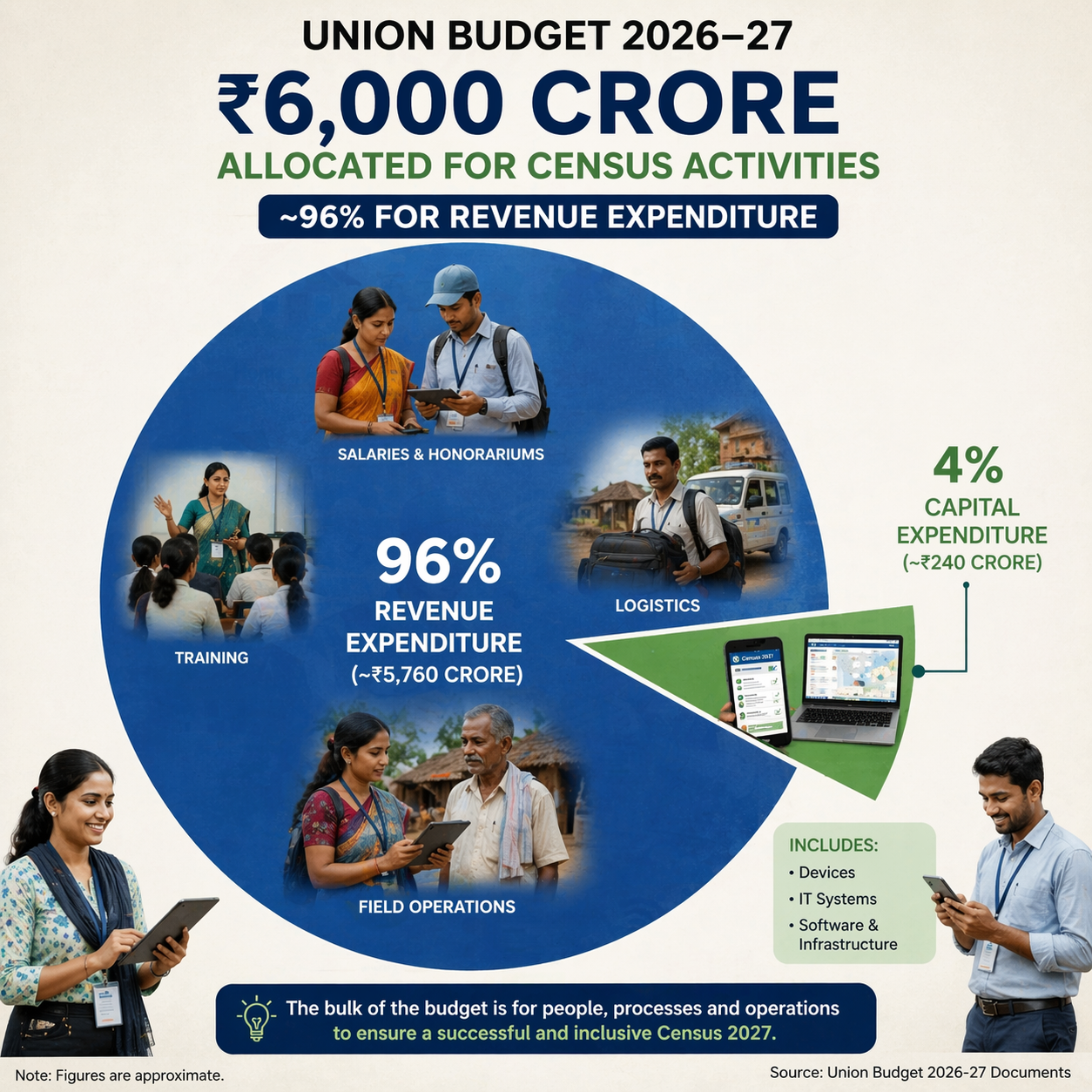
In the Union Budget for 2026-27, about ₹6,000 crore has been allocated for census activities, and roughly 96% of this is revenue expenditure.
That means the bulk of the money is going toward salaries, honorariums, training, logistics, and field operations. Only a small fraction is being spent on capital items like devices and systems. Census is not expensive because of technology but because of the scale.
The government plans to deploy nearly 30 lakh field functionaries who will go door to door, verify data, and ensure coverage across every corner of the country. Supporting them is a smaller but critical pool of around 18,000 technical personnel who will keep the digital systems running.
Altogether, this translates into over 1 crore man-days of work.
So what really changed is not the nature of the census, but how authorities execute it.
Earlier, the process involved printing millions of paper forms, transporting them, storing them, and then scanning and digitising them after collection.
Now, data is captured digitally at the source, which eliminates several layers of post-processing. This can potentially reduce errors, speed up data availability, and cut certain logistics costs.
But why now?
Part of the answer lies in necessity. The long delay created pressure to modernise the system rather than simply restart it.
At the same time, India’s digital infrastructure has matured significantly over the past decade. With widespread smartphone usage, better connectivity, and experience from large-scale digital platforms, the ecosystem is now ready to support something like a digital census.
But there are downsides too.
Digital systems come with risks around data security and privacy. Not everyone is comfortable with or has access to digital tools, which means the system must still rely heavily on manual verification.
Training such a large workforce to use new technology is not easy and can lead to inconsistencies. And then there is the added complexity of sensitive data like caste, which increases both operational and political stakes.
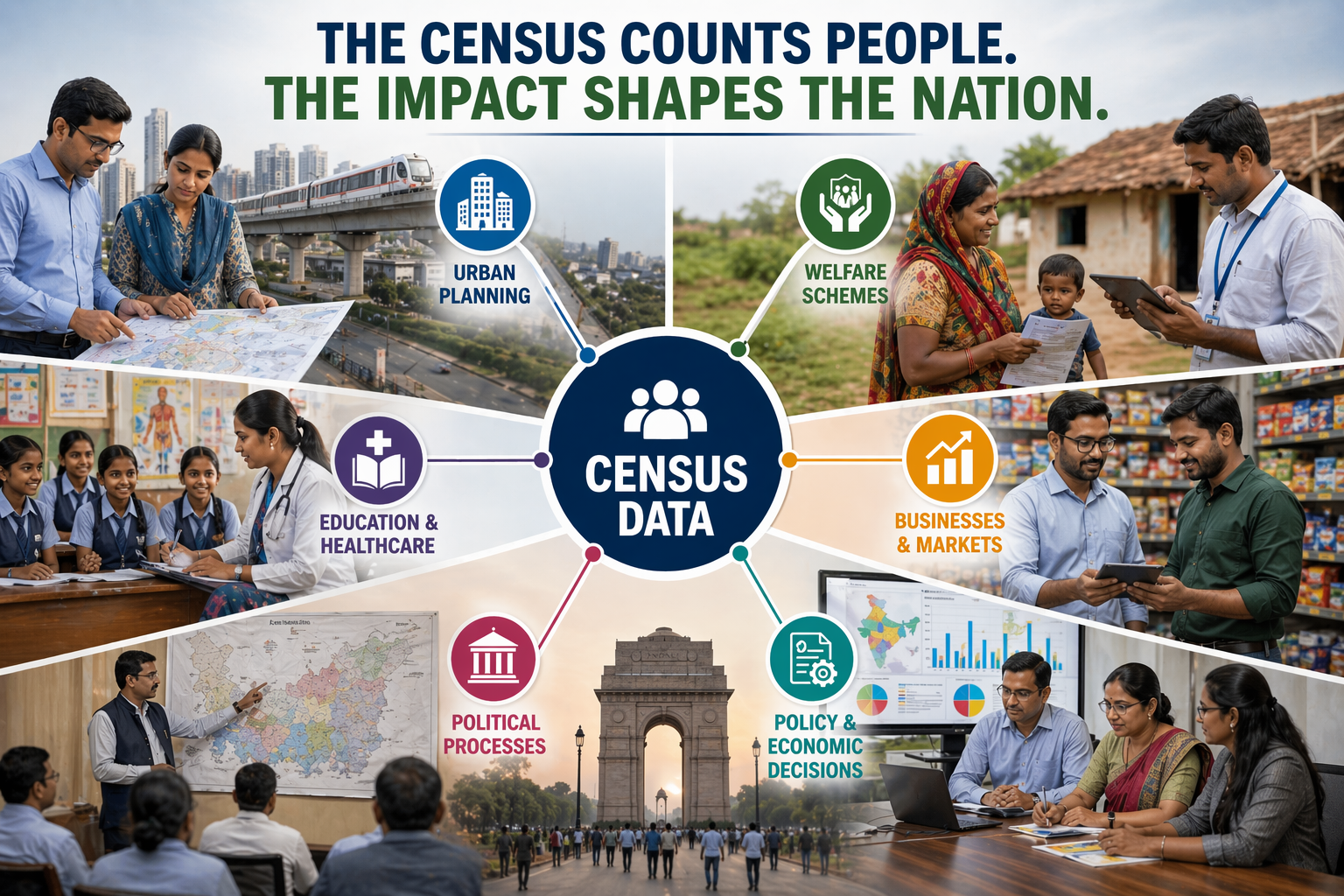
The impact of the census goes far beyond just counting people.
The data collected feeds into a wide range of sectors. Urban planning depends on accurate population distribution to design infrastructure. Welfare schemes rely on demographic data to identify beneficiaries.
Education and healthcare planning use census data to allocate resources. Businesses use it to understand markets and consumer behavior. Even political processes such as constituency delimitation are influenced by census numbers.
In other words, the census is the foundation on which a large part of the country’s policy and economic decisions are built.
Looking ahead, Census 2027 is as much a test of execution as it is of design.
Early reports suggest that lakhs of households have already participated through self-enumeration, and field operations are active across several states.
The real challenge will be maintaining consistency, accuracy, and coverage at such a massive scale. If the digital systems hold up and the field operations run smoothly, India could end up with one of the most detailed and timely population datasets in its history.
And that would have long-term implications. Better data can lead to better policy. Faster insights can improve decision-making. And a successful digital census could become the blueprint for how large-scale data collection is done in the future.
In the end, Census 2027 is not just about answering how many people live in India. It is about understanding who they are, how they live, and what they need.
And in a country as vast and diverse as India, that understanding is essential.