
 Newsletter
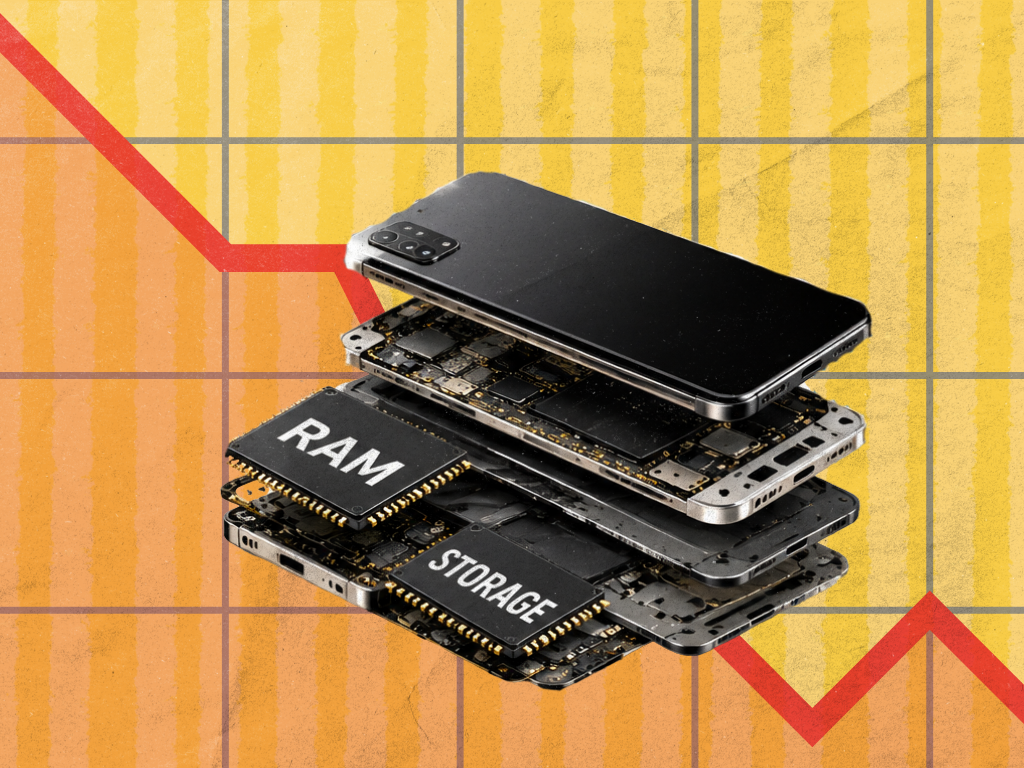
Last year, Microsoft sold its 13-inch Surface Laptop for $900 with 16GB of RAM. This year, the base model costs $950 and comes with 8GB.
You pay more. You get half the memory.
Microsoft is hardly alone. Framework raised the price of one Laptop 13 Pro configuration from $2,099 to $2,899. A 32GB Crucial DDR5 RAM kit that sold for around $90 during Prime Day in July 2025 was listed at roughly $459 a year later. Even older DDR4 memory, the kind that should normally become cheaper as technology moves ahead, has shot up in price.
There is an unexpected culprit behind all of this: AI.

The companies building massive AI data centres need huge amounts of memory. Nvidia’s AI processors depend on high-bandwidth memory, or HBM, which can move enormous quantities of data very quickly. AI servers also need conventional server memory and storage. As Microsoft, Google, Meta, OpenAI and others pour money into computing infrastructure, they are placing orders that consumer electronics companies simply cannot match in scale.
And RAM is not the only component getting squeezed.
NAND flash, the technology used for storage inside smartphones and SSDs, is under pressure too. TrendForce (a global market intelligence and research firm) expects NAND contract prices to rise another 10-15% in the third quarter of 2026, with AI servers and data centres driving demand for enterprise storage. So both parts of a phone that determine how much it can remember and store are becoming more expensive at the same time.
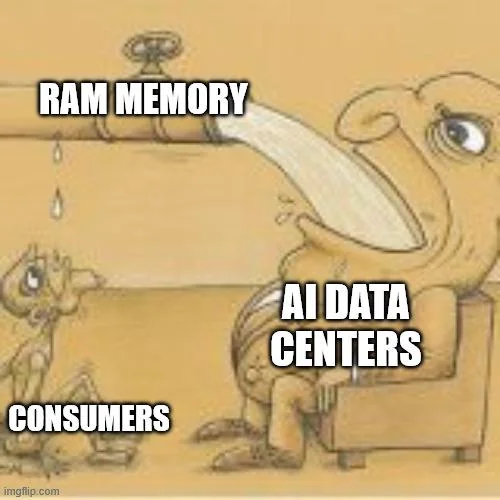
That has created a competition. Your next phone is not literally fighting ChatGPT for a RAM stick, but both ultimately depend on a memory industry controlled by a small group of manufacturers.
Samsung, SK hynix and Micron dominate global DRAM production. And right now, selling memory into AI infrastructure is a much better business than supplying cheap consumer electronics.
The shift is already visible in the decisions these companies are making. Micron, for instance, decided to wind down Crucial, its well-known consumer RAM and SSD brand, and focus more of its resources on larger strategic customers and faster-growing enterprise markets.
For anyone who has built a PC, Crucial disappearing is a pretty strange moment. Memory companies used to fight for consumers buying an extra RAM stick for their desktop. AI has created customers valuable enough for one of the biggest manufacturers to walk away from that business.
And the supply squeeze could get worse.
DRAM is volatile working memory used in phones, PCs and servers. HBM is a specialised, very high-bandwidth DRAM package used with AI accelerators. NAND Flash is non-volatile storage used in SSDs and phones.
DigiTimes reported in August that Samsung, SK hynix and Micron had already allocated their DRAM and HBM production capacity for 2027. Buyers are reportedly signing supply agreements lasting three to five years and paying deposits in advance simply to secure future capacity. Industry estimates suggest HBM and AI-server applications could account for close to 70% of DRAM production capacity next year.
This cannot be fixed by telling Samsung to make a few more chips.
Building a memory fab takes years. Once the factory exists, manufacturers still need to install equipment, perfect manufacturing processes and increase production without destroying yields. Samsung and Micron do not expect the shortage to ease quickly either. Both have warned that memory supply could remain tight through 2027 and into 2028.
Until that capacity arrives, electronics companies have a few choices. They can charge more. They can absorb the additional cost and accept lower margins. Or they can give customers less hardware.
We are already seeing the third option.
Microsoft’s cheaper Surface now ships with 8GB instead of 16GB. Framework has changed configurations after sharply higher memory costs. PC manufacturers are revisiting older platforms. Even 4GB graphics cards have started appearing again.
This is an odd reversal for an industry that spent years convincing buyers that every upgrade should bring more RAM, more storage and better specifications.
Smartphones are beginning to split along the same lines. Omdia says manufacturers are freezing or cutting RAM and storage configurations in cheaper and mid-range devices to control costs, while premium phones are still getting upgrades. In other words, someone buying an expensive phone can continue getting more memory every generation, while buyers at the cheaper end may increasingly pay more simply to get roughly what they had before.
And India could feel that reversal particularly hard.
India now manufactures more than 99% of the smartphones sold in the country. But manufacturing a phone here does not mean every important component is made here. The memory sitting inside a smartphone still comes from a highly concentrated global supply chain.
So a data centre being built for AI thousands of kilometres away can eventually change the economics of a phone assembled in Noida.
You can already see stress at the cheapest end of India's smartphone market.
IDC data reported by Mint shows that Indian smartphone shipments fell 11.1% year-on-year to 33.2 million units in the April-June quarter of 2026. Phones costing below $100, roughly ₹10,000, saw shipments collapse 74.3%.
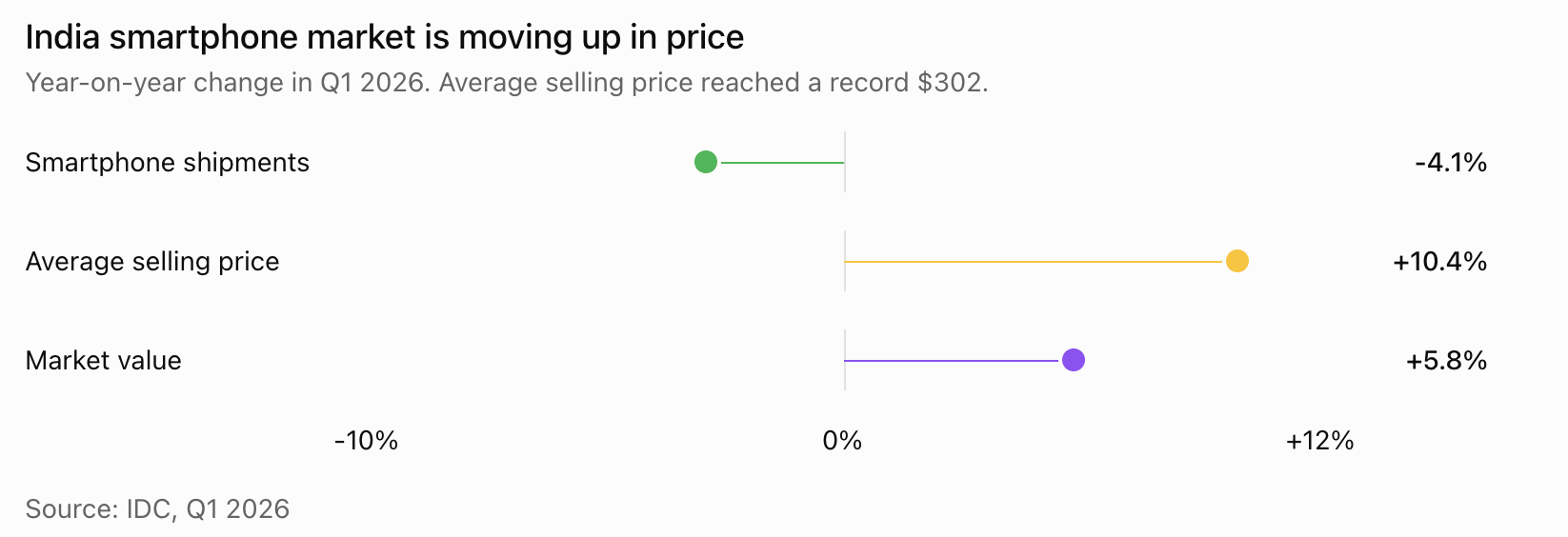
And the market was already becoming more expensive before that. IDC says the average selling price of a smartphone in India reached a record $302 in the January-March quarter, up 10.4% from a year earlier.
Shipments fell 4.1% during the same period, yet the overall value of smartphones sold grew 5.8%. India was effectively spending more money on fewer phones. IDC directly linked part of that shift to persistent memory cost inflation.
Memory prices are not solely responsible. Demand has weakened, brands have been moving towards costlier phones, and the industry's product mix has been changing for some time. But expensive RAM makes the cheapest phones particularly difficult to keep cheap.
Consider the economics of a ₹1 lakh smartphone and a ₹10,000 smartphone.
If higher memory and storage costs add ₹2,000 to the cost of the premium device, its maker has room to adjust. It can raise the price, offer a slightly smaller discount or absorb part of the hit through its margin.
Put the same additional pressure on a ₹10,000 phone and you can wreck the entire product.
Omdia estimates that memory accounted for nearly 60% of the total bill of materials, or component cost, of smartphones priced below $400 in the first quarter of 2026. For phones below $99, the share exceeded 64% (analyst estimate). And because the cheapest phones already have very little room to cut costs elsewhere, manufacturers cannot easily offset a jump in RAM and storage prices by saving a little on the camera or display.
That creates an awkward situation for companies such as Xiaomi, Realme, Vivo and Oppo.
These brands helped shape the modern Indian smartphone market by promising ridiculous amounts of hardware for the price. A slightly better camera here, another 2GB of RAM there, twice the storage next year. It became normal for ₹15,000 phones to offer specifications that would have belonged to much more expensive devices a few years earlier.
Now those economics are moving backwards.
In the June quarter, Vivo's shipments fell 13% year-on-year, Realme's 14.2%, Xiaomi's 10% and Oppo's 8.5%, according to IDC figures. Samsung's shipments remained broadly flat but its market share increased to 16.4%, while Apple reached 8%.
It would be too neat to credit those shifts entirely to RAM. Chinese smartphone brands were already trimming low-margin models and trying to sell more expensive devices. Financing is also reducing the monthly cost gap between price bands.
The AI boom is often discussed through chatbots, billion-dollar funding rounds and enormous data centres. But somebody has to manufacture the physical hardware underneath all that software. When AI companies consume an increasing share of the world's memory supply, the cost eventually travels down the chain.