

 Newsletter


Rediff, one of India's earliest internet companies, is preparing for a comeback on the stock market. The company has filed updated papers to raise ₹600 crore through an IPO, nearly 26 years after its Nasdaq debut in 2000.
And its journey has been quite something. Rediff was once valued at over $600 million, eventually lost its early dominance, and voluntarily delisted from Nasdaq in 2016. In 2024, Infibeam Avenues acquired a 54% stake for ₹25 crore. Now, just two years later, Rediff is preparing to list on Indian stock exchanges.
But the company returning to the market looks very different from the one that introduced millions of Indians to email and online news.
To understand that transformation, we need to go back to when the internet itself was new to India.
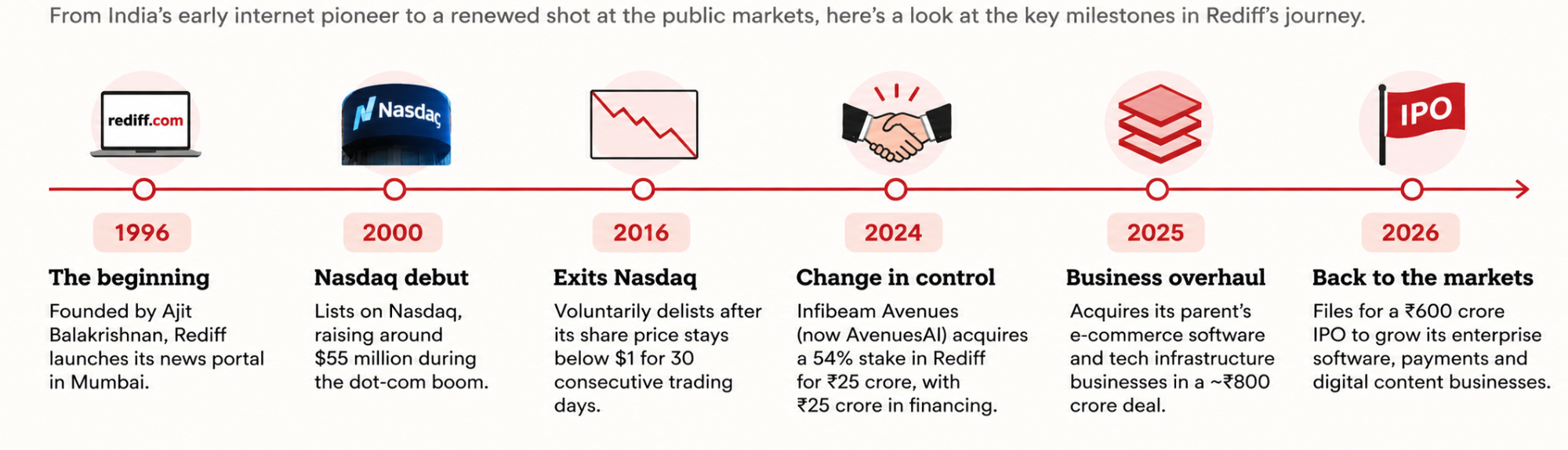
Rediff was founded by Ajit Balakrishnan in 1996, around the time India was beginning to get commercial internet access. Balakrishnan, who had co-founded advertising agency Rediffusion, saw an opportunity to bring Indian news, entertainment and communication services online.
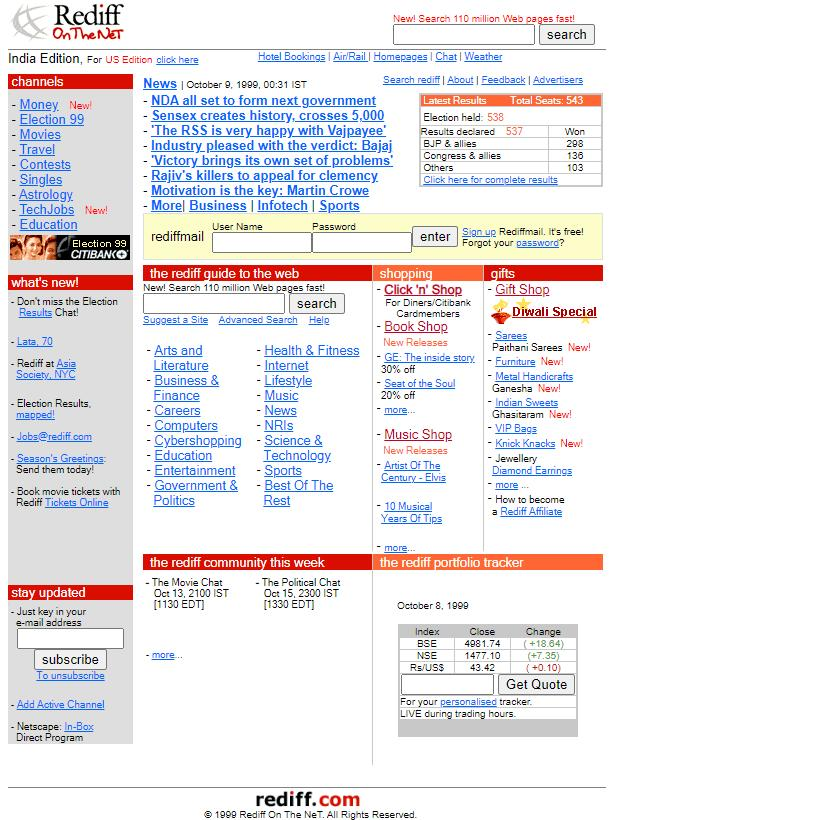
Image Credit: rediff.com
At the time, finding Indian news on the internet wasn't particularly easy, especially for Indians living abroad. Rediff offered them a place to read news, follow cricket, check stock markets and eventually access email, chatrooms and online shopping.
It became one of India's most recognisable internet brands. And in June 2000, Rediff made history by becoming one of the first Indian internet companies to list on Nasdaq, raising approximately $55 million before the underwriters exercised their additional share option.
It was a remarkable time, because the dot-com boom had convinced investors that the internet would transform businesses, and Rediff was among the few Indian companies participating in that excitement.
But being early to the internet didn't guarantee staying ahead.
By the early 2000s, the internet was becoming increasingly competitive. Google was gaining popularity as a search engine, and in 2004, it launched Gmail, giving users another alternative to services like Rediffmail.
Then came Facebook, which began gaining popularity in India in the late 2000s. People increasingly turned to social media to connect, share content and discover information, rather than relying on traditional internet portals.
Rediff continued offering news, email and other services, but its digital advertising business struggled as competition increased. The company was also reporting losses, and its stock price had been declining.
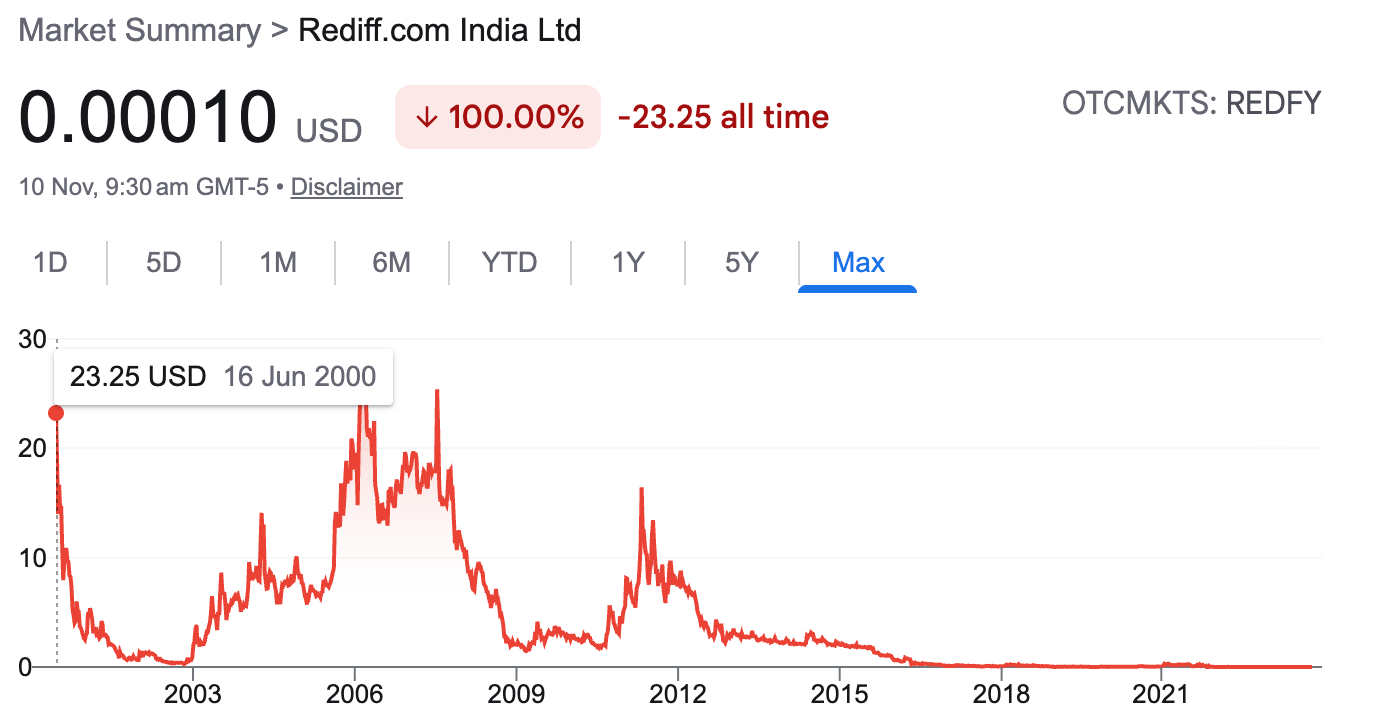
Image Credit: Google Finance
By February 2016, things had become serious. Rediff's Nasdaq-listed shares had closed below $1 for 30 consecutive trading days, violating the exchange's minimum share-price requirement. On 3 February, Nasdaq issued a warning, giving the company 180 days to regain compliance.
Rediff had until 1 August 2016 to bring its share price back to at least $1 for 10 consecutive trading days. But maintaining its US listing was already becoming expensive for a financially struggling company.
Rather than continue trying to meet Nasdaq's requirements, Rediff announced its decision to voluntarily delist in April 2016, citing the high cost of regulatory compliance and financial reporting.
Rediff continued operating, but the company that had once represented India's internet ambitions was no longer a leading player.
Between 2016 and 2024, the company continued operating under Balakrishnan, running Rediffmail, its news website and financial information services. It also provided email and cloud-based services to businesses.
And it still had a sizable audience. By 2024, Rediff was attracting over 55 million website visits a month, while more than 5,000 companies used its email services.
But financially, things weren't going particularly well. In FY24, Rediff generated just ₹36 crore in revenue and recorded a loss of around ₹6 crore. Years of accumulated losses had left its net worth negative, and its auditors noted that the company relied on continued financial support from its founder.
Then came an unexpected change in ownership.
In August 2024, Infibeam Avenues, now called AvenuesAI, acquired a controlling 54% stake in Rediff for ₹25 crore, alongside a separate ₹25 crore financing component.
For perspective, Rediff had commanded a valuation exceeding $600 million during its Nasdaq years. Now, a majority stake was changing hands for a fraction of that historical value.
Rediff’s 30-year journey
Infibeam, however, wasn't simply buying an old internet brand. It already operated payment infrastructure and e-commerce technology businesses. Rediff brought an established name, email users and business customers that could potentially use those services.
Under Vishal Mehta's leadership, Rediff began repositioning itself around enterprise software, payments and digital content.
Its newer offerings include Rediff One, which combines business email and productivity tools; Rediff Pay, which is entering UPI payments; and Rediff TV, a digital video platform. It also operates Rediff Commerce, alongside its existing news and email services.
And the financial numbers have changed considerably.
In FY26, Rediff's revenue jumped from ₹37.2 crore to ₹133.6 crore, an increase of nearly 259%. Its net profit rose from ₹5.9 crore to ₹56 crore.
Those are impressive numbers. But there's an important detail behind this growth.
In 2025, Rediff acquired its parent company's e-commerce software business and technology infrastructure assets in a transaction worth approximately ₹800 crore. This brought additional operations and assets into Rediff, making its latest financial results difficult to compare directly with the older business.
The restructuring also came with more debt. Rediff's borrowings rose from ₹7.7 crore in FY25 to approximately ₹399 crore by June 2026.
So while the company has become profitable, the turnaround cannot be attributed entirely to Rediffmail, news or its newer digital products attracting more customers.
That brings us to the proposed IPO. According to its latest prospectus, Rediff plans to spend approximately ₹225 crore developing Rediff One, Rediff Pay and Rediff TV. Another ₹183 crore is earmarked for marketing and branding over two years.
That marketing budget alone is larger than Rediff's entire FY26 revenue.
It's an ambitious investment for a company trying to establish itself in markets where Microsoft, Google, PhonePe, Google Pay and several other established players already operate.
And Rediff's newer products are still developing their commercial track records. Spending on technology and marketing doesn't automatically translate into paying customers.
The IPO itself will consist entirely of fresh shares, meaning the proceeds will go to the company rather than existing shareholders selling their holdings. Its final valuation, issue dates and price band are yet to be announced.
Rediff's story is therefore a combination of two very different journeys. The first is about an Indian internet pioneer that couldn't maintain its advantage as the industry evolved. The second is about a new owner trying to build a modern technology business using that company's brand, customers and acquired assets.
Whether this becomes a successful comeback will depend on how much sustainable business Rediff can build from here, particularly in enterprise software and payments.
For a company that helped introduce India to the internet, its next chapter will be about finding a meaningful place in an internet economy that has grown far beyond it.