

 Newsletter

India’s second-home story just quietly levelled up.
Over the past few months, multiple real estate developers, hospitality-linked platforms, and property consultancies have been reporting a shift. Demand is rising, prices are holding firm, rental yields are improving, and more importantly, the way people are buying second homes has fundamentally changed. What used to be a “nice-to-have” vacation purchase is now being evaluated like a serious financial asset.
Let’s start with what’s happening right now.
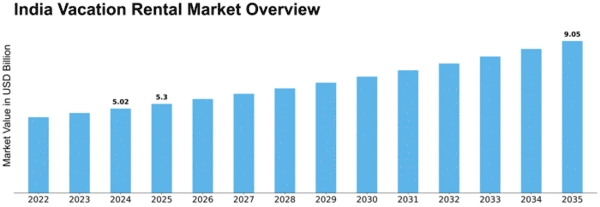
Across key leisure markets like Goa, Alibaug, Lonavala, Coorg and Rishikesh, developers are seeing sustained demand even as primary housing in metros shows mixed signals. Industry estimates suggest India’s second-home market is on track to touch roughly $4 billion in value in 2026, growing at over 20% annually.
And this demand is not just coming from the ultra-rich anymore. Yes, high-net-worth individuals still dominate, and roughly a third of their wealth is already parked in residential real estate, including second homes. But now, upper-middle-class buyers are entering the market too, pulled in by a mix of lifestyle aspirations and the promise of returns.
But why are people suddenly treating second homes like investments?
Because the math has changed.
Earlier, owning a holiday home meant locking up capital in a property that sat empty most of the year while still demanding maintenance, security, and upkeep. Basically, an expensive liability dressed up as a lifestyle choice.
Now enter short-term rental platforms and managed property services.
In hotspots like Goa or Lonavala, short-term rentals can generate yields between 5% and 9%, and in peak tourist seasons, even higher. Some reports suggest that on a per-day basis, short-term rentals can earn up to five times more than traditional long-term leases. That completely flips the economics. The house is no longer idle. It’s working.
And that’s exactly why a new category has exploded. Managed second homes.
Developers and startups are now offering properties bundled with hospitality-style services. Think housekeeping, maintenance, tenant management, and even dynamic pricing for rentals, all handled by a third party. Buyers essentially get a plug-and-play asset. You own the house, but someone else runs it like a business.
This has two direct outcomes. One, ownership friction drops. No more worrying about leaky pipes or finding tenants. Two, income becomes more predictable. Your holiday home starts behaving a bit like a semi-passive income generator.
Not surprisingly, this has also started reflecting in how companies operating in this space are positioning themselves. Rental operators are building inventory specifically designed for dual use, part personal retreat, part revenue-generating unit. Developers are also increasingly tying up with hospitality brands to sell “branded residences,” which promise hotel-like experiences inside privately owned homes.
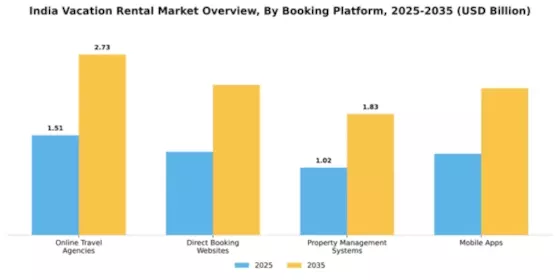
So when a developer today reports strong bookings in a leisure project, it’s not just because people want a beach view. It’s because buyers are underwriting that purchase with expected rental yields.
But demand alone doesn’t tell the full story. You also need to look at where this demand is going.
The geography is expanding, but not randomly.
The West region, especially areas around Mumbai and Pune like Alibaug, Karjat and Lonavala, accounts for nearly half of the market. That’s not a coincidence. Connectivity is the biggest driver here. New highways, expressways, and better last-mile infrastructure have made weekend travel far easier. If you can leave Mumbai on a Friday evening and reach your villa in under three hours, the property suddenly becomes far more usable.
The same pattern is playing out elsewhere. Delhi buyers are moving towards Rishikesh and Dehradun. Bengaluru buyers are exploring Coorg and Ooty. Even the Northeast is seeing early traction as connectivity improves.
This is also why established markets like Goa continue to dominate. It already ticks all the boxes. Strong air connectivity, mature tourism ecosystem, high rental demand, and social infrastructure like healthcare and dining. For a buyer thinking in financial terms, that reduces risk.
Usage patterns are also changing.
Second homes are no longer just for long weekends or annual vacations. With hybrid work becoming normal, people are using these homes for extended stays. Some are even treating them as secondary residences. That increases occupancy, which again improves the economics.
But let’s not pretend this is a perfect story.
There are real challenges.
First, regulation and compliance can get messy, especially with short-term rentals. Different states have different rules, and enforcement is not always clear. Second, not every location guarantees high occupancy. A scenic but poorly connected property might struggle to attract renters. Third, oversupply is a genuine risk. If too many similar villas hit the market in one micro-location, rental yields can quickly compress.
And then there’s pricing. In popular markets, property prices have already seen significant appreciation. That means entry costs are high, and future returns depend heavily on sustained demand.
Developers know this, which is why they are focusing on differentiation. Better design, curated experiences, wellness-focused amenities, and tighter integration with hospitality services. The idea is simple. If the property stands out, it can command better rentals and maintain occupancy.
Now step back and look at the bigger picture.
What we’re really seeing is the financialization of a lifestyle product.
Second homes are moving from being emotional purchases to calculated bets. Buyers are asking sharper questions. What’s the yield? What’s the occupancy rate? How liquid is the market? What’s the long-term appreciation potential?
At the same time, developers and service providers are building an ecosystem that supports this thinking. Managed services, rental platforms, branded residences, and better infrastructure are all feeding into the same loop.
So when you hear that a developer has sold out a villa project in Alibaug or a platform has expanded its managed inventory in Goa, it’s not just a real estate story. It’s a signal that a new asset class is quietly taking shape.
And if the current trajectory holds, the second home in India won’t just be where you escape the city.
It will be where your money quietly works while you’re not there.