

 Newsletter

GitHub has started charging many developers based on how much AI they actually use instead of offering effectively unlimited access. Anthropic has also been moving business customers towards usage-based billing for some of its AI services, and OpenAI has repeatedly hinted that the future of AI pricing could look more like electricity or water, where you pay for what you consume.
It may sound like a small pricing tweak, but it marks the end of one of the biggest experiments in the AI boom: convincing everyone that using more AI was always better.
For nearly two years, Silicon Valley wanted people to use AI as much as possible. Companies bought ChatGPT subscriptions for employees. Software firms bundled AI into their products. Developers were encouraged to let AI write code, analyse documents, answer emails and automate repetitive work.
Some companies even tracked how many AI tokens employees consumed, turning usage into an internal performance metric. The trend became known as "tokenmaxxing", where the goal was simple: use as much AI as possible because more tokens supposedly meant more productivity.
That philosophy is now running into reality.
Let’s first understand what a token actually is.
AI models do not read words the way humans do. They break text into smaller units called tokens. Every prompt you type, every document you upload and every word an AI model generates consumes tokens. The longer and more complex the task, the more tokens it burns. A simple email may consume only a few thousand tokens, while asking an AI coding agent to analyse an entire software repository, debug errors and write new code over several hours can consume millions.
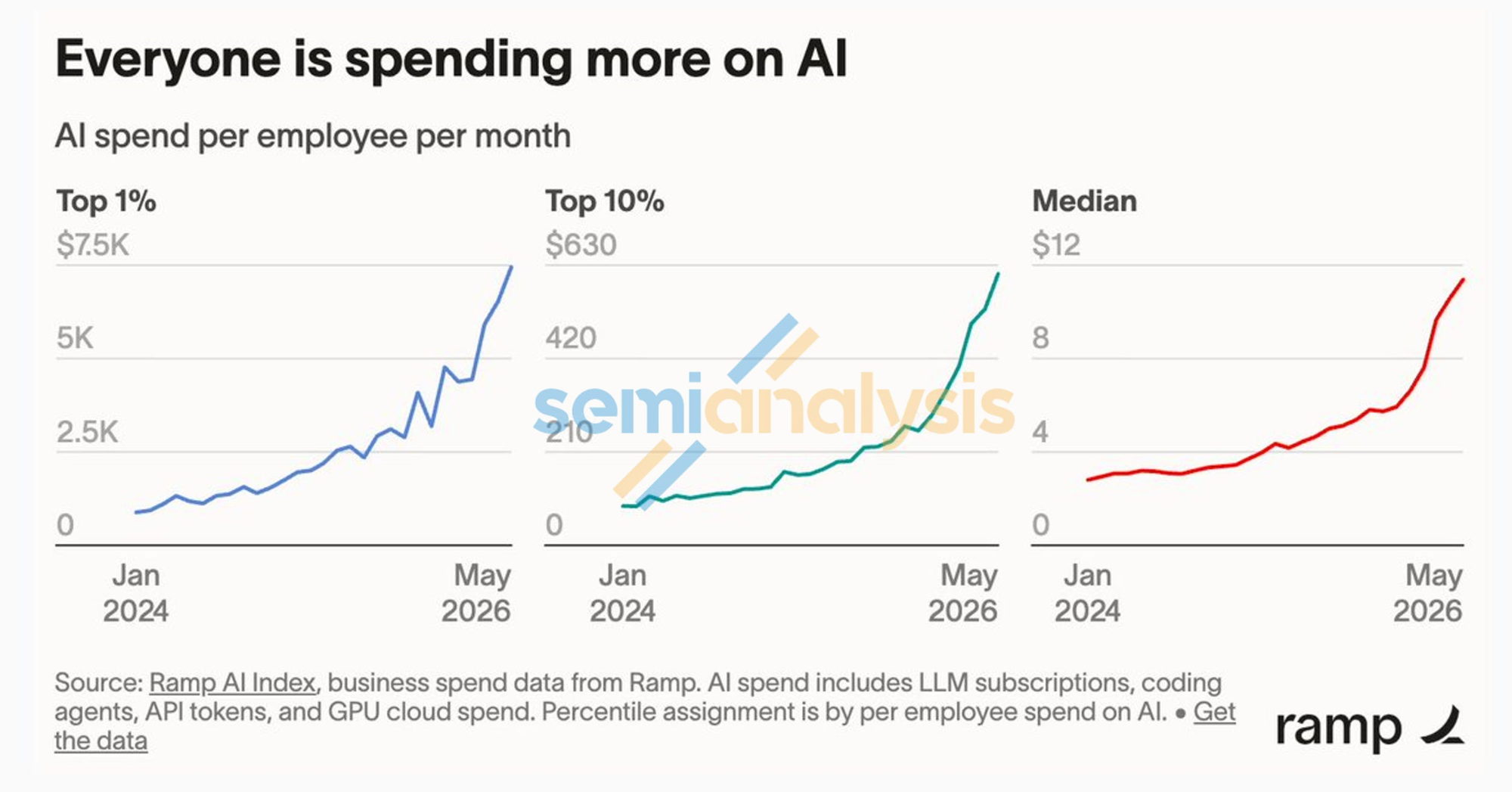
During the early days of generative AI, this wasn't a problem. Companies like OpenAI and Anthropic were focused on acquiring users rather than making profits. ChatGPT launched its Plus subscription at $20 per month in 2023, offering generous usage limits that made AI feel almost unlimited. Enterprise plans followed the same idea. Businesses paid a fixed monthly fee for each employee, regardless of whether that employee used AI once a week or ran dozens of AI agents throughout the day.
That model worked because very few people were pushing AI to its limits. Then the technology changed.
Late 2025 and early 2026 saw the rise of reasoning models and autonomous AI agents. Unlike a chatbot that simply answers one question, an AI agent can keep working for hours. It can browse files, search the web, write code, fix bugs, revise documents and repeatedly call the underlying AI model until the task is complete. Every one of those actions consumes more tokens. Suddenly, a single employee could generate computing costs that were hundreds of times higher than what companies had originally budgeted for.
Many organisations embraced this shift enthusiastically. Some even created internal leaderboards ranking employees by token usage, believing that people who consumed more AI were getting more work done. The logic sounded reasonable until finance teams looked at the bills.
Companies soon realised that high token usage did not always translate into higher productivity. Some employees began running AI agents on unnecessary tasks simply because usage itself had become a target. Economists often refer to this as Goodhart's Law: once a measure becomes a target, it stops being a useful measure. Token usage had become exactly that.
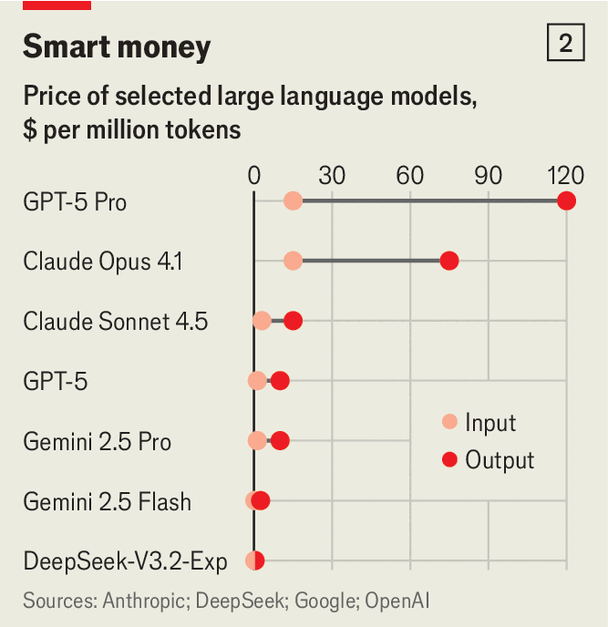
The costs were becoming impossible to ignore. GitHub acknowledged that under its old pricing model, a developer asking one quick coding question paid exactly the same as someone running an autonomous coding agent for several hours. The company said this was no longer sustainable and introduced a system of AI credits, where usage is billed based on actual consumption. Anthropic has adopted a similar direction for its managed agents, charging businesses not only for tokens but also ₹6.9 (about $0.08) for every active session hour an AI agent runs. OpenAI executives have gone even further, saying they increasingly see intelligence becoming a utility, much like electricity, where customers pay for what they consume instead of receiving unlimited access.
This reflects a much bigger problem facing the AI industry. Building frontier AI models is one of the most expensive businesses in the world. Companies are collectively spending hundreds of billions of dollars on Nvidia chips, data centres, electricity and top AI researchers. While subscription revenues have grown rapidly, expenses have grown even faster. Investors are now demanding something they were willing to overlook during the AI race: profitability.
That pressure is becoming visible in the data.
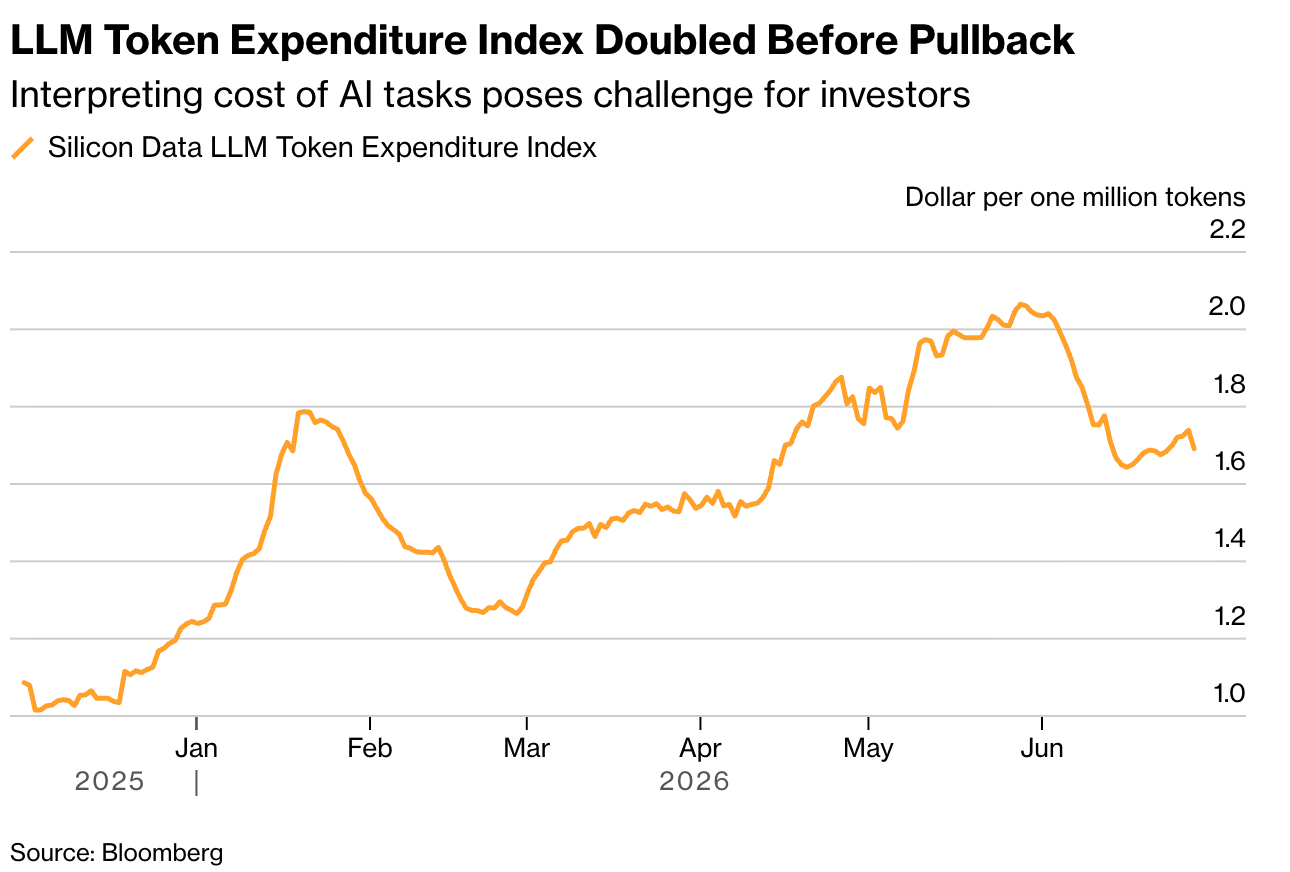
Bloomberg reported that the Silicon Data LLM Token Expenditure Index, which tracks what customers pay for AI token usage, has fallen nearly 20% from its peak in May. The decline does not necessarily mean AI is becoming cheaper.
It could mean businesses are shifting towards more affordable models or becoming less willing to pay premium prices for every task. Either way, it suggests customers are becoming more price sensitive just as AI companies are trying to justify enormous infrastructure investments.
Another report from Allianz Research highlights why investors are watching closely. It estimates there is now a 46% gap between AI investment and AI-related sales, wider than the 32% divergence seen during the telecom boom before the 2001 crash. That does not mean AI is heading for a similar collapse, but it does underline how much future revenue the industry still needs to generate to justify today's spending.
The response from businesses has been equally revealing. Uber reportedly capped spending on certain AI coding tools. Walmart limited employee usage of internal AI assistants. Instead of asking employees to maximise tokens, companies are now asking a different question: what is the cheapest model that can get this job done?
That change has given rise to another trend called "modelmaxxing". Instead of sending every request to the most powerful and expensive AI model, businesses are beginning to route simple tasks to smaller and cheaper models while reserving premium models only for difficult work such as advanced coding or complex reasoning.
Entire startups are now being built around model routing software that automatically decides which AI model should handle each request, reducing costs without significantly affecting quality.
This shift may matter even more in India than in Silicon Valley. India has become one of the world's fastest-growing AI markets. OpenAI recently said the country has more than 100 million weekly ChatGPT users, while Anthropic says India contributes about 5.8% of global Claude usage, second only to the United States. More importantly, Indian users rely on AI differently. Anthropic's India Economic Index found that nearly half of Claude usage in India comes from computer programming and mathematical work, both of which are among the most token-intensive AI tasks.
Indian enterprises are also moving faster than many global peers. Deloitte's latest State of AI report says 40% of Indian companies have achieved significant or full AI adoption, compared with a global average of 28%. The country leads in deploying AI across product development, strategy, marketing and supply chain functions. At the same time, Indian businesses have always been known for squeezing maximum value out of every rupee spent. That combination makes India an ideal testing ground for the next phase of enterprise AI.
Instead of abandoning AI, Indian companies are likely to become early adopters of cost optimisation. They may increasingly combine frontier models like GPT-5.5 or Claude with cheaper open-source alternatives such as DeepSeek, Qwen or Llama, depending on the complexity of each task. As AI spending grows, managing token budgets could become just as important as managing cloud infrastructure or software licences.
In many ways, tokenmaxxing was never meant to last. It served its purpose by accelerating AI adoption and teaching millions of people how to work with these tools. But once businesses started measuring returns instead of excitement, unlimited usage stopped making financial sense.
The AI industry is now entering a more mature phase where success will not be measured by how many tokens are consumed, but by how much business value each token creates. That may not sound as exciting as the early days of the AI race, but it is probably the shift that determines whether today's AI boom becomes a sustainable business or simply another expensive technology cycle.