

 Newsletter

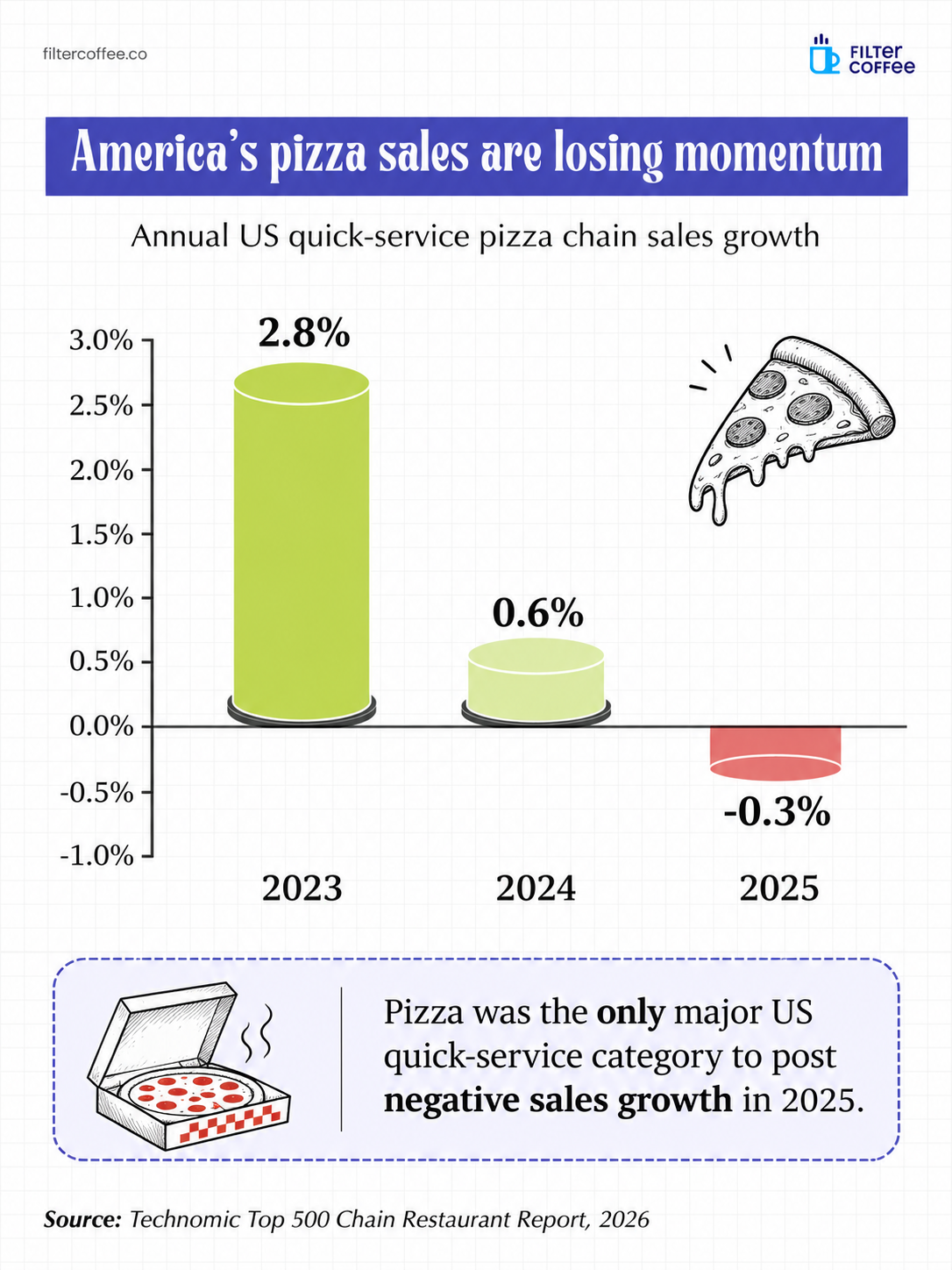
Pizza was the only major quick-service restaurant category in the US to record a decline in sales in 2025. Sales fell by 0.3%, following growth of 0.6% in 2024 and 2.8% in 2023. Six of America's ten largest quick-service pizza chains recorded a decline in sales last year.
The slowdown has been building for a while. The number of pizzerias in the US has fallen by more than 9,600 from its peak of 83,035 in August 2019. And in September this year, Yum! Brands, the parent company of KFC and Taco Bell, completed the sale of its global Pizza Hut business through two transactions worth a combined $2.7 billion.
So, what's happening to America's favourite delivery food?
A large part of pizza's commercial success came from convenience. It was relatively affordable, could feed an entire family and travelled well in a cardboard box. At a time when most restaurants expected customers to visit them, pizza chains built entire businesses around bringing food to people's homes.
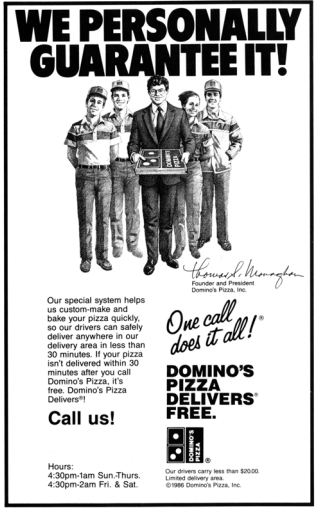
Domino's, for instance, introduced its famous 30-minute delivery guarantee in the US in the 1970s. It helped turn pizza into a dependable option for everything from family dinners to late-night cravings.
The arrival of platforms like DoorDash and Uber Eats gradually weakened that advantage. A restaurant selling burgers, tacos or sushi no longer needed its own delivery fleet to reach customers at home. The platforms took care of everything from accepting orders to arranging deliveries.
Pizza chains were suddenly competing with hundreds of restaurants for the same dinner order.
The pandemic temporarily worked in their favour. With dining rooms shut and families spending more time at home, pizza was particularly well suited to the circumstances. But as restaurants reopened, consumers had more choices again, while rising living costs put additional pressure on discretionary spending.
And more recently, America's pizza business has found itself dealing with an unlikely competitor: weight-loss medication.
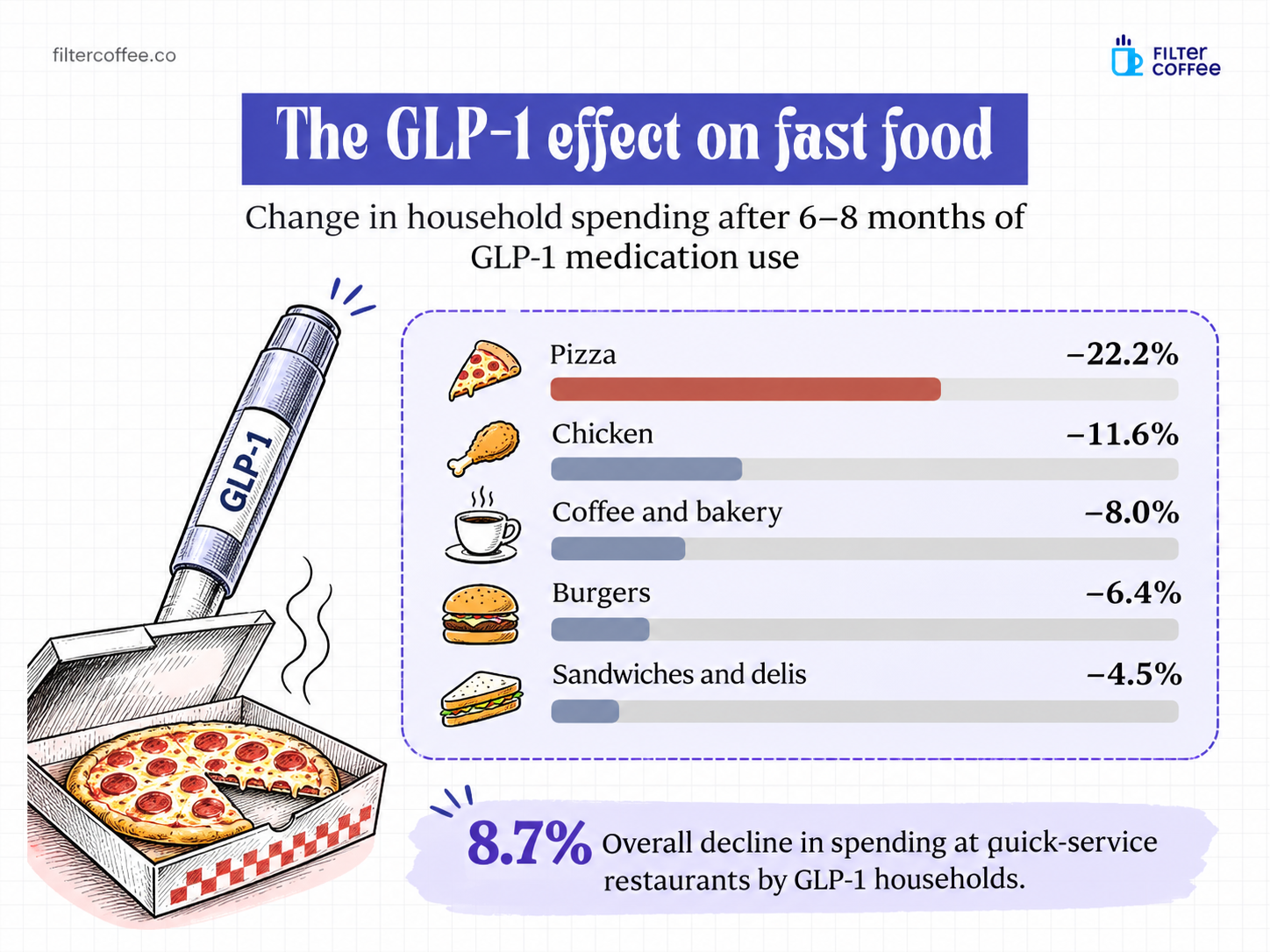
According to PwC's 2026 research, households using GLP-1 medications, such as Ozempic and Wegovy, reduced their spending at quick-service restaurants by 8.7% after six to eight months of use.
Pizza took the biggest hit among the categories studied, with spending declining by 22.2%, compared with 11.6% for chicken and 6.4% for burgers.
These medications suppress appetite, which poses a challenge for businesses accustomed to selling larger portions, extra cheese, sides and meal combinations. In the same study, 35% of current GLP-1 users wanted smaller portions at proportionately lower prices.
Of course, weight-loss drugs alone cannot explain the entire industry's slowdown. And despite these challenges, some pizza chains are performing considerably better than others.
Domino's, for instance, recorded 3% same-store sales growth in the US in 2025, while Pizza Hut recorded a 5% decline. Domino's has also been adapting its distribution strategy. In April 2025, it partnered with DoorDash to reach customers through the platform while retaining its own delivery drivers.
Even Domino's is experiencing a slowdown, though. Its US same-store sales grew by just 0.3% in the September quarter of 2026.
Meanwhile, pizza companies are finding more room to expand in markets like India and China.
In India, Domino's added 280 outlets over the past year, taking its network to 2,601 stores across 587 cities. Its September-quarter results showed that orders grew by 6.3% year-on-year, while delivery accounted for nearly 76% of revenue.
India's organised restaurant industry is still reaching new customers, particularly in smaller cities. Affordable offerings such as Domino's ₹119 My Meal also allow consumers to order pizza for an ordinary lunch rather than waiting for a special occasion.
China is witnessing a similar experiment with affordability. Pizza Hut's restaurant network there grew by 18% over the past year to 4,740 outlets. Interestingly, its latest quarterly results showed that transactions at existing restaurants increased by 5%, even as sales at those restaurants fell by 3%.
Essentially, more customers are placing orders, but they're spending less per visit. Pizza Hut has been introducing affordable meals and targeting people dining alone, creating more opportunities to sell pizza beyond traditional group meals.
America's pizza industry is unlikely to disappear. It still has an enormous customer base and an established delivery infrastructure. But the convenience that once set pizza apart is now available across almost every cuisine.
For pizza chains, getting a hot pizza to someone's doorstep is no longer the difficult part. Giving customers a compelling reason to order one in the first place is becoming increasingly important.
Sources
- CNBC: America's pizza industry slowdown
- Technomic data via Nation's Restaurant News
- Yum! Brands: Pizza Hut sale
- PwC: GLP-1 Consumer Trends 2026
- Domino's: FY2025 financial results
- Domino's: Q3 2026 financial results
- Domino's and DoorDash partnership
- Jubilant FoodWorks: Q2 FY27 results
- Yum China: Q3 2026 results
- Business Standard: India's pizza market