

 Newsletter
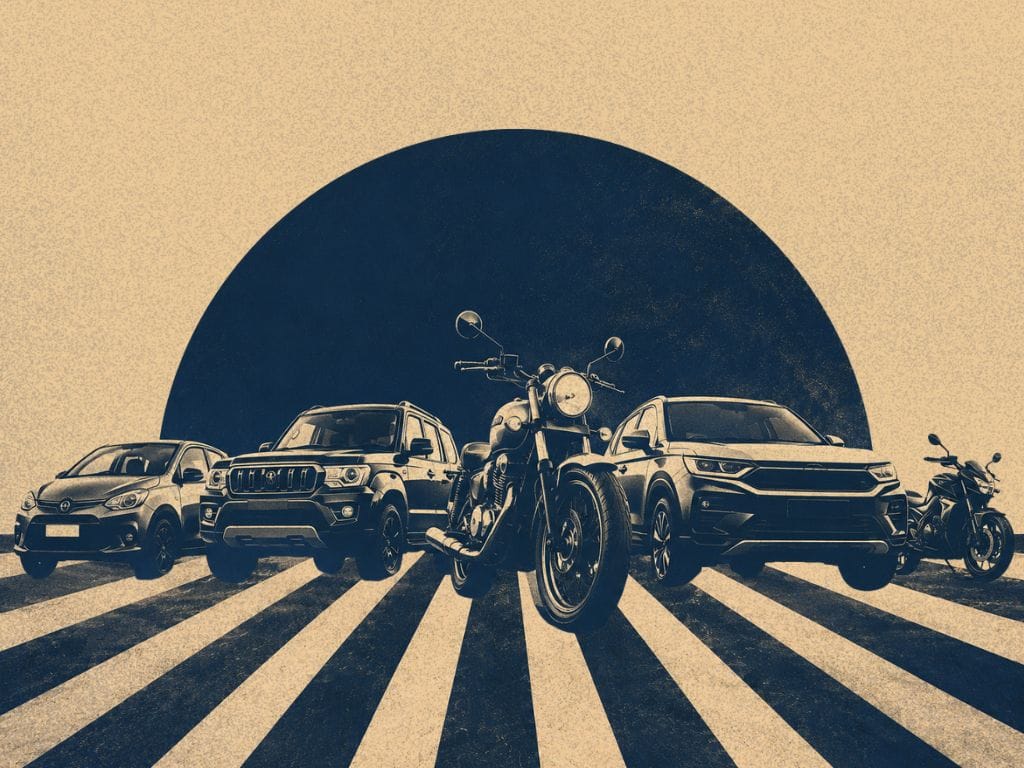
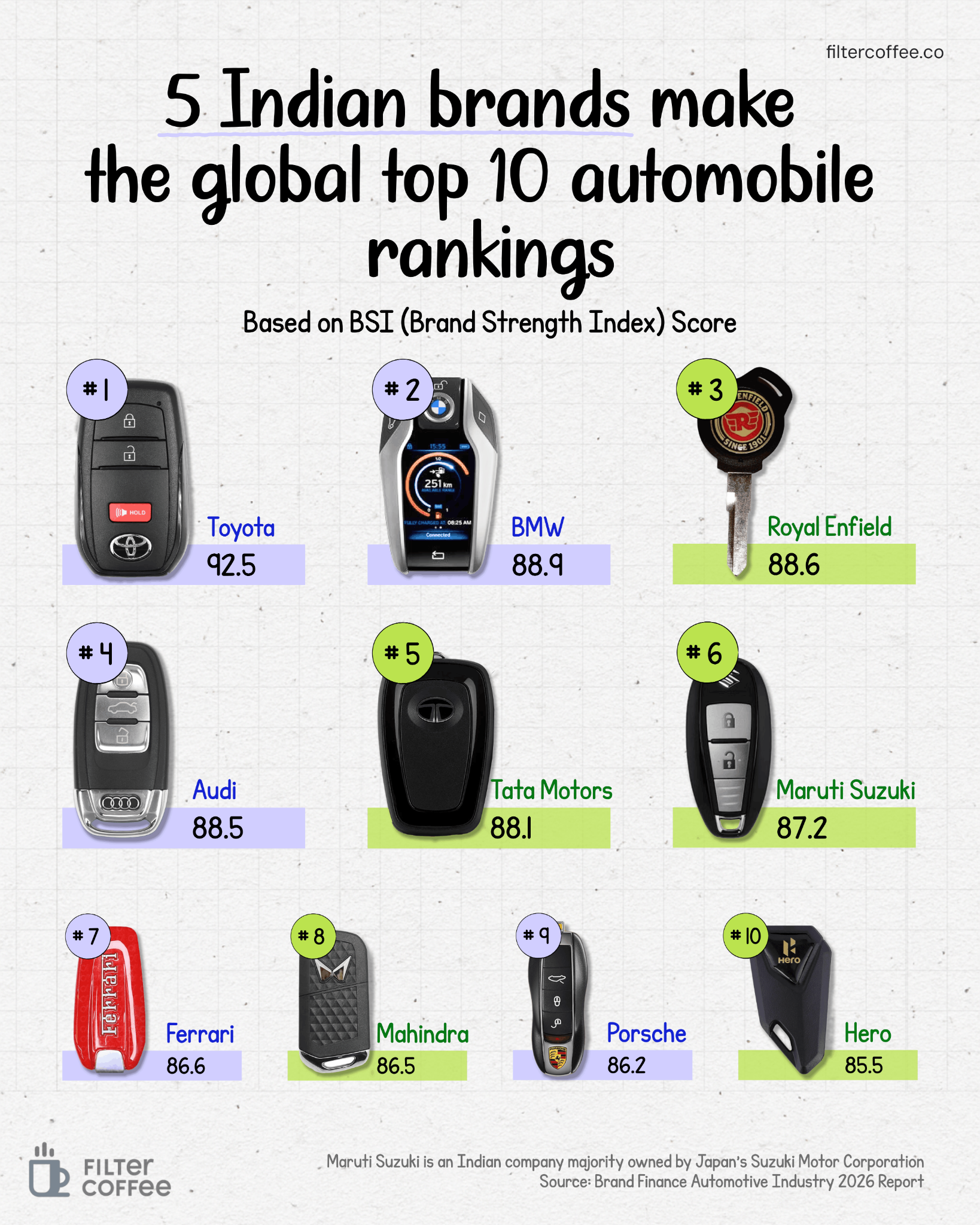
A new global ranking in 2026 has put 5 Indian automobile brands in the world’s top 10 by Brand Strength Index (BSI), placing names like Royal Enfield, Tata Motors, Mahindra, Maruti Suzuki and Hero alongside Toyota, BMW, Audi and Porsche.
Royal Enfield ranked third globally, Tata Motors fifth and Maruti Suzuki sixth, making this one of the strongest global showings ever for Indian auto brands.
What makes this even more surprising is that these rankings are not based on sales or market value. They measure brand strength, which includes trust, customer loyalty, familiarity, recommendation scores and emotional connection with consumers.
In simple terms, this ranking tries to answer one question.
Which automobile brands do people genuinely believe in?
And that is what makes this moment so significant for India.
A few years ago, the idea of Indian automobile brands competing with Toyota, BMW, Audi or Porsche on a global rankings table would have sounded unrealistic. Indian companies were usually associated with low-cost manufacturing, fuel-efficient commuter bikes and budget hatchbacks.
The global auto industry conversation revolved around German engineering, Japanese reliability and American scale, while India mostly sat on the sidelines as a manufacturing base and a giant consumer market.
And now India has become impossible to ignore.
Toyota still topped the global list with a BSI score of 92.5. BMW came second with 88.9. But Royal Enfield was right behind at 88.6, ahead of Audi, Ferrari and Porsche.
Tata Motors scored 88.1 while Maruti Suzuki came in at 87.2. Mahindra and Hero were not far behind either.
For a country that was once known mostly for producing affordable motorcycles and small cars, this is a remarkable shift.
But this story did not happen overnight.
The Indian automobile market itself has transformed drastically over the last few years. India’s passenger vehicle market hit a record 4.64 million units in FY26, growing nearly 8% year-on-year.
Vehicle exports also jumped 17.5% to almost 910,000 units, showing that Indian factories are becoming global production hubs.
At the same time, Indian brands have stopped positioning themselves only around affordability.
Royal Enfield is the clearest example of this shift. The company sells motorcycles that are slower and heavier than many competitors, yet it has built one of the strongest lifestyle communities in the global auto industry.
Riders do not just buy Royal Enfield motorcycles anymore. They buy into road trips, riding clubs, mountain festivals and nostalgia. That emotional pull helped the brand’s value rise nearly 30% to around $1.2 billion this year.
Mahindra has undergone a similar transformation. A few years ago, it was seen largely as a utility vehicle company. Today its Scorpio, Thar and XUV lineup have waiting periods stretching for months. The company has successfully turned ruggedness into aspiration.
Tata Motors did something even more difficult by changing its public perception entirely.
There was a time when Tata passenger cars struggled with quality concerns and weak consumer confidence. But the company reinvented itself through design upgrades, safer vehicles and an aggressive electric vehicle push.
India’s EV market crossed 2.3 million vehicle sales in 2025, and Tata became one of the biggest reasons behind mass EV adoption in the country.
Then there is Maruti Suzuki, which still controls a massive share of India’s car market despite rising competition. The company’s biggest advantage is trust. Millions of Indian families still see Maruti as the safest first-car purchase because of low maintenance costs, wide service networks and reliability.
And that may actually be the biggest insight hidden inside this ranking.
Most of the world’s strongest automobile brands are no longer winning only because of horsepower, luxury or racing heritage. They are winning because consumers trust them during a period when the auto industry itself is going through massive uncertainty.
The entire global sector is being reshaped by electric vehicles, software integration, battery supply chains and changing climate regulations. The total global automobile sector value fell to around $575 billion in 2026 after two straight years of decline. Even large global companies are under pressure.
Yet Indian brands are strengthening.
Part of that comes from timing. India is currently one of the few major automobile markets still growing rapidly. Rising incomes, expanding highways, easier financing and premiumisation are pushing more Indians into the vehicle market every year.
But another reason is psychological. Indian consumers now want brands that feel rooted in local realities rather than imported aspirations.
That is why a Royal Enfield can outrank Ferrari on brand strength even though Ferrari remains far more expensive and exclusive.
One sells speed. The other sells identity.
And the world is starting to notice that Indian automobile brands have learned how to build that identity at a global scale.