
 Newsletter
This month, Starbucks opened its first Reserve store in eastern India, choosing Kolkata for one of its most premium café formats anywhere in the country.
Spread across nearly 3,600 square feet and designed as Starbucks India’s first rooftop Reserve outlet and the fourth Reserve store in the country. This store signals something much bigger happening in India’s urban economy and consumer culture.
Because this is not a normal Starbucks.
A regular Starbucks works like an efficient urban stop. People walk in for a quick coffee, maybe work for a while, grab a sandwich and leave. The business depends on faster turnover, repeat visits and everyday convenience.
A Starbucks Reserve flips that logic entirely.
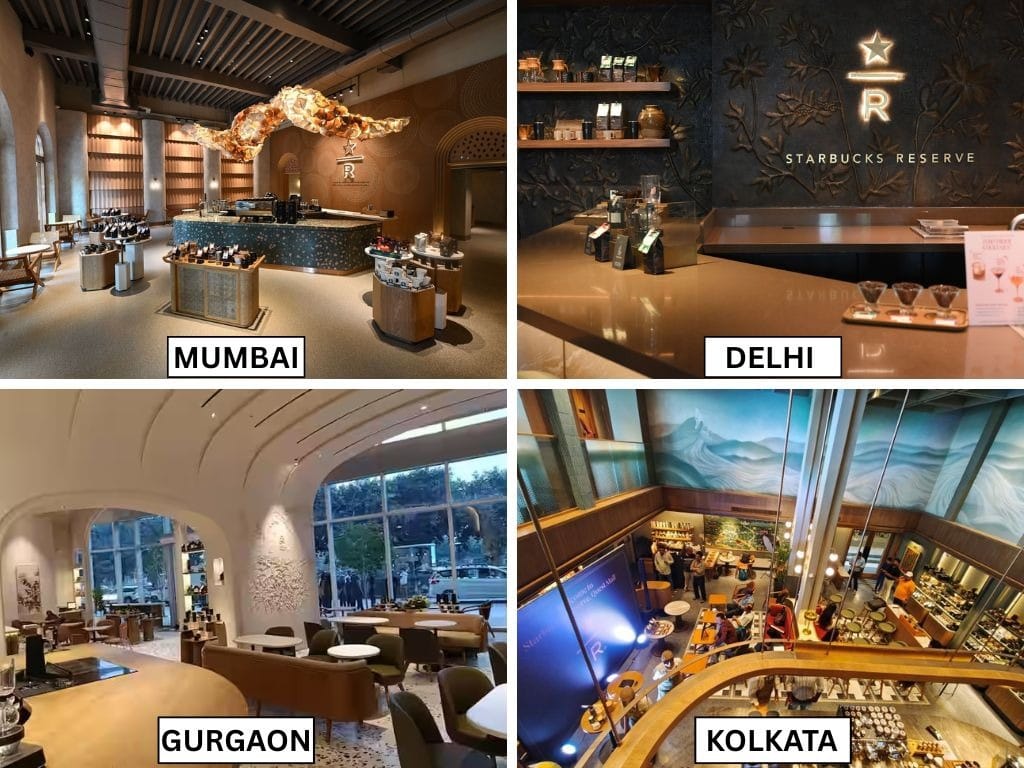
Reserve stores are designed around rarity and theatre. They sell small-lot coffees sourced from specific farms and regions. They use brewing techniques like siphon brewing, Chemex and pour-over stations that look more like chemistry experiments than café counters.
Baristas become storytellers. Interiors become warmer, slower and more luxurious. Customers are encouraged to stay longer.
This makes more sense when you look at the larger trend.
India has traditionally been a tea-first country. Coffee consumption existed, but mostly in South India through traditional filter coffee culture. For decades, coffee chains remained niche urban luxuries. Even Café Coffee Day, which pioneered café culture in India, relied more on affordability and accessibility than premiumisation.
But over the last decade, India’s coffee market began evolving from a beverage business into a lifestyle business.
The rise of remote work, startup culture, mall-led consumption, dating culture, solo dining, creator economies and premium food delivery transformed cafés into social infrastructure. Young Indians stopped viewing cafés as occasional indulgences and started treating them as extensions of home and office.
And Starbucks understood this before most global brands did.
When Starbucks entered India in 2012 through a joint venture with Tata Consumer Products, many believed the pricing would be too high for Indian consumers. After all, paying ₹250 to ₹400 for coffee in a country where roadside chai cost ₹10 sounded absurd.
Yet the company kept expanding.
Today, Tata Starbucks has crossed 500 stores across 81 Indian cities. The company still wants to hit 1,000 stores by 2028. That is a big ambition considering Starbucks took nearly 12 years just to cross the first 500.
Globally, Starbucks Reserve is positioned as the luxury division of Starbucks. Think of it as the difference between a business-class lounge and an airport waiting area. Both help you travel, but one makes you feel important while doing it.
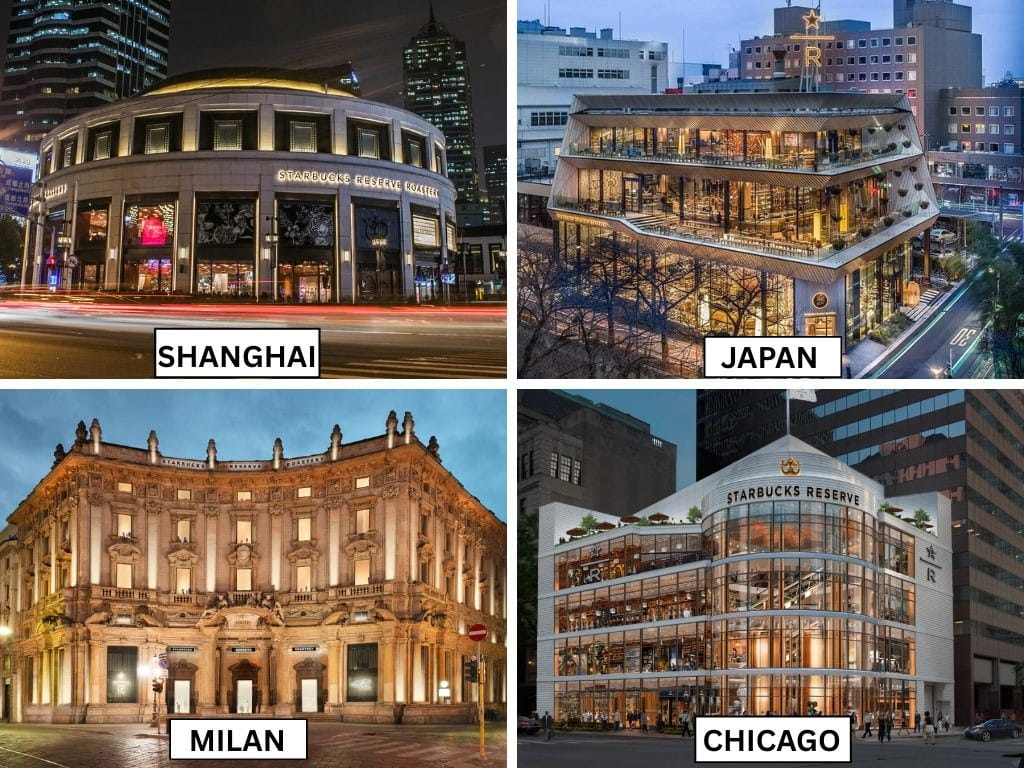
The world’s most iconic Reserve locations prove this strategy. The Shanghai Reserve Roastery spans around 30,000 square feet and feels more like an amusement park for coffee lovers. It features giant copper roasting casks, augmented reality experiences and elaborate brewing stations.
The Tokyo Reserve Roastery was designed by legendary architect Kengo Kuma and blends Japanese woodcraft with industrial coffee aesthetics. The Milan Reserve Roastery opened inside a historic post office building because Starbucks wanted symbolic validation in the country that practically invented espresso culture. Chicago’s Reserve Roastery became one of the largest Starbucks spaces ever built.
These stores exist to build mythology. And mythology matters because Starbucks has a growing problem globally. The brand became too ordinary.
When Starbucks expanded aggressively worldwide, its stores slowly lost their premium feel. Once what felt aspirational became routine. Investors worried about slowing sales growth. Customers complained about standardised experiences. Independent specialty cafés started attracting younger consumers seeking authenticity.
Reserve stores are Starbucks’ answer to that crisis as they restore exclusivity.
And India has become one of the most important testing grounds for this strategy because India represents growth.
While many Western markets are saturated, India remains dramatically underpenetrated in organised café culture. Compared to countries like China, where Starbucks already operates thousands of stores, India remains underpenetrated. That gives Starbucks room to shape consumer behaviour before competitors fully catch up.
At the same time, India’s premium consumer economy is exploding despite broader economic anxiety.
This sounds contradictory, but it is happening everywhere.
Luxury housing is booming. Premium smartphones dominate sales value. International travel among upper-middle-class Indians is surging. Fine dining is growing rapidly. High-end gyms, artisanal bakeries and gourmet chocolate brands are expanding across cities.
India is becoming a deeply unequal but intensely premiumising economy.
Which means brands are increasingly focusing less on mass affordability and more on extracting higher spending from affluent urban consumers. Reserve stores fit perfectly into that shift.
And Kolkata is an especially interesting choice.
For decades, Kolkata was stereotyped as culturally rich but commercially slow compared to Mumbai, Bengaluru or Delhi. But consumption patterns are changing there too. The city’s café culture has expanded rapidly over the last few years with specialty coffee brands, boutique bakeries and premium dining spaces gaining traction.
Starbucks seems to believe Kolkata now has enough consumers willing to pay not just for coffee, but for curated experiences.
That explains why the Kolkata Reserve store reportedly includes city-inspired design elements and localised menu experiments. Alongside Reserve-exclusive beverages, the menu also includes regional influences and desserts inspired by Bengali sweets such as chamcham tiramisu and chocolate rasmalai mousse.
In fact, the most successful international chains in India rarely remain fully international. McDonald’s adapted with McAloo Tikki. Domino’s built a business around paneer toppings. Starbucks is now experimenting with blending global coffee prestige with regional identity.
And all of this is happening while India’s broader café industry becomes brutally competitive.
Blue Tokai built a cult following around specialty coffee and transparency about sourcing. Third Wave Coffee expanded aggressively across urban India. Tim Hortons entered India. Pret A Manger arrived. Local artisanal cafés became Instagram destinations. Even quick commerce platforms started making premium coffee more accessible at home.
So Starbucks can no longer rely only on brand recognition.
It needs consumers to feel that Reserve is different.
Interestingly, this mirrors what happened in industries like fashion and alcohol. Once basic consumption becomes common, premium experiences become the next growth engine. People no longer just buy whisky. They buy single malts with origin stories. They no longer just buy sneakers. They buy limited-edition collaborations.
Coffee is moving the same direction.
Origin matters. Brewing method matters. Bean variety matters. Atmosphere matters. And consumers increasingly want stories attached to what they consume.
Which is why Starbucks Reserve is ultimately less about caffeine and more about status signalling disguised as lifestyle.
That means Reserve stores are high-risk bets too as they need enough affluent customers visiting consistently, staying longer and spending more per visit to justify the economics.
But Starbucks appears confident India can support that model.
And maybe the company sees something deeper.
Perhaps India is entering the same phase China entered a decade ago, where consumption itself becomes aspirational entertainment. People are buying environments, aesthetics and social identity.
A ₹20 chai still exists outside.
But inside a Starbucks Reserve, coffee becomes a luxury experience.
And Starbucks is betting that millions of Indians are finally willing to pay for it.