
 Newsletter
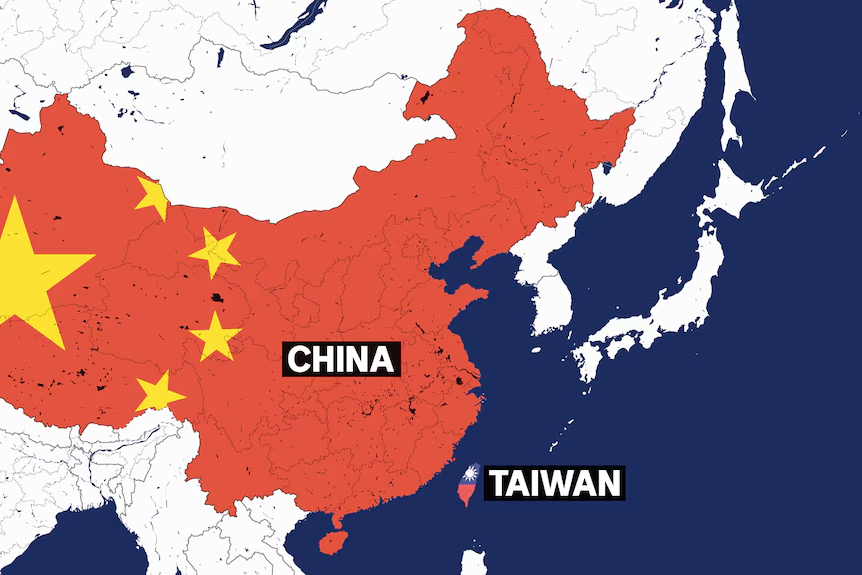
If the world had to pick one relationship that could swing global peace, shift markets, shake governments and still somehow look like a chaotic on again off again situationship, it would be China and Taiwan.
They have been locked in a decades long emotional, political and occasionally military tug of war that feels less like a border dispute and more like a family argument that spiralled out of control. And the funniest part is that while everyone else keeps insisting they should sit down and talk it out, Beijing and Taipei are both convinced they are absolutely right and the other side needs to see sense.
No pressure at all, considering their drama pulls in the United States, Japan and half the Indo Pacific into the splash zone.
To understand how we got here, you have to rewind to a time when everything in East Asia was shifting.
Before 1949, China and Taiwan were technically one political unit under the Republic of China, a government run by Chiang Kai-shek's Nationalists. Then came the Chinese Civil War, Mao Zedong’s Communists won on the mainland, and the losers packed their bags and moved to Taiwan. Imagine shifting an entire government, an army and a chunk of elites to an island and declaring, with full confidence, that you are still the real China. That is literally what happened. The mainland became the People’s Republic of China. The island kept the Republic of China name. Both insisted they were the only legitimate China. Zero chill on both sides.
For a few years, most of the world went along with Taiwan’s version of events, partly because the Cold War meant the US wanted to isolate Communist China. But by the 1970s, reality kicked in. The mainland had 800 million people. Taiwan did not. So countries started switching recognition to Beijing, and by 1979 even the US accepted the PRC as the official China.
Taiwan lost the China seat at the UN in 1971 and to this day only a handful of countries recognise it diplomatically. But this does not mean the island shrank away quietly. While China handled revolutions, famine, political chaos and massive state rebuilding, Taiwan did something else completely. It became a tech powerhouse, a democracy, an exporter of culture and a surprisingly progressive society for a place that had been under martial law for decades.
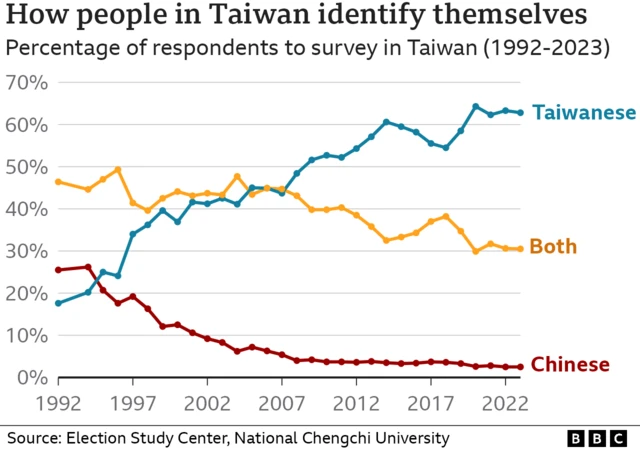
That bit often shocks people who assume Taiwan is just a smaller China. Taiwan today is nothing like the mainland. It has free elections, real political debates, LGBTQ rights, a lively press and zero patience for authoritarian rule. Young Taiwanese do not even identify as Chinese anymore. Most call themselves Taiwanese. So while Beijing tells the world that both sides belong to one big Chinese family, Taiwan’s youth are basically like, thanks but no.
Now the story gets more interesting because China’s attachment to Taiwan is not about romance or nostalgia. It is hard politics. First comes pride. Every Chinese leader since Mao has promised national reunification, which includes taking Taiwan.
For Beijing, letting Taiwan go would feel like breaking the central storyline of modern Chinese nationalism. President Xi Jinping has tied his legacy to restoring China’s historical greatness. From Beijing’s point of view, Taiwan is the final missing puzzle piece.
Then there is geography. Look at a map for literally ten seconds and the anxiety makes sense. Taiwan sits right off China’s coast, controlling access to the South China Sea and blocking the mainland from easy entry into the Pacific. Even more dramatic, it sits inside something called the First Island Chain, a long arc of islands that the US and its allies use to monitor China’s movements. If China controlled Taiwan, the entire military balance in Asia would flip overnight.
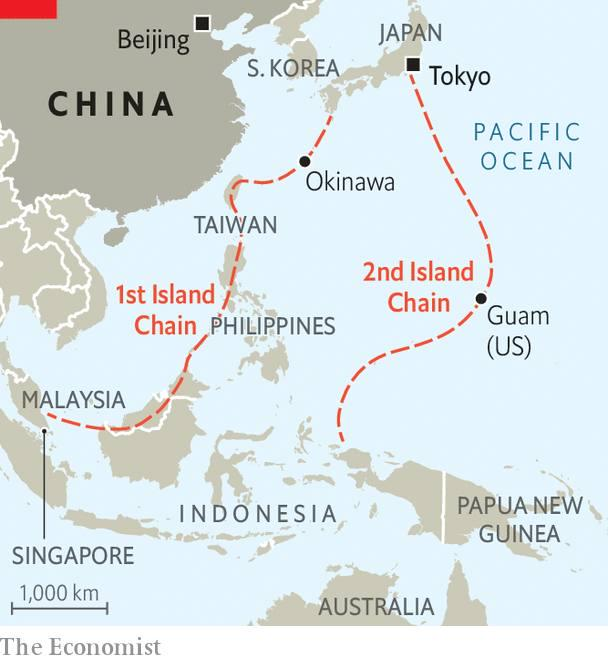
The "First Island Chain" is a key geostrategic arc of islands in the Western Pacific, stretching from Japan, Taiwan, the Philippines, and parts of Indonesia, forming a crucial defensive line against China's naval expansion into the open Pacific and a cornerstone of US military strategy in Asia. It serves as a natural barrier, controlling access to the Pacific for China, with the US and its allies (Japan, S. Korea, Australia) reinforcing this chain to deter Chinese aggression, especially concerning Taiwan.
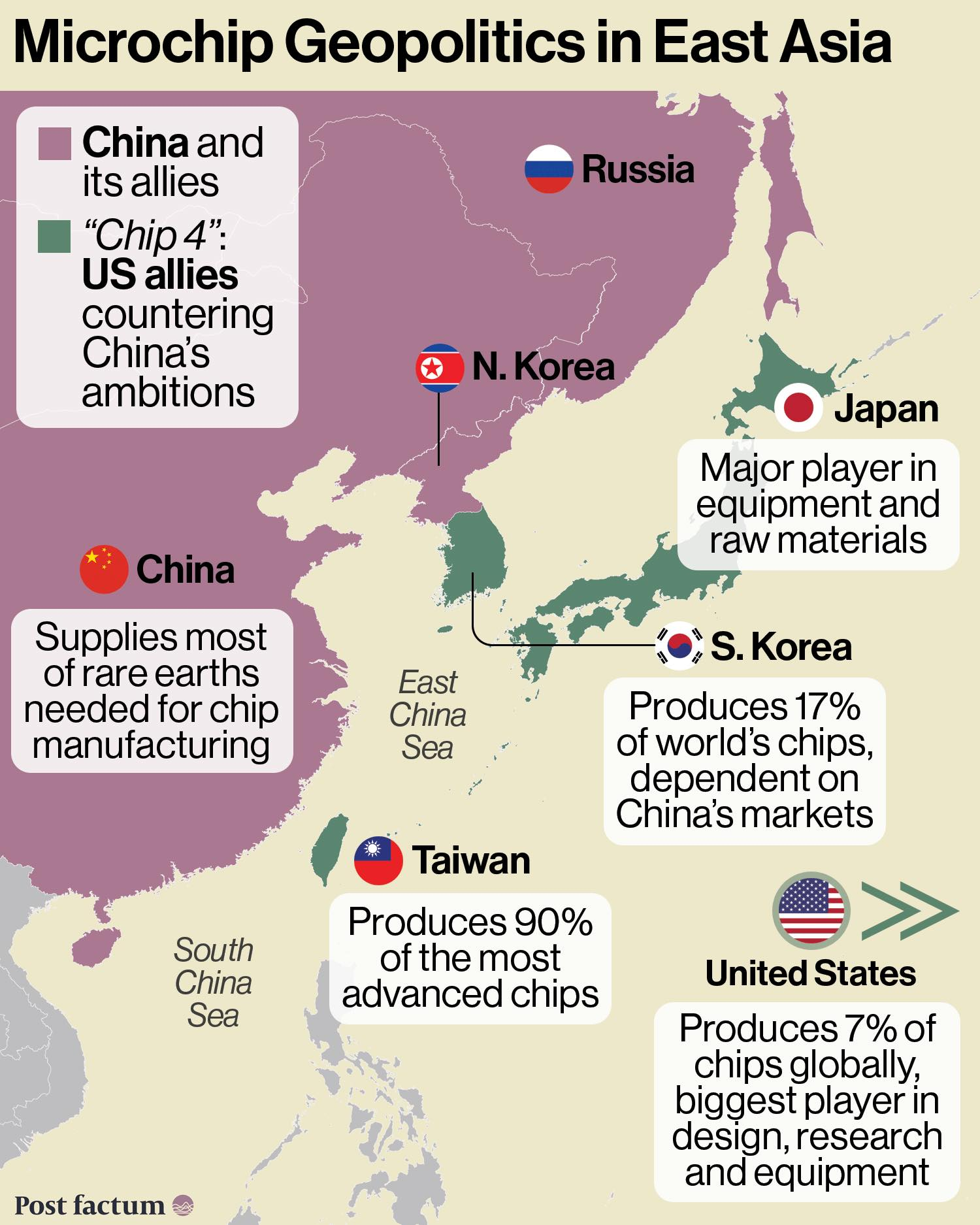
And if that were not enough, there are chips. Not the snack. Semiconductors. Taiwan is basically the global god of chip making. Companies like TSMC command more than 90% of the world’s advanced chip supply. These chips run everything from iPhones to fighter jets to cloud servers. China has been pouring billions into building its own industry but still trails behind.
So when analysts say Taiwan is the Silicon Beyoncé of the world, they are not exaggerating. Whoever controls Taiwan controls a slice of the future.
You would think Taiwan might be panicking at this attention but honestly, the island is living its best life. Its economy is booming thanks to AI demand, chip exports, and manufacturing strength. It is democratic, socially progressive, globally respected and has figured out that China’s model is absolutely not the vibe. Polls consistently show that Taiwanese people want to maintain the status quo which is a polite way of saying they do not want to be ruled by Beijing.
Less than 3% of young Taiwanese want unification. They are more worried about housing costs than ancient political reunification narratives.
But this is where the plot twists again. Because the US is heavily invested in this story. Taiwan is the ultimate domino in the Indo Pacific security puzzle. If China takes Taiwan, the First Island Chain breaks, US military access becomes weaker, Japan and the Philippines get nervous, and the entire balance of Asia tilts.
The US also cannot afford to lose access to Taiwan’s chip factories because that would be like handing your rival the keys to the global tech supply chain. So Washington follows a system called strategic ambiguity which is basically the diplomatic version of, “We might defend Taiwan or we might not, depends on how you behave, buddy.”
Except now presidents keep saying out loud that the US would defend Taiwan militarily which sort of ruins the ambiguity part.
Japan is also deeply involved and not just because it is close by. Some Japanese islands sit barely 110 kilometres from Taiwan. When China fires missiles or flies jets near Taiwan, Japan feels the heat immediately.
So Tokyo has begun its biggest military buildup in decades. Missiles on islands, radar towers, F 35 jets, everything. Japan’s government insists it is only for defence but China sees it as provocation. Younger Japanese citizens actually support stronger defence spending, considering China’s increasing military activity. Older generations, who remember the horrors of World War Two, are far more hesitant.
So Japan is balancing memories of the past with fear of the future.
Meanwhile China is not simply standing around. It has been conducting military drills around Taiwan, sending dozens of aircraft and ships to send a message. It calls these drills punishment for Taiwanese separatism.
It also pressures countries around the world to avoid official relations with Taiwan. Even when Taiwan buys pineapples to boost farmers who lose access to the Chinese market, China treats it like a geopolitical tantrum. And whenever China is cornered on unrelated international issues, its diplomats pivot to the One China principle as a way to shut down conversations. It is basically a diplomatic shortcut that comes with heavy emotional baggage.
The One China Principle is the People's Republic of China's (PRC) stance that there is only one sovereign China, Taiwan is an inalienable part of it, and the PRC's government is the sole legitimate representative, demanding other nations recognize this to have formal ties.
What complicates this further is the history angle. China insists that Taiwan has always been part of China, citing ancient documents and old dynasties. But the truth is more complicated. Taiwan was ruled by various indigenous groups, then colonised by the Dutch, then briefly held by Koxinga, then ruled by the Qing dynasty, then ceded to Japan for 50 years. China regained control in 1945, only to lose it again when Chiang Kai shek fled there.
So while Beijing frames the story as ancient destiny, historians describe it more like a messy, overlapping set of claims shaped by wars and colonial shifts. Nothing about it is simple or tidy, which is exactly why both sides cling so hard to their own version.
The present moment feels tense because Taiwan has a new president from a party Beijing dislikes. China calls him a separatist even though he has not declared independence. Taiwan argues it is already independent in everything except UN membership. China argues even talking about independence is a national insult.
The US says it recognises the One China policy but still sells weapons to Taiwan. Japan stresses peace but installs new defence systems. Europe issues concerned statements. Everyone says diplomacy is important but each week brings a new military drill or political jab.
Through all this, Taiwanese civilians go on with life, building chips, exporting tech, riding scooters, enjoying night markets, occasionally dealing with pineapples getting caught in diplomatic crossfire. Ordinary Chinese citizens meanwhile are told from childhood that Taiwan is part of China and reunification is non-negotiable. This is why any compromise feels impossible.
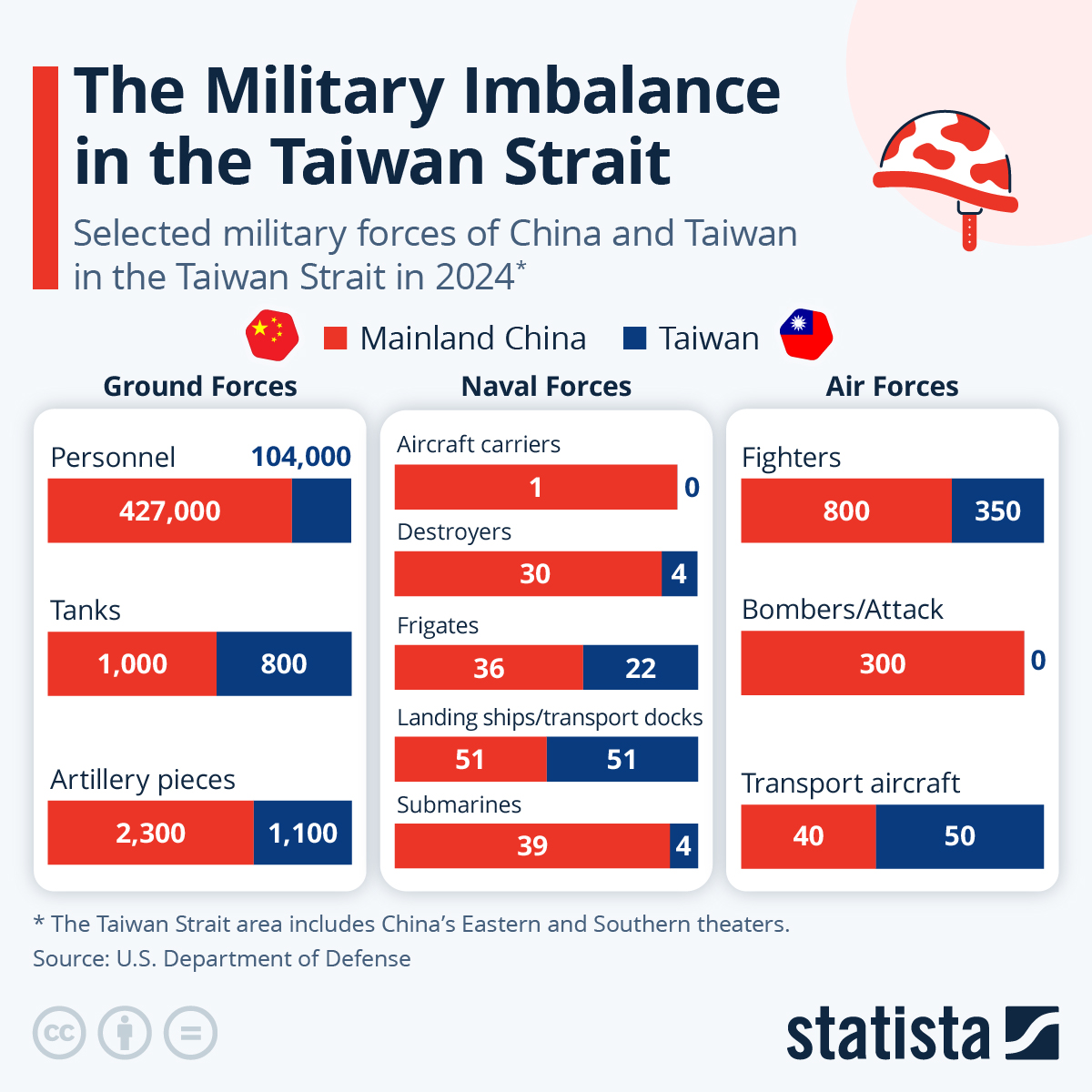
What the world fears is miscalculation. China’s military flights near Taiwan have increased. A single wrong move could spark conflict. The US navy is active in the region. Japan’s bases are preparing for contingencies. A local fishing dispute or a drone incident could escalate because everyone is on edge. This is why the Taiwan Strait is called the world’s most dangerous flashpoint. Not because anyone wants war but because the entire setup is fragile.
And yet, for all the sound and fury, the economic ties between China and Taiwan are massive. Taiwanese companies manufacture in China. Students travel both ways. Families exist on both sides. Trade keeps flowing even as political rhetoric gets louder. It is the weirdest paradox. A relationship where daily life is intertwined but political trust is at zero.
So where does this go. The most likely scenario is the continuation of the status quo. China talks tough. Taiwan quietly strengthens its defences. The US keeps watch. Japan fortifies its islands. Everyone hopes deterrence works. But the issue will not disappear because it is not just about borders. It is about identity, political legitimacy, national pride, tech supremacy and global power. That makes it stubborn and complicated.
For now, Taiwan remains the island that Beijing cannot let go of, Washington cannot ignore, and Tokyo cannot avoid. A place that is small in size but enormous in consequence. It sits at the centre of a giant geopolitical triangle where history, military strategy and the future of technology collide. And until all sides find a way to coexist without threatening each other’s core beliefs, we are all stuck watching this situationship unfold like a never ending season of a political thriller where everyone claims they want peace but keeps buying more missiles just in case.
If nothing else, you have to admit one thing. Nobody does long running drama like East Asia.
FAQs
Why are China and Taiwan in conflict?
China and Taiwan disagree over political identity. China sees Taiwan as part of its territory, while Taiwan functions as a separate democracy with its own government. This clash of sovereignty, history and national pride keeps tensions high.
What started the China Taiwan issue?
The conflict began in 1949 when the Chinese Civil War ended. The Communist Party took control of the mainland and the defeated Nationalist government moved to Taiwan. Both claimed to be the legitimate government of China, creating a decades long divide.
Why does China want Taiwan so badly?
China considers Taiwan essential for national reunification, military security and technological leadership. Taiwan’s location, political symbolism and advanced semiconductor industry make it a strategic priority for Beijing.
Why does Taiwan not want to reunify with China?
Taiwan has evolved into a vibrant democracy with free elections, civil liberties and a strong cultural identity. Most Taiwanese people identify as Taiwanese, not Chinese, and do not want to live under Beijing’s one party political system.
Why is the US involved in the China Taiwan tension?
The US supports Taiwan’s self defence, relies on its semiconductor industry and sees the island as crucial to Indo Pacific stability. Washington’s strategy aims to deter China from using force and maintain balance in the region.
How is Japan connected to the Taiwan China issue?
Japan is geographically close to Taiwan and would be directly affected by any conflict. It has increased defence spending and strengthened its island defences because China’s military activity near Taiwan threatens Japan’s security interests.
Why are Taiwan’s semiconductors so important?
Taiwan’s chip makers, especially TSMC, produce the world’s most advanced semiconductors used in phones, cars, AI, defence systems and cloud computing. Losing access to Taiwan’s chips would disrupt global technology supply chains.
Could China invade Taiwan?
China has not ruled out using force, but an invasion would be extremely risky. Taiwan has strong defences, the US and Japan could intervene, and global economic fallout would be severe. Most analysts believe China prefers pressure over war.
What does the First Island Chain have to do with Taiwan?
The First Island Chain is a strategic arc of islands that limits China’s military access to the Pacific. Taiwan sits at the centre of this chain. If China controlled Taiwan, it would gain a major military advantage in Asia.
What is the current status of China Taiwan relations?
Relations are tense. China conducts military drills and diplomatic pressure campaigns while Taiwan strengthens its defences and deepens ties with the US and Japan. Both sides avoid direct conflict but remain locked in a high stakes standoff.