
 Newsletter
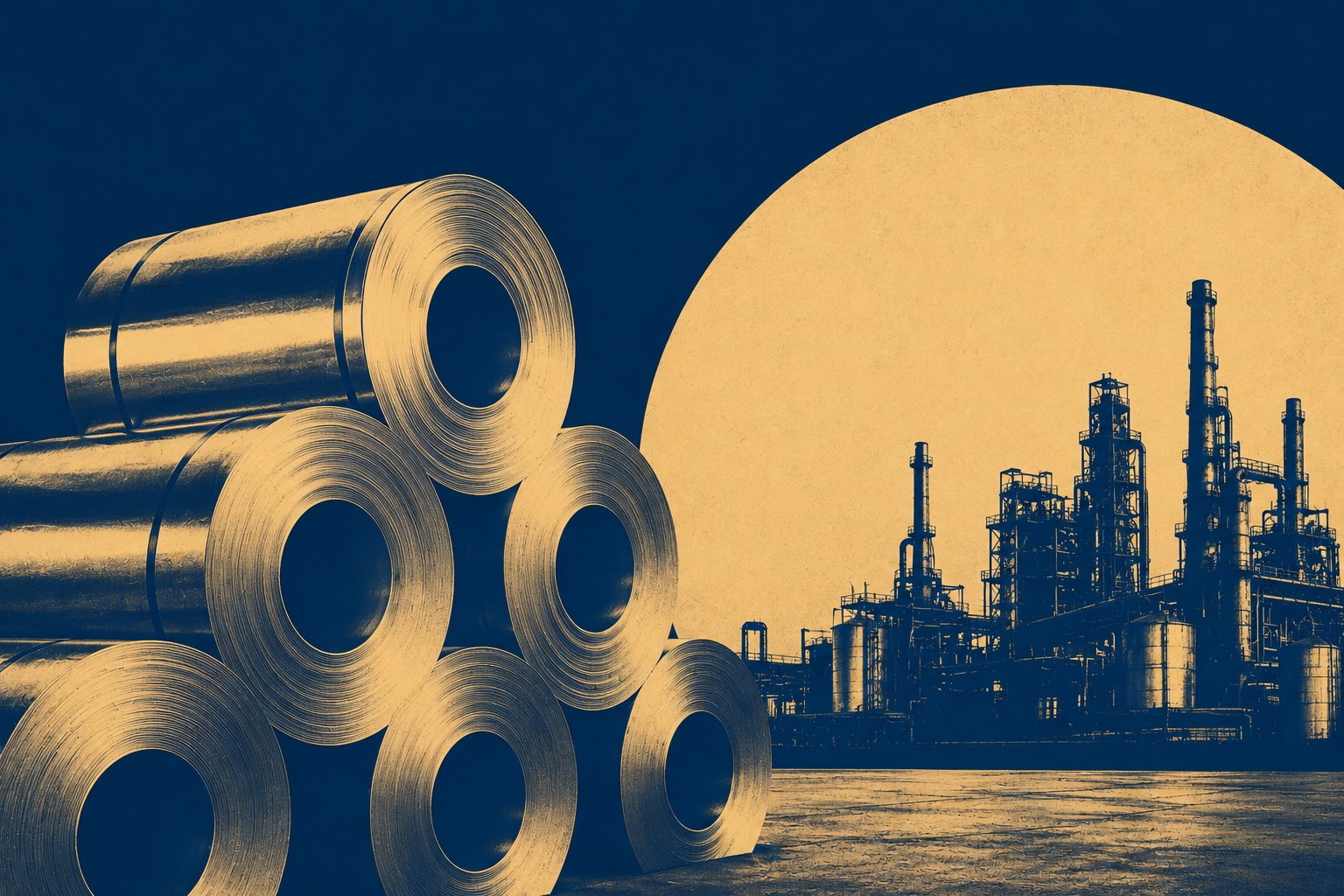
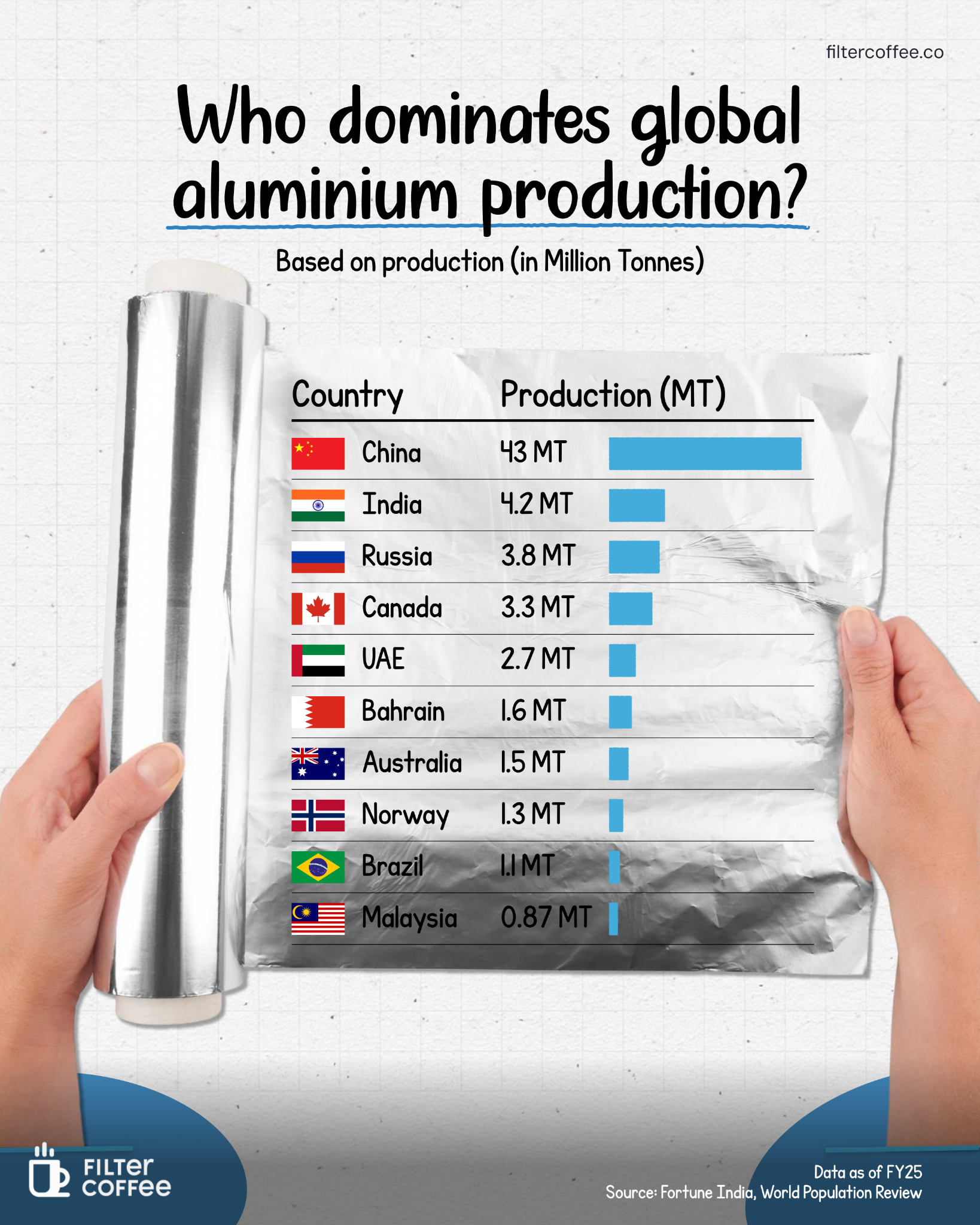
China makes so much aluminium that the rest of the world almost looks like a side character in the story. Last year, the country produced more than 43 million tonnes of aluminium, which is nearly 60% of global output.
India, despite being the world’s second-largest producer, made just about 4.2 million tonnes. That gap alone tells you something important.
Aluminium is no longer just an industrial metal. It has quietly become a geopolitical weapon, an infrastructure story, an energy story and now increasingly, an India growth story. And India wants a bigger role in it.
In April 2025, India imposed anti-dumping duties on aluminium foil imports from China after investigators found Chinese products were undercutting domestic manufacturers. Because there lies a very important question:
Why is India, despite having massive bauxite reserves, cheap labour and rising demand, still so far behind China in aluminium?
The answer begins with electricity.
Making aluminium is absurdly energy intensive. To produce one tonne of aluminium, you need roughly 13,000 to 15,000 kilowatt-hours of electricity. That is enough to power an average Indian household for around 10-12 years. In fact, people in the industry often joke that aluminium is basically “solid electricity.” Which is why countries with cheap and stable power dominate the industry.
China figured this out decades ago. It built gigantic smelters, secured coal and hydropower access, and flooded global markets with low-cost aluminium.
Today, one country alone controls almost three-fifths of global production. That kind of dominance gives China enormous pricing power across industries from automobiles and aviation to construction and clean energy.
India, meanwhile, is only now beginning to scale aggressively.
The country produced a record 4.2 million tonnes of primary aluminium in FY25. The number may look tiny compared to China, but India’s importance lies elsewhere.
Demand is exploding. Aluminium consumption in India is rising because everything around us is becoming more aluminium-heavy.
Electric vehicles need lightweight metals to improve battery efficiency. Solar panels require aluminium frames. Transmission lines use aluminium conductors. Metro rails, airports, high-speed trains, defence equipment and even beverage packaging are becoming increasingly aluminium-dependent.
This is why companies like Vedanta, Hindalco and NALCO are in expansion mode.
The Indian government estimates the country may still face a 1.6 million tonne aluminium capacity shortfall by FY30 even after planned expansions. This highlights how fast domestic demand is expected to grow.
Vedanta recently expanded its alloy production capacity to cater specifically to the automotive sector.
Hindalco, through its subsidiary Novelis, has become one of the world’s largest aluminium recyclers and flat-rolled product makers. This recycling business is especially important because aluminium can be recycled repeatedly without losing its quality.
This makes recycling far cheaper and more efficient, which is why many countries are trying to secure aluminium scrap supplies. India, however, still lacks a robust scrap collection ecosystem, forcing manufacturers to depend heavily on imports.
Then there is the environmental problem.
Globally, aluminium producers are under pressure to reduce carbon emissions because smelters powered by coal generate enormous amounts of CO2. Europe is already moving toward carbon border taxes that could penalise carbon-intensive imports.
This means India cannot simply produce more aluminium. It has to produce greener aluminium. That is why Indian companies are increasingly experimenting with renewable energy-powered smelters and low-carbon production methods.
What makes this story fascinating is that aluminium sits at the intersection of almost every major economic trend of this decade.
Urbanisation needs it. The energy transition needs it. EVs need it. Defence manufacturing needs it. Data centres need it. Even the humble aluminium foil sitting in Indian kitchens has become part of a global trade battle.
And while China still dominates the industry by an enormous margin, India’s aluminium story is just about becoming indispensable in a world that suddenly cannot build its future without this metal.