
 Newsletter
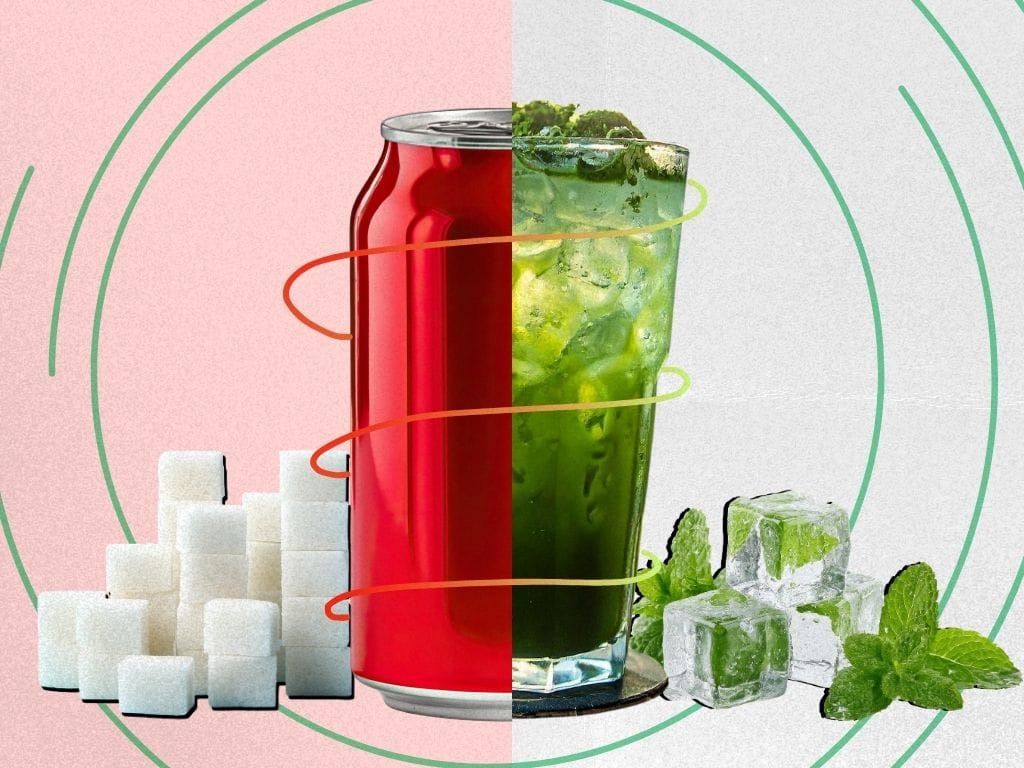
Coca-Cola’s zero-sugar drinks now reportedly contribute nearly 30% of its beverage volumes in India. Varun Beverages says low-sugar and no-sugar drinks have already crossed 60% of its sales mix in some quarters.
PepsiCo is doubling down on healthier beverage options. Reliance Consumer has acquired a stake in functional beverage brand Shunya. And even packaging giant Tetra Pak says it is seeing rising demand from startups building low-sugar and protein-led drinks.
India’s beverage market is changing faster than most people realise.
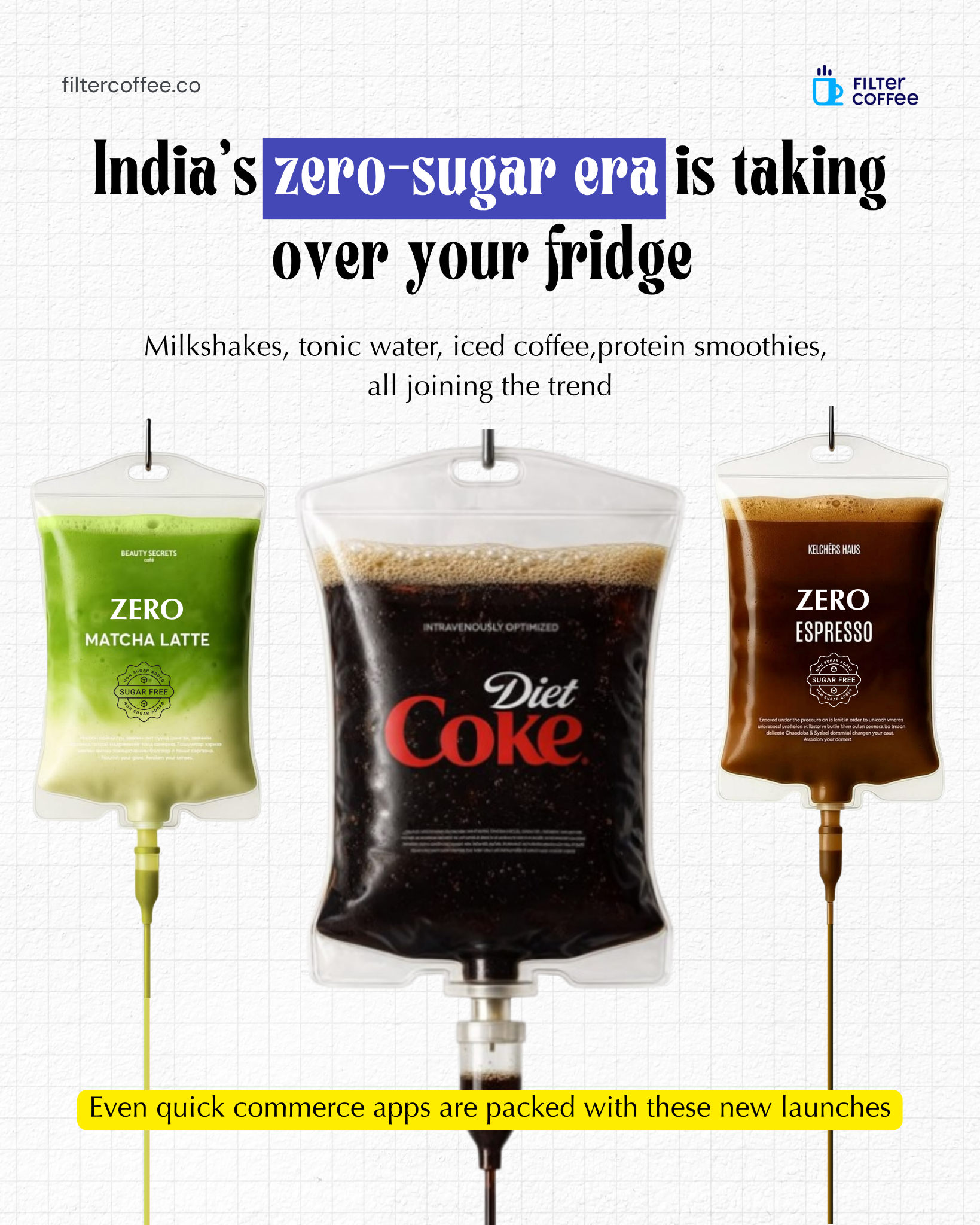
For decades, soft drink companies in India competed on one thing. More flavour usually meant more sugar. The biggest campaigns were built around indulgence, celebrations and impulse consumption.
But now the same industry is racing toward “zero sugar”, “no added sugar”, “protein”, “functional wellness” and “better-for-you” drinks.
And the reason goes much deeper than just fitness trends.
India is currently facing a massive lifestyle health problem. Government-backed estimates show the country has around 101 million people living with diabetes and another 136 million in the prediabetic category. Obesity and metabolic disorders are also rising sharply in urban India. For younger consumers especially, sugar is becoming something people actively monitor.
That shift is now beginning to reshape entire supermarket shelves.
A few years ago, “healthy drinks” mostly meant expensive imported products bought by niche audiences. Today consumers are seeing protein coffees, kombucha, low-calorie sodas, electrolyte drinks, sugar-free iced teas, lactose-free milkshakes and zero-sugar desi beverages sitting right next to traditional colas. The visibility itself changes behaviour. When healthier alternatives become equally accessible, consumers start experimenting more frequently.
And that is creating one of the biggest beverage opportunities India has seen in years.
Global giants are already moving aggressively.
Coca-Cola has expanded Coke Zero and Diet Coke distribution sharply across metros and quick commerce platforms. PepsiCo has publicly said it wants to push more low-sugar and zero-sugar beverages in India as health awareness rises.
Varun Beverages, PepsiCo’s key bottling partner, recently said low-sugar and no-sugar beverages now account for nearly 63% of sales volumes in some periods, showing just how quickly consumer demand is shifting.
But the bigger story may actually be the startups.
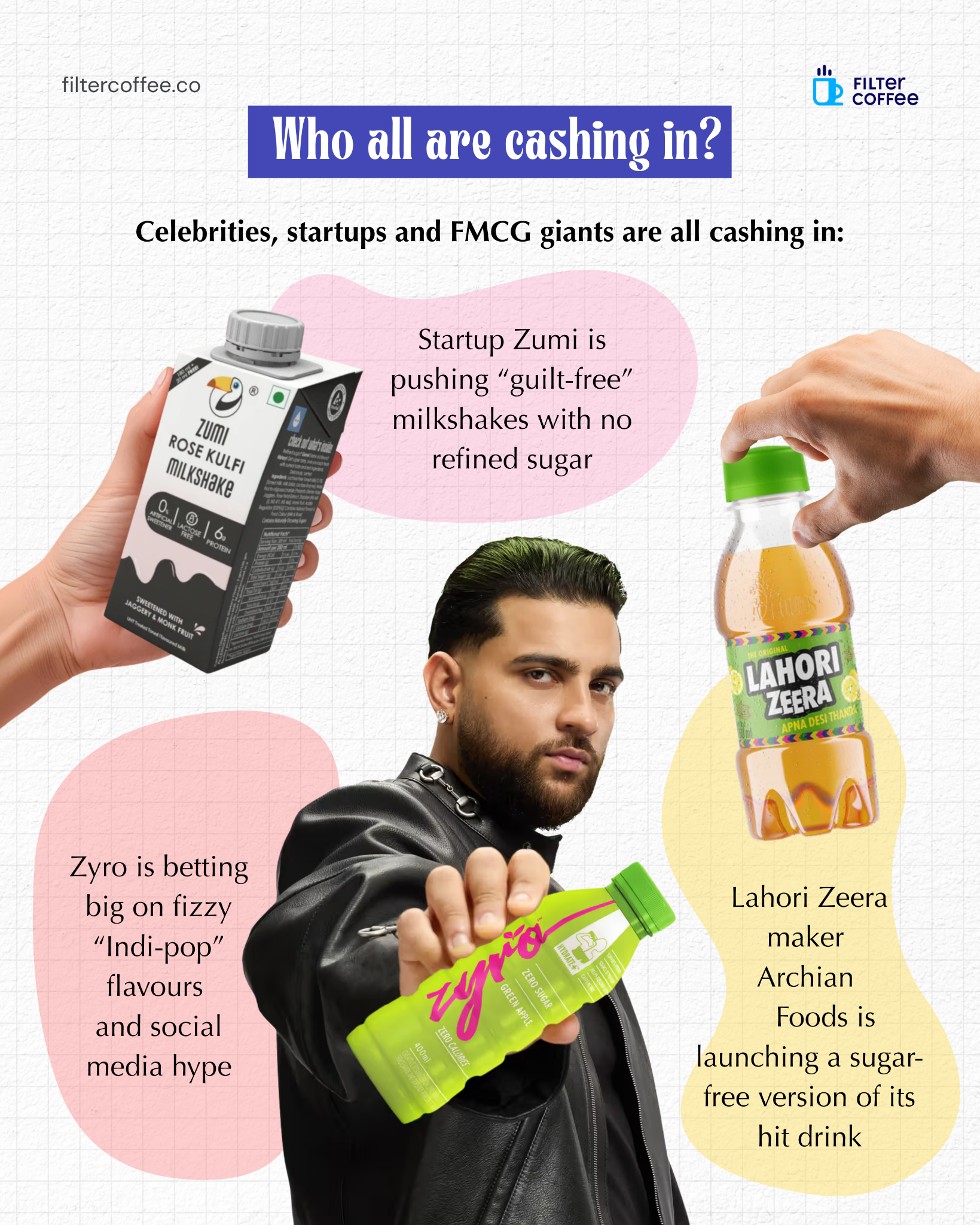
Indian beverage startups are no longer trying to compete directly with cola giants on traditional sugary drinks. Instead they are building entirely new categories around wellness and guilt-free consumption.
ZUMI, for instance, has launched lactose-free milkshakes with no refined sugar. Lahori Zeera maker Archian Foods is introducing sugar-free versions of its popular desi beverage. Reliance Consumer acquired a majority stake in Shunya, a zero-sugar functional drink brand focused on herbal and wellness positioning.
Even protein brands are entering the ready-to-drink space because consumer habits are changing. Earlier protein consumption in India was associated mostly with gym culture and bodybuilding. But now companies are marketing protein beverages to office workers, students and regular consumers looking for convenient nutrition.
In 2026, Parag Milk Foods launched Avvatar Protein Cold Coffee with Tetra Pak, signalling how mainstream protein beverages are becoming.
And that is where another interesting layer appears.
Tetra Pak itself is quietly emerging as a major beneficiary of this shift.
Whenever consumers move toward premium ready-to-drink beverages like protein shakes, cold coffees or functional drinks, companies need specialised packaging, longer shelf life and portable formats. So while consumers notice flashy new beverage brands, the companies supplying the packaging infrastructure are also cashing in behind the scenes.
But perhaps the most important reason behind this shift is cultural.
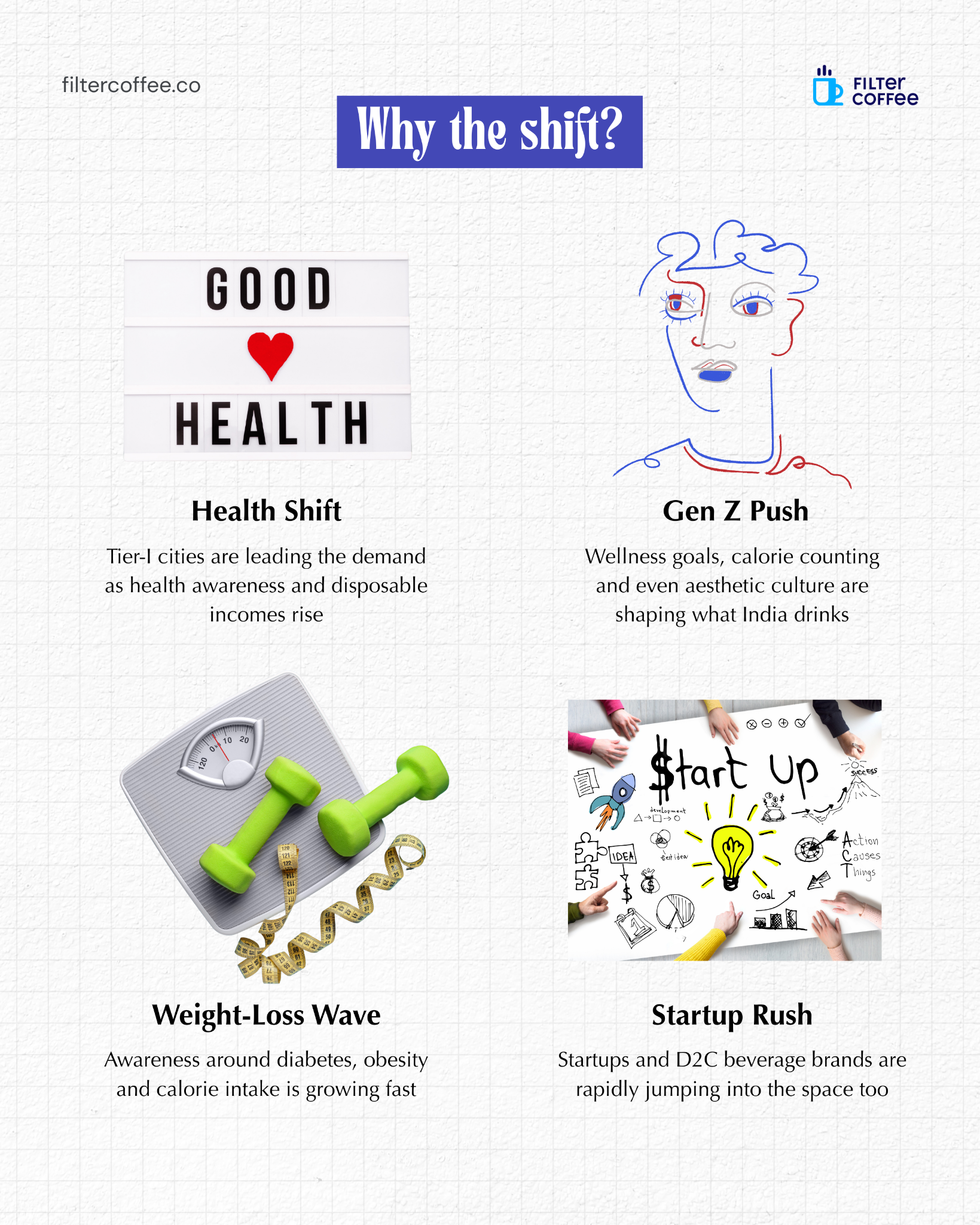
For Gen Z consumers, low-sugar beverages are increasingly tied to identity. Calorie counting apps, smartwatch ecosystems, fitness influencers and aesthetic wellness culture have all made people more conscious about everyday consumption. Ordering a zero-sugar drink today also signals lifestyle, discipline and self-improvement.
And unlike older “diet” products that often tasted bland, companies have learned they cannot sell health alone. The new strategy is to make healthy products feel aspirational and fun. That is why brands are experimenting with fizzy desi flavours, matcha lattes, protein smoothies, iced coffees and functional sodas instead of just plain diet cola.
What makes this moment important is that India’s beverage industry is no longer merely reducing sugar. It is rebuilding the entire idea of what a modern drink should look like.
For decades the cola wars were fought over who could sell the sweetest beverage. Now the next battle may be about who can remove the sugar without losing the consumer.