

 Newsletter

Indian solar manufacturers are turning to Germany for technology and equipment as China moves to tighten exports of advanced solar manufacturing technologies.
In October, China proposed restrictions on 12 solar manufacturing technologies, covering processes used to produce polysilicon, silicon wafers and advanced solar cells. Some technologies could be banned from export, while others would require government approval.
The rules haven't been finalised yet, although interim registration requirements are already in place. But Indian companies aren't taking chances. They're exploring suppliers in Germany, Japan, Taiwan and other markets.
The catch? European equipment could cost 40–50% more than Chinese alternatives, and suppliers may struggle to meet India's demand.
To understand why this is a problem, we need to look at how India's solar industry actually works.
India has become one of the world's largest solar panel manufacturers. By June 2026, the country had built approximately 233 gigawatts (GW) of solar module manufacturing capacity, making it the second-largest manufacturing base after China.
That's an impressive achievement for a country that once imported nearly all its solar panels.
But manufacturing a solar panel involves several stages.
It begins with polysilicon, a highly purified form of silicon. This is converted into blocks called ingots, which are sliced into thin wafers. Those wafers are processed into solar cells that convert sunlight into electricity. Finally, the cells are assembled into modules, the familiar panels we see on rooftops and solar farms.
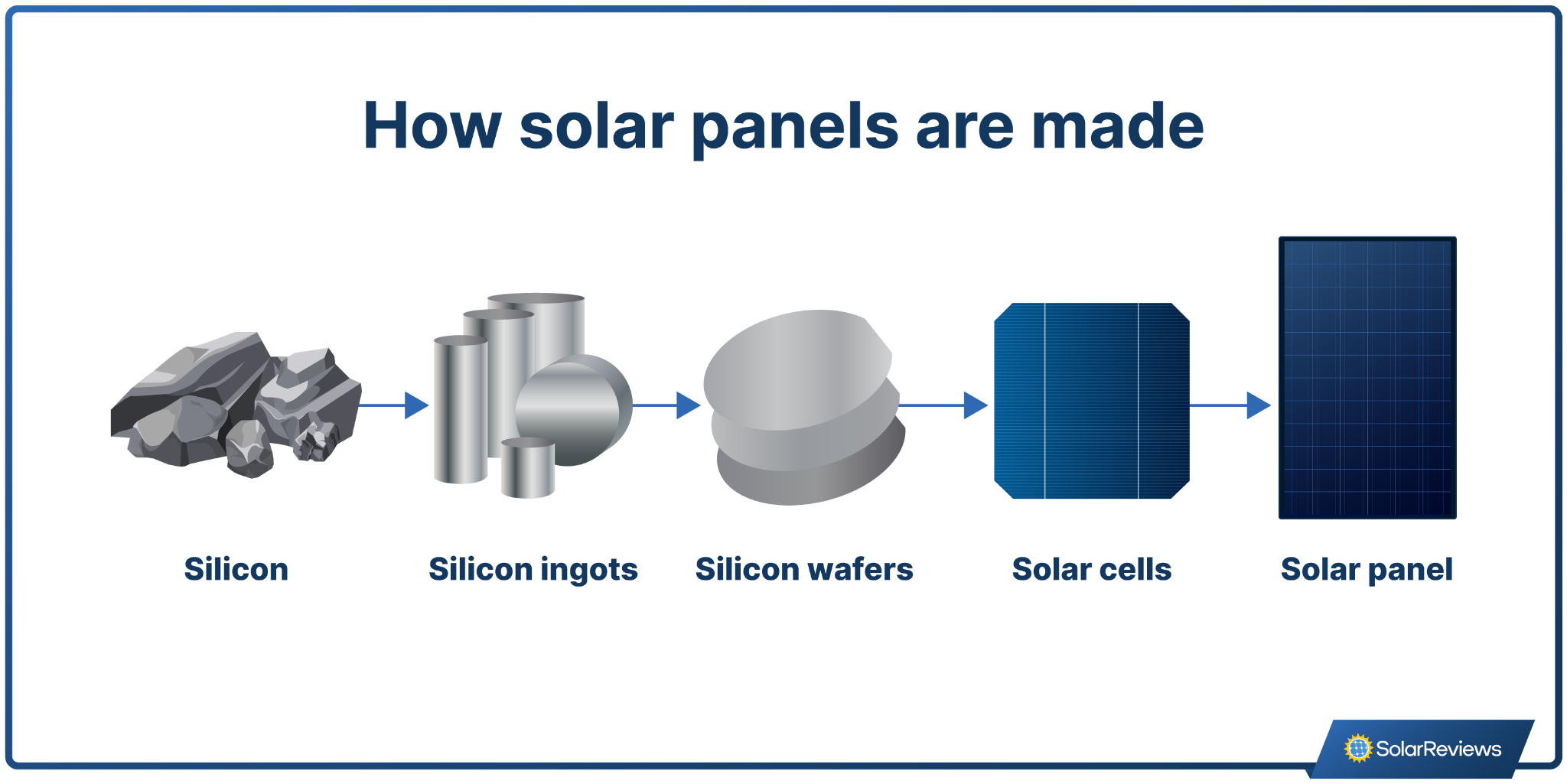
India has become very good at the final stage. The earlier stages are a different story.
According to a September 2026 study, India's module manufacturing capacity was nearly seven times its solar-cell capacity and 116 times its ingot-wafer capacity. In other words, India can assemble enormous quantities of solar panels but still depends heavily on imported components and manufacturing technology, particularly from China.
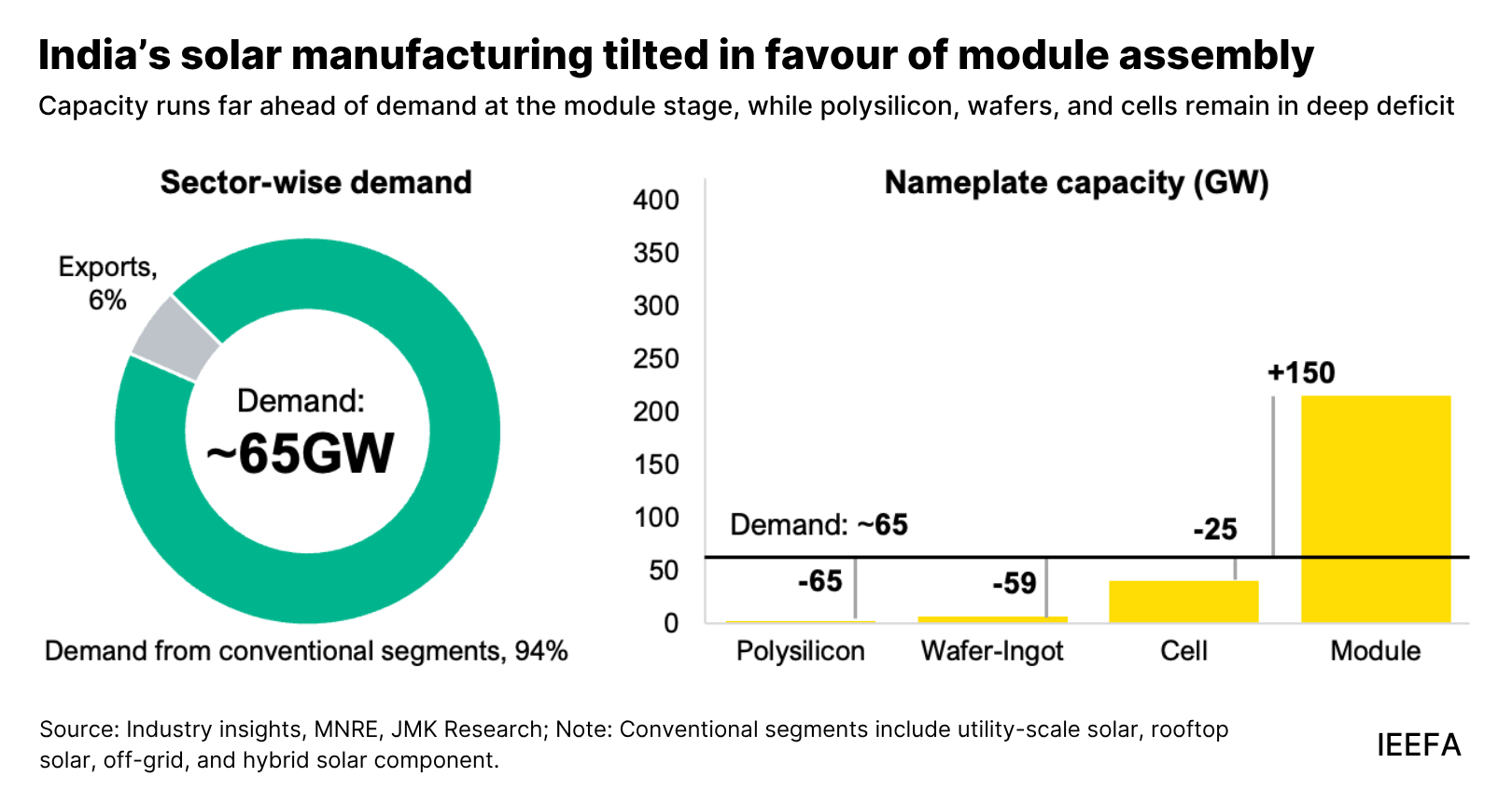
And China has a remarkable grip on this industry. It accounts for roughly 95% of global solar wafer production capacity and dominates several other stages of the manufacturing chain. This dependence extends beyond raw materials. Indian manufacturers also rely on Chinese equipment, engineering expertise and technical support to establish and operate factories.
That's why China's proposed restrictions are concerning. Even when manufacturers can purchase equipment, access to the technology and expertise required to install, commission and upgrade production lines could become more complicated.
India is now looking for alternatives, and Germany has emerged as a promising partner.
German companies have decades of experience developing precision manufacturing equipment. In June 2026, German equipment maker RENA Technologies signed a contract to supply machinery for 6 GW of advanced solar-cell manufacturing capacity to Bengaluru-based EMMVEE Energy.
More recently, in November, IB Solar signed an agreement with RENA and fellow German supplier Centrotherm to develop a proposed 2 GW solar-cell production line in India. These partnerships are encouraging, although they won't be an overnight replacement for Chinese suppliers.
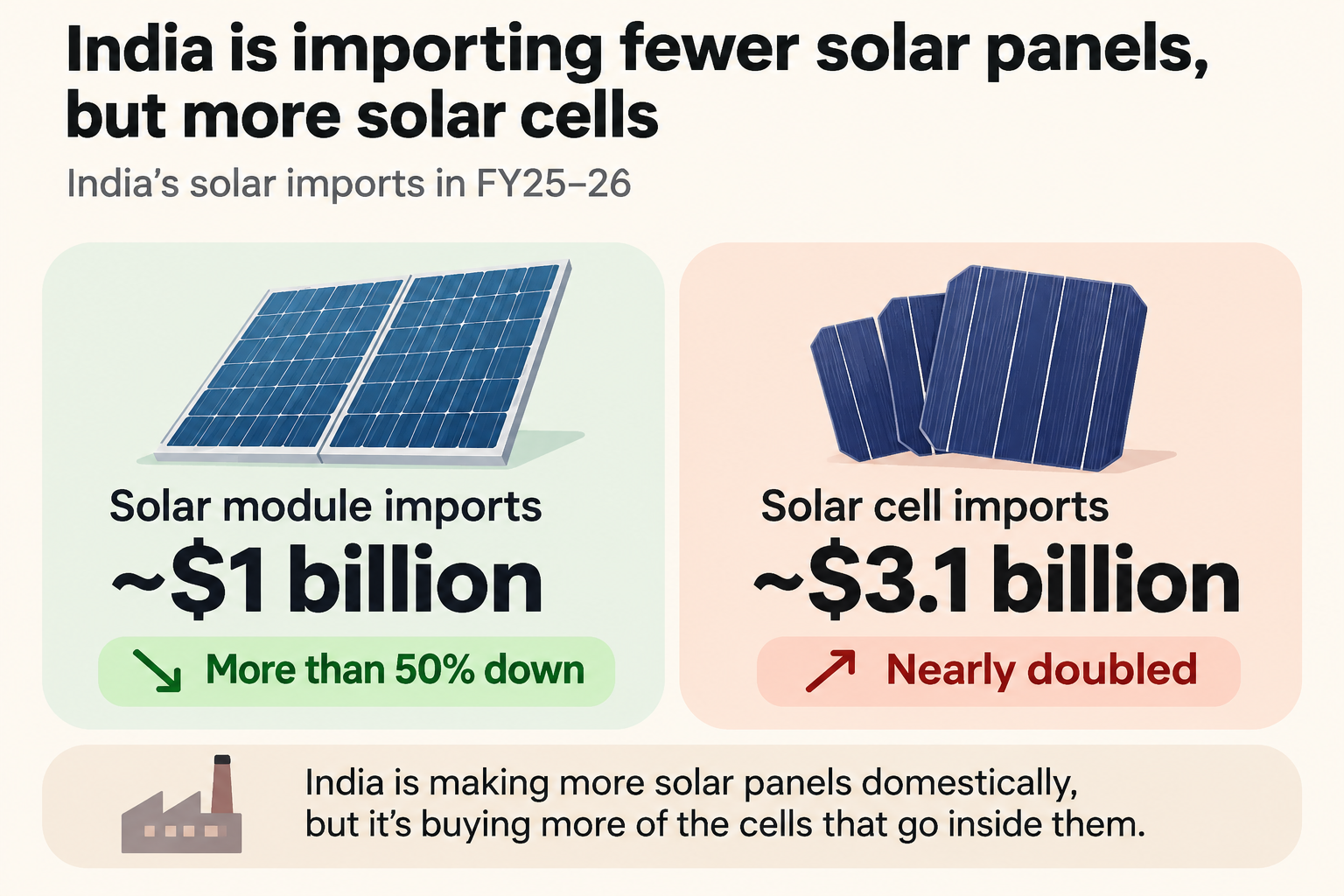
China has spent years developing an integrated ecosystem of equipment manufacturers, component suppliers, engineers and factories. Germany has strong technological capabilities, but matching China's production scale and prices will be difficult.
The reported 40–50% premium also needs perspective. It refers to equipment procurement costs, not necessarily the overall cost of a solar factory or finished panel. Manufacturing efficiency, production yields and maintenance costs will ultimately determine whether European machinery is commercially competitive.
Meanwhile, India has another problem to solve. Despite its dependence on imported components, the country may already have more solar module manufacturing capacity than it needs.
The September study estimated that Indian module factories were operating at just 35–40% capacity utilisation, below the 50–65% considered necessary for sustainable operations. Another 135 GW of capacity was planned or under construction.
So India faces an unusual situation. It has invested heavily in assembling solar panels, while the more technically demanding parts of manufacturing remain underdeveloped.
The government is trying to correct this through its ₹24,000 crore production-linked incentive scheme and domestic sourcing requirements. From June 2028, eligible solar projects will also have to use wafers from approved manufacturers, subject to the government's implementation conditions.
That creates a tight deadline for companies planning new upstream factories.
They need machinery, technology partners, skilled engineers and enough time to begin commercial production. China's restrictions could complicate precisely those investments.
For India, diversifying suppliers is a sensible immediate response. But long-term independence will require domestic manufacturing capabilities across the entire supply chain, rather than simply more factories assembling imported components.
India has already demonstrated that it can manufacture solar panels at scale. Building the technology and industrial ecosystem behind those panels will be a considerably harder task.
Sources: China's Ministry of Commerce | Mint | IEEFA and JMK Research | RENA Technologies | RENA Technologies | Ministry of New and Renewable Energy