
 Newsletter
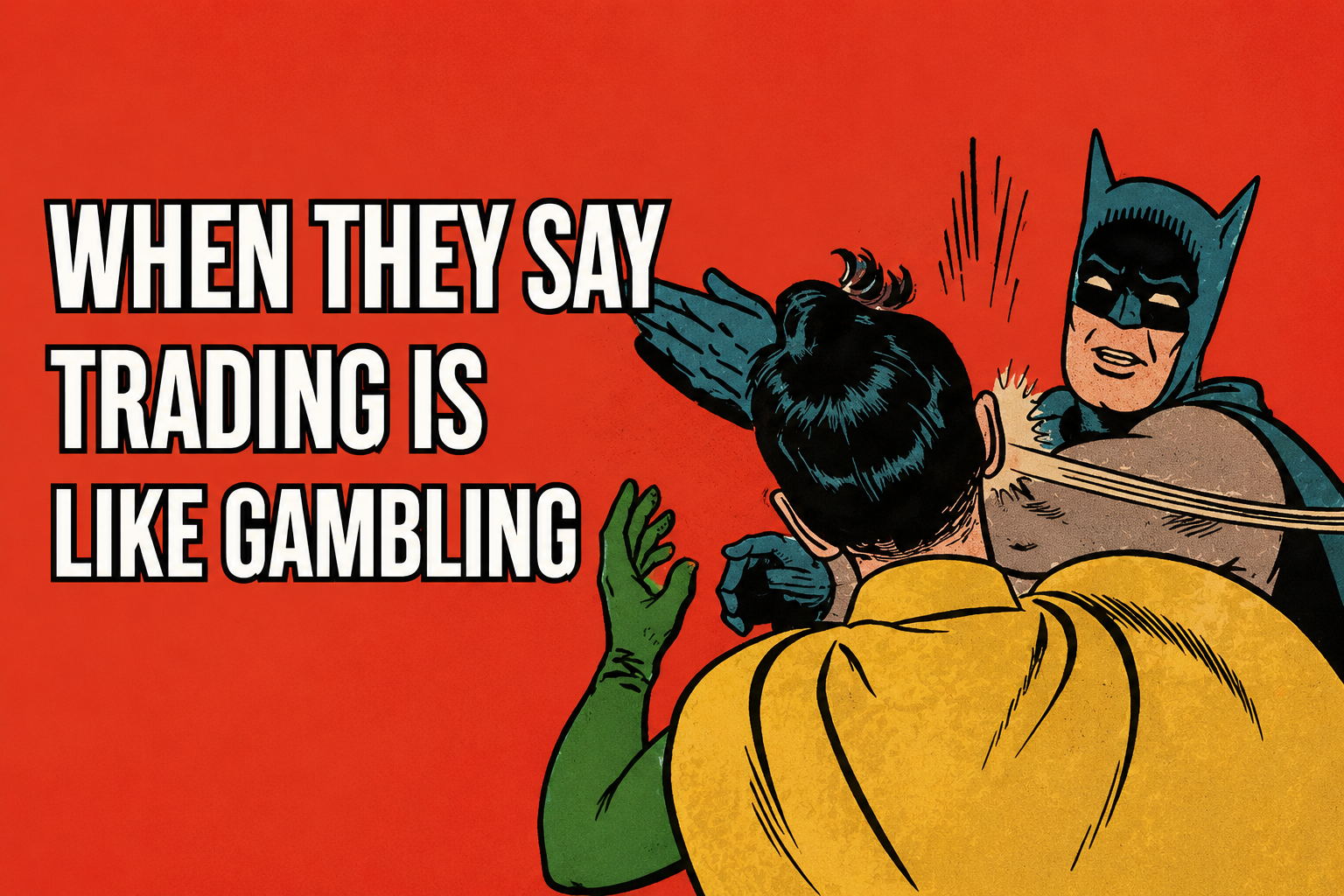
"You'll lose all your money."
"Options are just gambling."
"The stock market is basically a casino."
If you've ever told someone that you trade, you've probably heard at least one of those statements. And honestly, it's not difficult to understand why. Every day, people make and lose fortunes in the markets, and no one knows with certainty what prices will do tomorrow. On the surface, it doesn't seem very different from gambling.
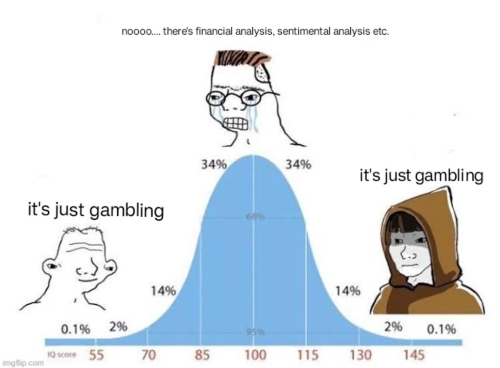
But maybe we've been asking the wrong question all along.
Instead of asking whether trading is gambling, we should probably ask what gambling actually is.
Most people would define gambling as putting money on an uncertain outcome. It sounds like a perfectly reasonable definition until you realise that uncertainty exists in almost every financial decision we make. Buying a house assumes property prices won't collapse. Starting a business assumes customers will continue to buy your product. Even putting money into a fixed deposit is a bet that inflation won't quietly eat away at your returns. None of these decisions come with certainty, yet we don't instinctively call them gambling.
So if uncertainty isn't the difference, what is?
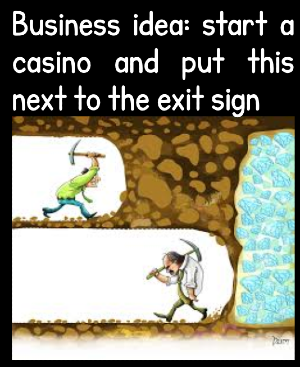
A casino is probably the easiest place to understand gambling. It doesn't know who's going to win the next spin of the roulette wheel or the next hand of blackjack, and it doesn't need to.
Every game is designed so the odds work in the house's favour over time.
Insurance companies aren't very different. They don't know whose car will crash next month or which house will be damaged in a storm, but they have decades of data to price those risks. Some years are worse than others, but over time the numbers work in their favour. That's why nobody calls insurance companies gamblers.
Now let's come back to trading.
Every trade is uncertain. No trader knows where the market will close tomorrow, just as no investor knows which headline will move prices next week. Even the greatest investors in history have made investments that didn't work out. Uncertainty isn't a flaw in markets. It's the reason markets exist.
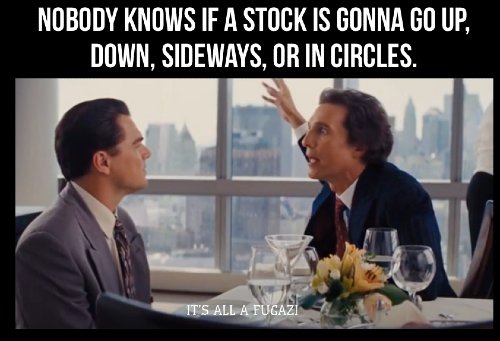
The difference is that professional traders aren't trying to remove uncertainty.
They're trying to find situations where the odds are slightly better than everyone else thinks they are. That edge might come from research, experience, data, risk management or a strategy that's been tested over hundreds of trades. Nobody gets every trade right. That's never been the goal. The goal is to make decisions where, over time, the probabilities work a little more in your favour.
This is also why investing can easily become gambling. Buying a stock because someone on social media recommended it, chasing a penny stock without understanding the business or purchasing options simply because they look cheap isn't really investing. The instrument isn't what makes something gambling. The process behind the decision does.
At this point, you might ask: if trading isn't gambling, why do so many traders lose money?
It's a fair question. According to SEBI's latest study, around 93% of individual F&O traders ended up making net losses, while only about 7% were profitable. Those numbers seem to settle the debate. But they may simply prove that most participants never developed an edge. Losing money doesn't automatically make something gambling. If it did, every failed business and every unsuccessful startup would also be called gambling.
Perhaps that's why asking whether trading is gambling misses the bigger picture. Both involve uncertainty. Both involve risk. Both involve the possibility of losing money. The real difference is how those risks are approached.
Gamblers hope the odds eventually work in their favour. Professionals spend their time trying to understand what those odds actually are before they put money at risk. Markets don't reward certainty because certainty doesn't exist. They reward people who can consistently make better decisions in an uncertain world.
Maybe trading isn't the opposite of gambling after all. Maybe it's simply a far more disciplined, calculated and nuanced version of it. The uncertainty never disappears. What changes is how you understand it, how you manage it and whether you've built an edge before putting your money on the line.
It's never been a game of certainty. It's always been a game of probabilities.