

 Newsletter
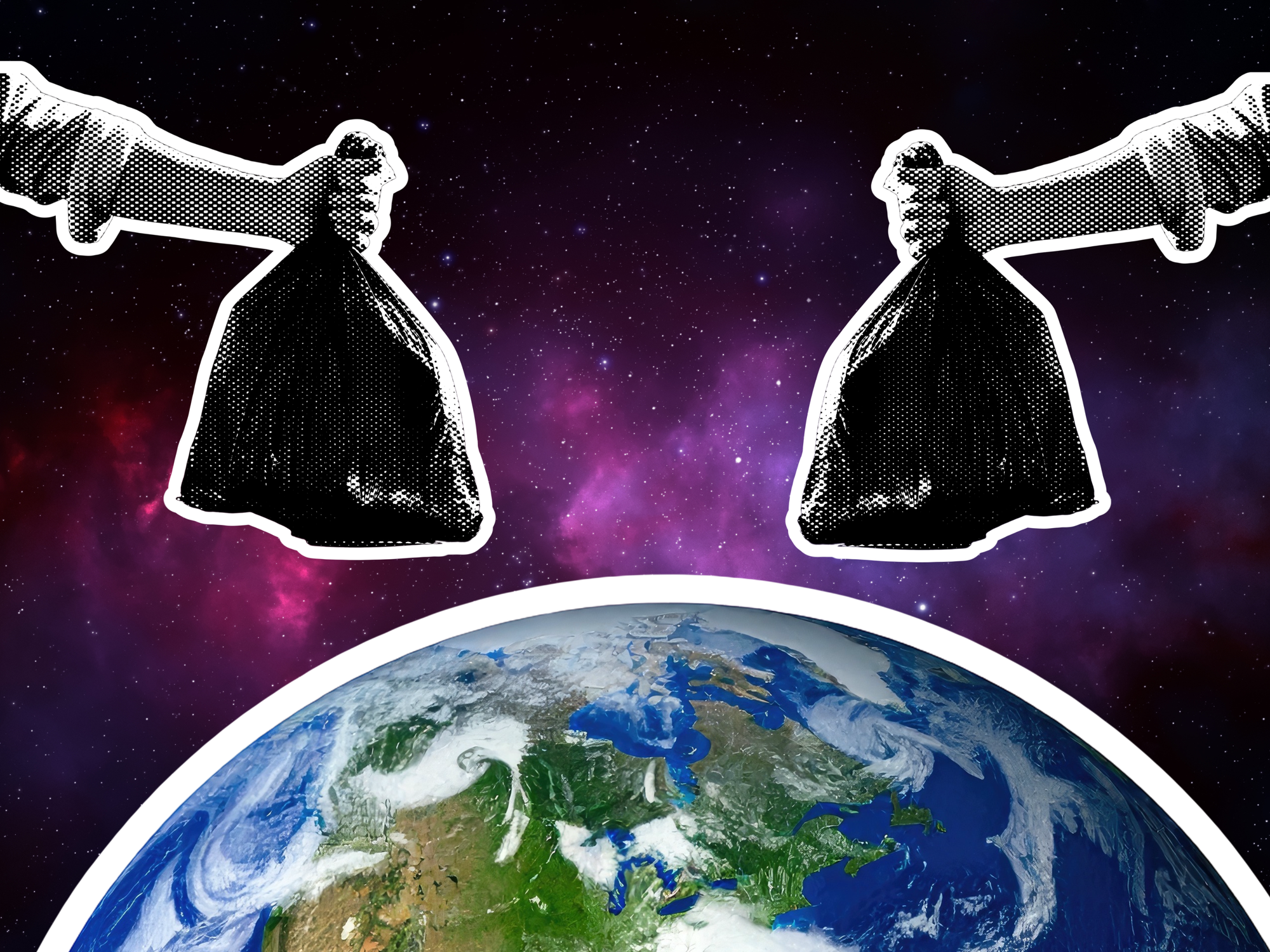
A discarded SpaceX Falcon 9 rocket crashed into the Moon this week at nearly 8,700 km/h, leaving behind a fresh crater. It wasn't dangerous, but it did put the spotlight back on a growing problem. The space around Earth is slowly turning into a junkyard.
Every rocket launch and satellite mission leaves something behind. Sometimes it's an old rocket stage. Sometimes it's a dead satellite or a tiny fragment from an earlier collision. Over the years, all of it has added up into what we now call space junk.
There are now more than 36,000 trackable objects larger than 10 cm orbiting Earth. On top of that, there are millions of smaller pieces that are far too small to track. The scary part is that size doesn't matter much in space. Even a tiny paint chip can tear through a satellite because everything is moving at roughly 28,000 km/h.
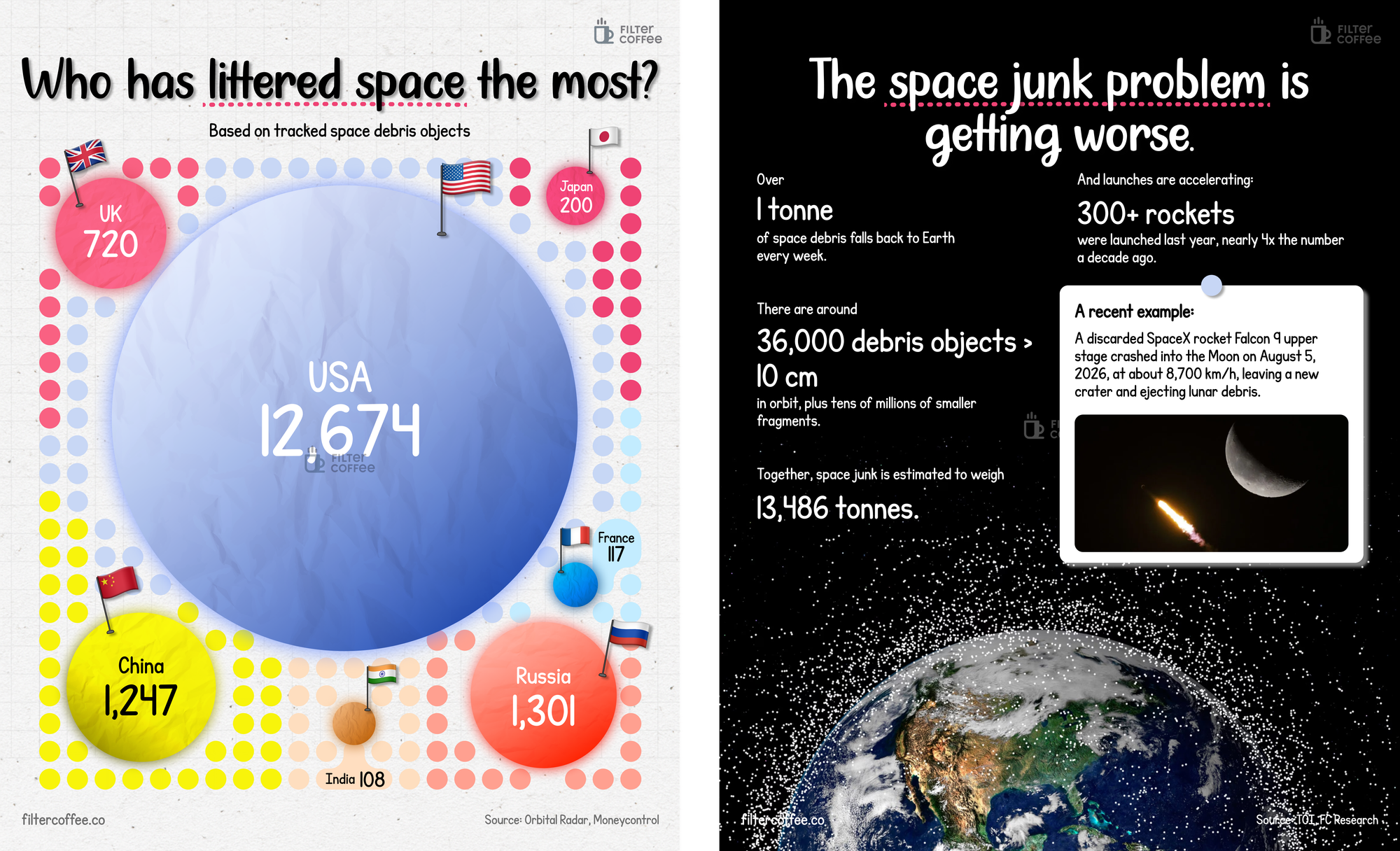
The problem is only getting bigger. More than 300 rockets were launched last year, almost four times as many as a decade ago. Thousands more satellites are waiting to be launched as companies build global internet networks and countries invest more in space.
The biggest risk isn't a single piece of debris. It's what happens when debris hits something else. One collision can send thousands of new fragments flying across orbit.
Those fragments can trigger more collisions, creating a chain reaction that scientists call the Kessler Syndrome. If that ever gets out of control, parts of Earth's orbit could become too risky for satellites and future missions.
That would affect a lot more than astronauts. Satellites help us navigate with GPS, forecast the weather, make digital payments, watch live television, track flights and ships, and respond to natural disasters. We depend on them every single day, even if we rarely think about it.
Space feels endless when you look up at the night sky. But the stretch of orbit that humanity depends on is surprisingly small. We have spent decades filling it with things we no longer use. The Moon crash is a reminder that what we leave behind in space doesn't simply disappear. Sooner or later, it comes back to haunt us.
Humanity has only just begun exploring space. It would be ironic if the biggest obstacle to that journey turned out to be our own mess.