
 Newsletter
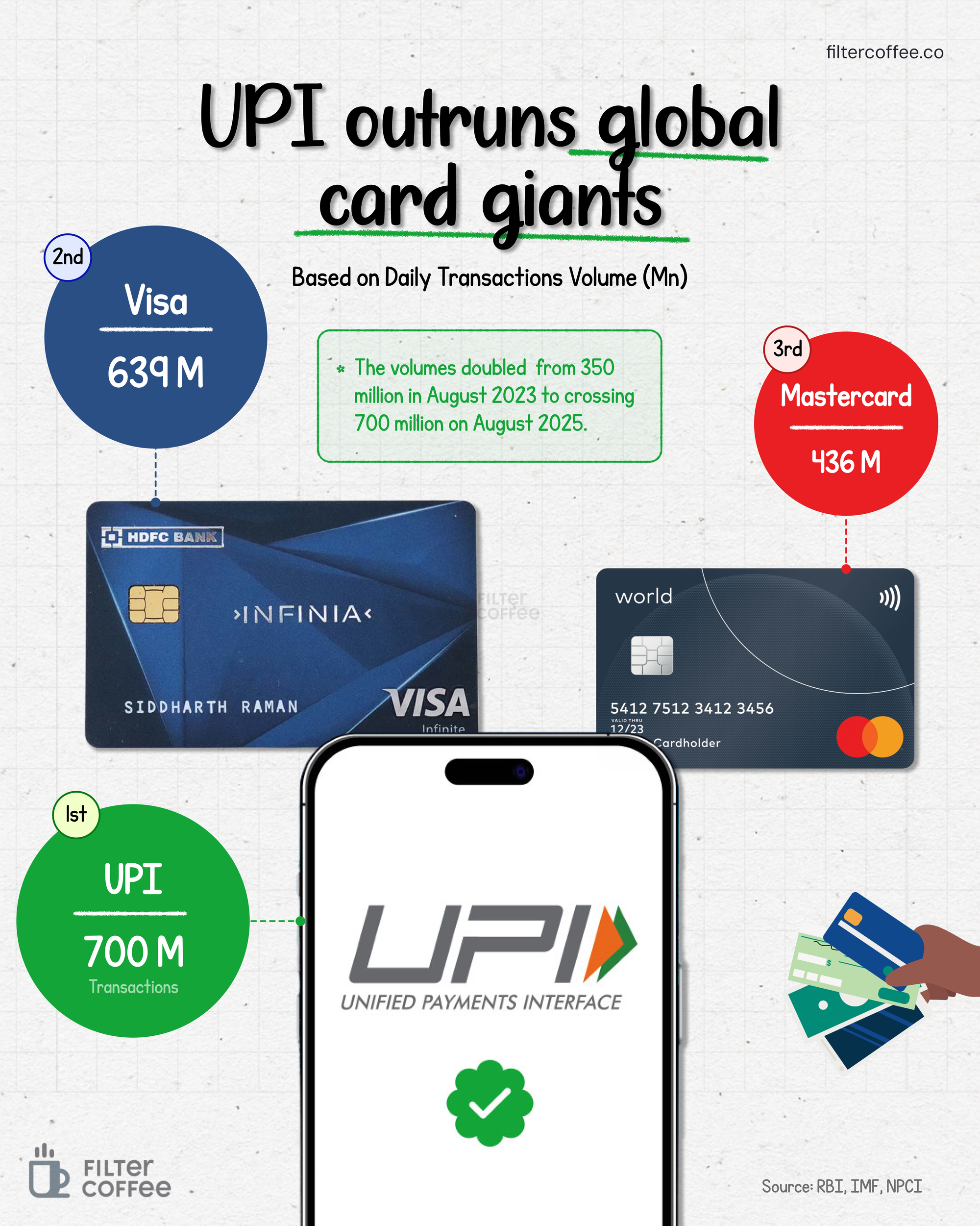
UPI has pulled off a big win. It is now processing over 700 million transactions a day, beating Visa (639 million) and Mastercard (436 million) on daily volumes.
The system is going global, with Japan piloting UPI this week for QR payments by Indian tourists using their bank accounts.
What started as a simple domestic payments upgrade has turned into the busiest payments rail in the world. This is = driven by zero-cost transactions, instant settlement, and mass adoption across India.
Why this matters: UPI shows how infrastructure-first design can leapfrog legacy systems. While card networks still dominate globally, India has built a system that works at population scale, fast, cheap, and real-time.
From street vendors to large businesses, UPI has become the default way India pays, and its growth curve suggests this story is far from done.