

 Newsletter
SMEs Bounce Back, India secures rare earth supply, and Rupee rebounds.
🗓 Morning, folks!
Markets notched up gains for the second day on Tuesday, with the Nifty and Sensex climbing close to 0.5%. Auto stocks led the charge after reports suggested that China lifted curbs on rare-earth magnet exports.
Investor sentiment improved further on news of potential talks between Russian President Vladimir Putin and Ukrainian President Zelenskyy, raising hopes of easing geopolitical tensions.
💡 Things on our radar
1. A quick rupee check
The Indian rupee logged its biggest gain in over a month, strengthening 19 paise to 87.20 against the US dollar in early trade. Traders credited strong domestic equities, optimism over reforms, suspected RBI intervention, and easing global jitters for the currency’s rebound.
2. SME IPOs bounce back
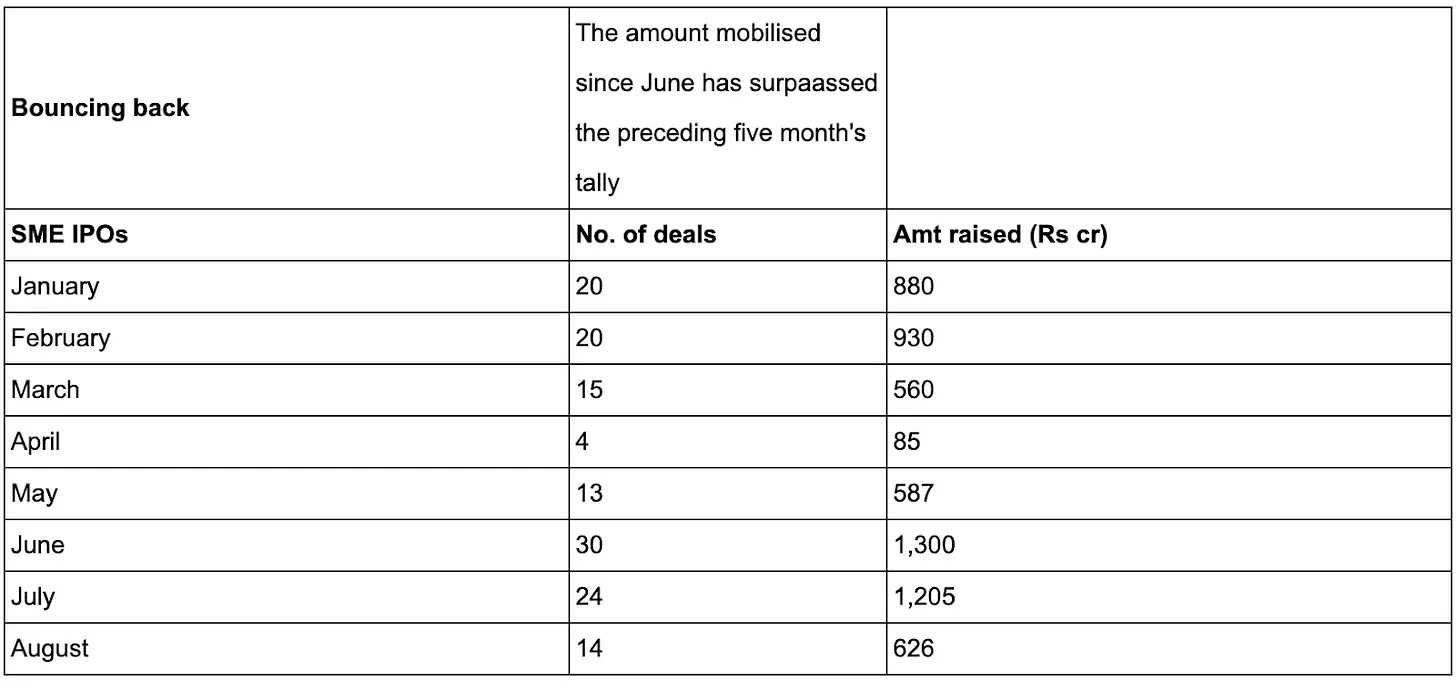
After a three-month lull, SME IPOs are roaring again, 68 companies have raised ₹3,131 crore since June. The surge rides on the back of buoyant market sentiment, strong mainboard IPOs, and better listing gains, pulling investors back into the riskier small-cap play.
3. Unemployment eases
At the same time, fresh jobs data shows India’s unemployment rate cooled to 5.2% in July, a three-month low, with more women entering the workforce.
But youth joblessness told a different story: nearly 30% in Himachal Pradesh versus just 5.6% in Gujarat. The gap highlights why SME growth and capital access are critical for creating jobs where they’re needed most.
1 Big Thing: India gets relief as China eases export curbs 🇮🇳
China is planning to ease export curbs on fertilisers, rare earth minerals, and tunnel boring machines after talks with India.
Rare earths are critical for electronics, EVs, and defence, while tunnel boring machines are essential for metros and major infrastructure projects.
The deets: the move follows Chinese foreign minister Wang Yi’s meeting with India’s External Affairs Minister S Jaishankar in New Delhi, where the two held “substantive” discussions.
Why it matters: fertiliser restrictions have made it harder for farmers to get Di-Ammonium Phosphate (DAP), a key fertiliser that supports wheat and other Rabi crops.
Delays in tunnel boring machines have slowed big infrastructure projects. Auto companies are also struggling because China controls 90% of rare earth minerals, used in electric vehicles. The shortage has already forced Bajaj Auto to cut EV production by half in July, with more cuts expected in the coming months.
China imposed restrictions in April in response to US tariffs, forcing governments and companies to seek alternatives. Indian auto parts maker Sona Comstar is among those planning domestic production of rare earth magnets to reduce reliance on China.
2. Cabinet clears bill to regulate India’s gaming industry 🎮
The Union Cabinet has cleared the Online Gaming Bill, a landmark move to regulate the fast-growing sector and curb illegal betting.
The Online Gaming Bill will regulate digital gaming in India, ban online betting, curb addiction and fraud, tighten oversight of real-money platforms, and let MeitY block illegal sites.
Breaking it down: the draft law bans individuals or companies from running online games where players must pay to join. Ads and transactions for such games will also be stopped, and banks may be barred from processing payments. Any game that requires players to pay a fee or deposit money, whether skill-based or chance-based—will be treated as an “online money game.”
The penalties: offering money games could mean up to three years in jail and fines of ₹1 crore. Advertising them could attract two years and ₹50 lakh, while facilitating payments may invite three years and another ₹1 crore fine.
Worth noting: expected to be tabled in the Lok Sabha on Wednesday, the Bill marks a sweeping regulatory shift for India’s gaming industry, particularly targeting real-money formats that dominate the market.
3. Trump administration eyes 10% stake in Intel 🇺🇸
The Trump administration is weighing a move to take a roughly 10% stake in Intel Corp. This deal could make the US government the chipmaker’s largest shareholder.
What’s brewing: officials are considering turning some or all of the $10.9 billion that Intel was promised under the Chips and Science Act into company shares, instead of giving it as straight funding for chipmaking. At Intel’s current market value, a 10% stake would be worth about $10.5 billion.
Intel has also attracted interest from SoftBank, which recently committed $2 billion to buy shares in the company. The investment is being seen as a vote of confidence from the Japanese tech giant as it expands its exposure in the United States.
The big question: can government backing revive Intel?
Once the industry leader, the chipmaker is now grappling with flat sales, mounting losses, and a fading technological edge.
Intel has yet to secure a major customer for its manufacturing business and continues to trail rivals in the artificial intelligence boom despite significant spending. Some analysts say a government stake is crucial to safeguard United States national security and stabilise the struggling company. Others believe Intel’s challenges go deeper than funding and question whether Washington’s support can truly engineer a turnaround.
4. Seafood startup Captain Fresh files for $400 million IPO 🐟
Captain Fresh has confidentially filed for an IPO with SEBI and aims to raise $350-400 million.
Founded in 2020, Bengaluru-based Captain Fresh grew into a global seafood player, owning brands across US, Europe, offering shrimp, tuna, salmon.
What’s brewing: of the total IPO size, around $300 million will be raised through a fresh issue, while the rest will be an offer for sale, allowing some early-stage investors to partially exit. The listing is expected to value the company at over $1 billion.
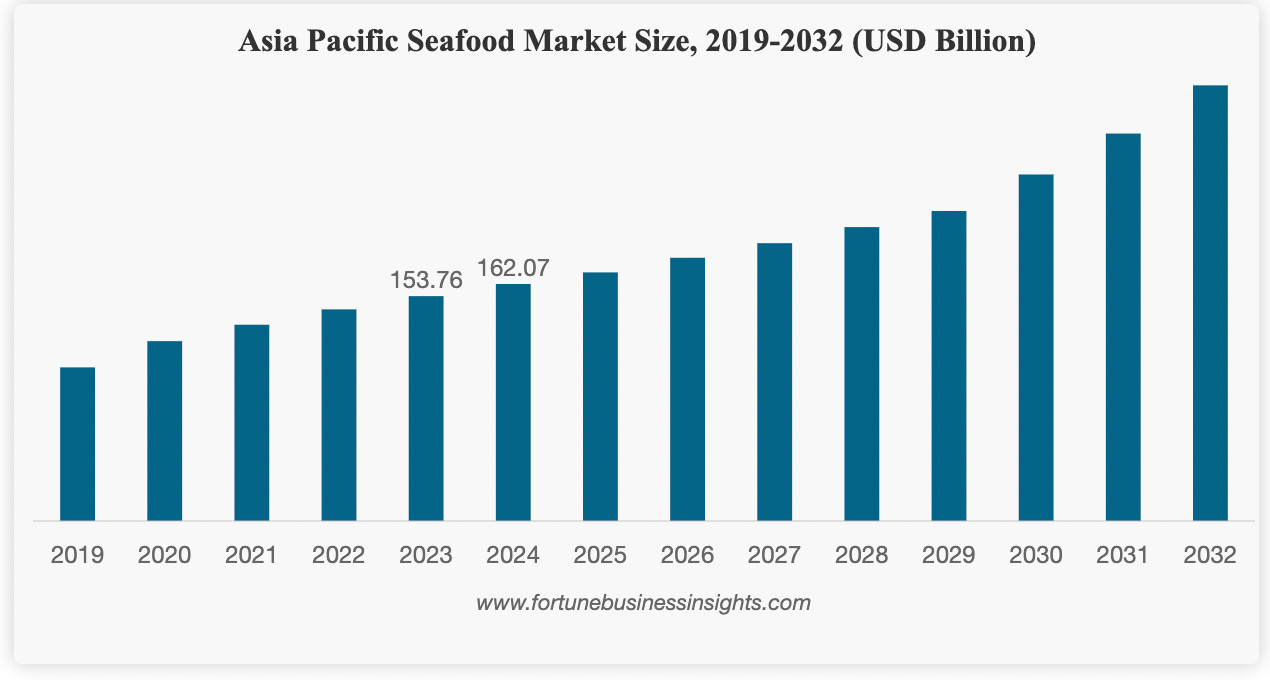
The big picture: the global seafood industry is projected to grow from $386.99 billion in 2025 to $651.39 billion by 2032, reflecting a CAGR of 7.72%.
With brands like CenSea and Ocean Garden in the US, Koral in Poland, and Senecrus in France, Captain Fresh is positioning itself as a global multi-species player in shrimp, salmon, tuna, crab, lobster, and more, giving it significant room to capture market share in this rapidly expanding industry.
5. Inox Wind climbs after ₹175 cr stake sale in subsidiary 💨
Inox Wind shares gained 3% after the company sold shares worth ₹175 crore in its subsidiary, Inox Renewable Solutions.
IRSL, Inox Wind subsidiary and top EPC player, delivers end-to-end renewable project services from design to commissioning with turnkey plug-and-play solutions.
What’s happening: the company said that it has agreed to sell 49.6 lakh shares of its subsidiary Inox Renewable Solutions, valuing the business at about ₹7,400 crore.
By the numbers: the announcement follows Inox Wind’s Q1FY26 earnings, where the company reported a 134% surge in net profit to ₹97.3 crore.
Why it matters: the stake sale not only unlocks value for Inox Wind but also highlights the strong market positioning of IRSL, one of India’s top two wind EPC firms. With India targeting 500 GW of renewable capacity by 2030, the monetisation move strengthens Inox Wind’s balance sheet and positions the group to capitalise on the country’s accelerating clean energy transition.
6. Stocks that kept us interested 🚀
1. Cotton stocks rally as govt scraps 11% import duty 🌱
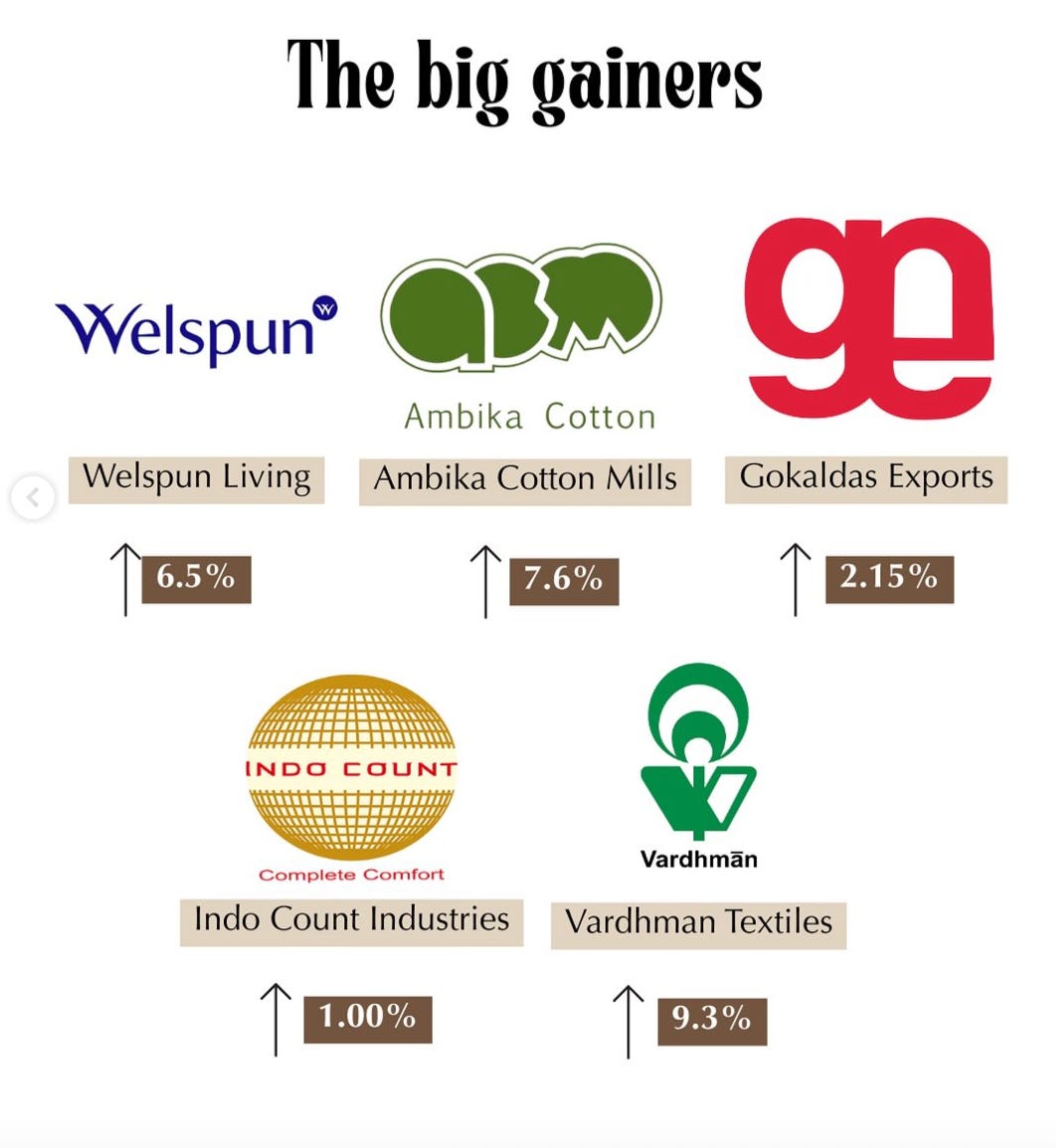
Cotton-linked stocks like Gokaldas Exports, KPR Mills, Welspun Living, and Ambika Cotton Mills jumped in Tuesday’s trade after the government announced the removal of the 11% import duty on raw cotton till September 30.
What’s happening: the Finance Ministry scrapped both basic customs duty and the Agriculture Infrastructure and Development Cess to provide relief to the textile and garment sector, which has been under strain from high input costs.
The why: the move is expected to lower raw material prices, improve profit margins, and boost global competitiveness for Indian textile players. The duty cut offers short-term breathing room for the textile and garment industry by reducing raw material import costs and potentially improving profit margins and competitiveness.
2. SPML Infra shares gain after bagging ₹1,073 crore deal 💰
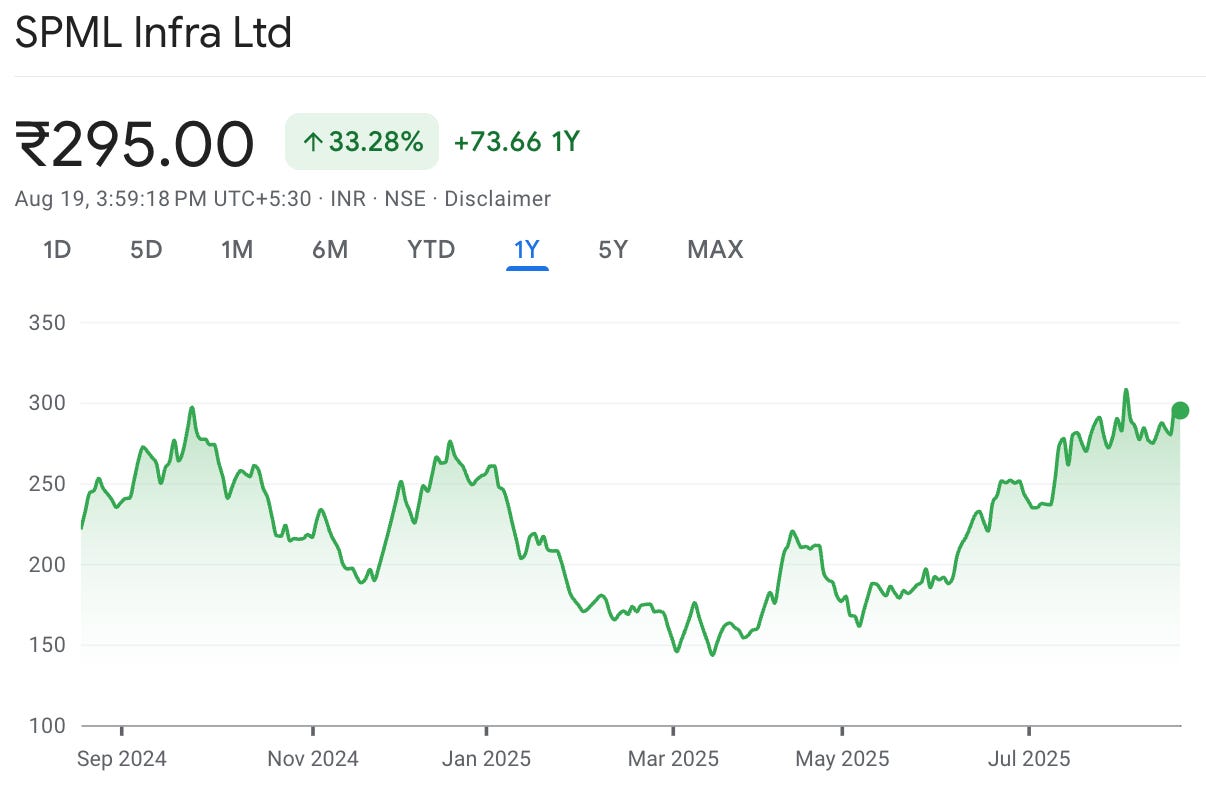
Shares of SPML Infra Ltd. rose 2% as the company bagged an order worth ₹1,073 crore from the Indore Municipal Corporation.
SPML Infra Limited is an infrastructure development company that specialises in turnkey water and waste management solutions.
The deets: the project will augment a water supply system under the AMRUT 2.0 - a national water management scheme aimed at providing clean water coverage to every household. The project includes construction of a system for raw water intake, processing, and transmission of water supply. It will have the capacity of 1,650 MLD (million litres per day).
Big picture: the project comes a month after SPML bagged a similar project in Rajasthan worth ₹385 crore. The company hasn’t reported a profit yet but is betting on its strong pan-India presence, robust portfolio of successful projects, and partnerships with government entities to make a turnaround.
What else are we snackin’ 🍿
💼 Pink slips: Oracle lays off 10% of India staff, mainly in the Cloud unit, as it restructures to boost AI and data centre growth.
🚲 EV push: Swiggy has teamed up with Bounce to deploy e-scooters for delivery partners in NCR and Bengaluru, aiming to cut costs and shrink its last-mile carbon footprint.
💡AI unlocked: OpenAI has launched ChatGPT Go, a budget plan at ₹399/month with GPT-5, UPI support, image generation, and file uploads, making advanced AI tools more accessible to Indian users.
That’s a wrap! Don’t let the weekday blues get to you.
And if you’d like to place your brand on this newsletter, let us know.
Hit that 💚 if you liked this issue.