
 Newsletter
Hindalco's expansion plans, Amazon to invest in OpenAI, and forex reserves at record highs.
🗓️ Morning, folks and Happy Monday! ☀️
India’s forex reserves just hit a fresh all-time high, climbing to ₹65.24 lakh crore as of January 23, up sharply from ₹63.73 lakh crore a week earlier. That’s a jump of roughly ₹1.50 lakh crore in just seven days.
What’s inside the kitty:
- Foreign currency assets: ₹51.76 lakh crore
- Gold reserves: ₹11.32 lakh crore
- IMF reserve position: ₹43,086 crore
Why it matters: bigger reserves mean a stronger buffer against global shocks. It gives the RBI more firepower to manage currency swings, handle capital outflows, and keep the rupee steady.

Let’s hit it!
1 Big thing: Nestlé’s growth recipe delivers 🍫
Nestlé India served a strong quarter, with solid sales and profit growth, even as margins took a hit from higher ad spends. The stock jumped up to 3% post results but gave up some gains by close.
By the numbers:
- Revenue up 18.5% YoY at ₹5,667 crore, the highest-ever quarterly sales for Nestlé India
- Adjusted profit at ₹1,018 crore, up 46% YoY, helped by a one-time tax gain of ₹202 crore
- EBITDA margin at 21.1% vs 23.1% last year
What worked: this was a volume-led win. Nestlé clocked its highest volume growth in five years, with confectionery leading the charge in double digits.
Strong advertising, wider product range, deeper rural reach, premium offerings, and the quick-commerce push helped drive demand across categories.
What pinched: margins took a hit as Nestlé spent aggressively on brand building. Higher ad spends and costs linked to new labour codes (₹10 crore) and severance (₹35 crore) weighed on profitability, even after the tax write-back cushion.
Zoom out: India’s FMCG sector is slowly shifting gears, from price hikes to volume-led growth. Demand is improving, but input costs like milk and edible oils remain sticky.
Companies with strong brands and distribution, like Nestlé, are better placed to absorb cost pressures while keeping growth simmering.
2. Hindalco sparks India’s aluminium surge ↗️
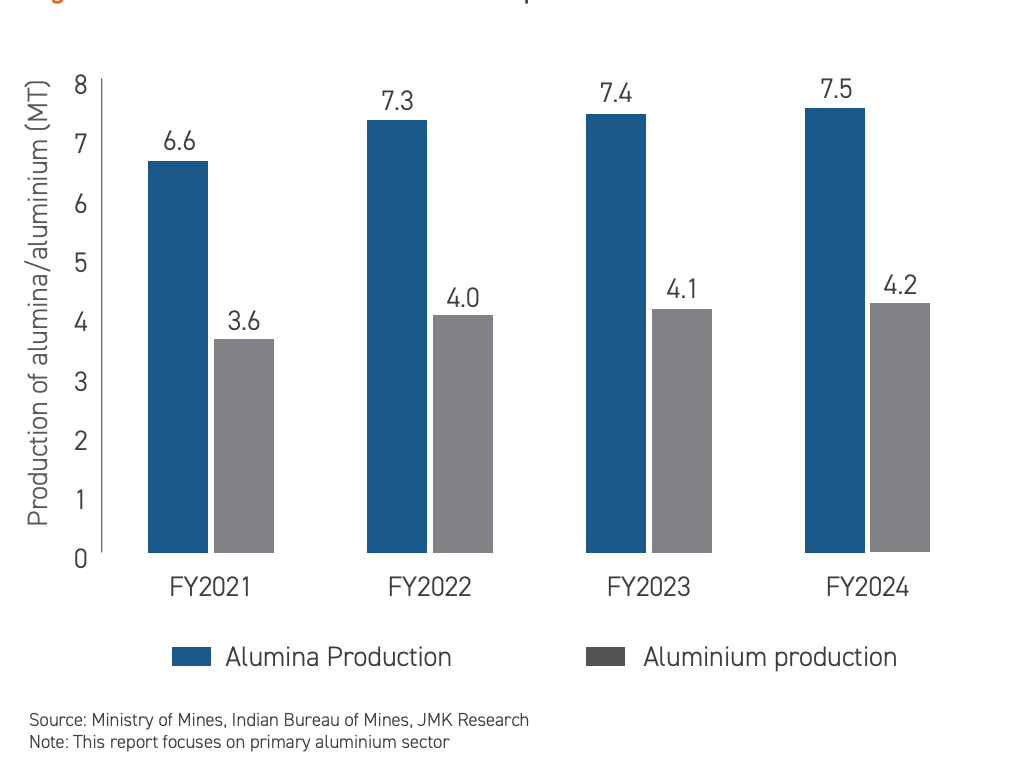
Hindalco Industries came under spotlight after Aditya Birla Group announced a ₹21,000 crore expansion of its aluminium smelter operations in Odisha. However the stock ended lower on Friday.
The deets: the aluminium plant will add 3.6 lakh tonnes of annual capacity. It has also started a new aluminium sheets and battery-grade foil unit with a capacity of 1.7 lakh tonnes, built at a cost of ₹4,500 crore.
The significance: the battery-grade aluminium foil plant, India’s first will supply enough material to support up to 100 GWh of battery production, using aluminium sourced directly from the company’s own facility.
In simple terms, these projects help India make key materials for lithium-ion batteries at home instead of importing them, supporting electric vehicles and energy storage.
The larger goal: the move is part of Hindalco’s bigger plan to grow its aluminium business, with around ₹37,000 crore invested in Odisha and a total of ₹55,000 crore across India.
3. How India turned phones into export gold 📱
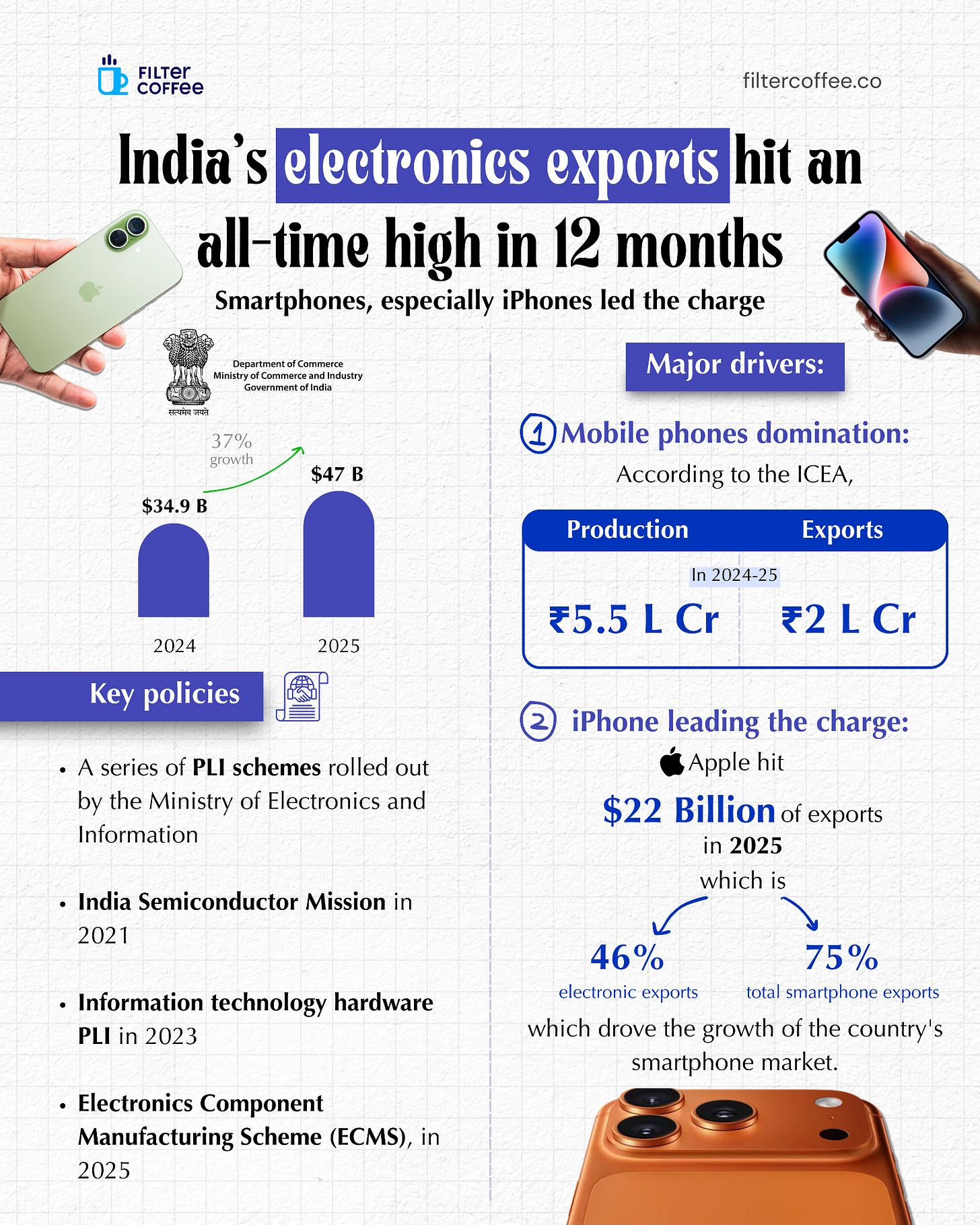
India’s electronics exports have hit an all-time high over the past 12 months, driven largely by smartphones. iPhones lead from the front.
Exports jumped from $34.9 billion in 2024 to $47 billion in 2025, marking a 37% year-on-year growth.
Mobile phones have emerged as the dominant category, with production worth ₹5.5 lakh crore and exports crossing ₹2 lakh crore in FY25.
iPhone exports alone touched $22 billion in 2025, accounting for 46% of India’s total electronics exports and nearly 75% of smartphone exports. This scale-up has been powered by policy support over the years.
4. Stocks that kept us interested 🚀
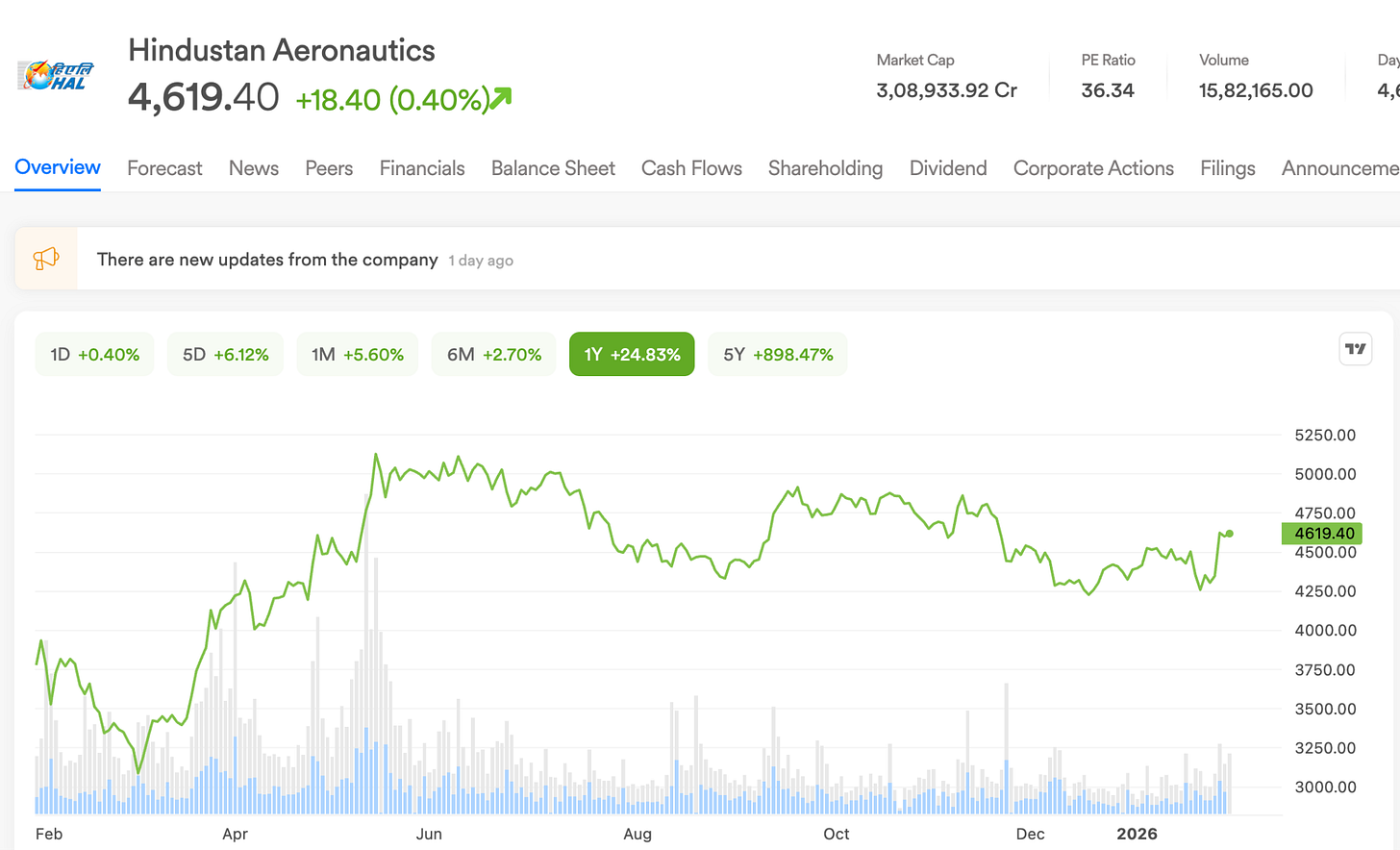
1. HAL’s civil takeoff begins ✈️
HAL has secured a ₹1,800 crore domestic order from Pawan Hans to supply 10 Dhruv NG helicopters.
Pawan Hans is a state-owned helicopter service provider, operating a fleet of over 40 helicopters for offshore oil and gas operations. It connects remote regions, providing emergency medical services, and conducting VIP transportation.
The importance: the Dhruv NG is a Made-in-India, 5.5-tonne twin-engine helicopter with modern avionics, built for safe, all-weather flying across India’s toughest terrains.
Big picture: the move will help HAL expand beyond its defence-heavy business and build a stronger presence in civil aviation. The segment is expected to contribute about 25% of revenues over the next decade, up from 3-6% currently.
2. What’s inside ACME solar’s power deal with NHPC? ⚡
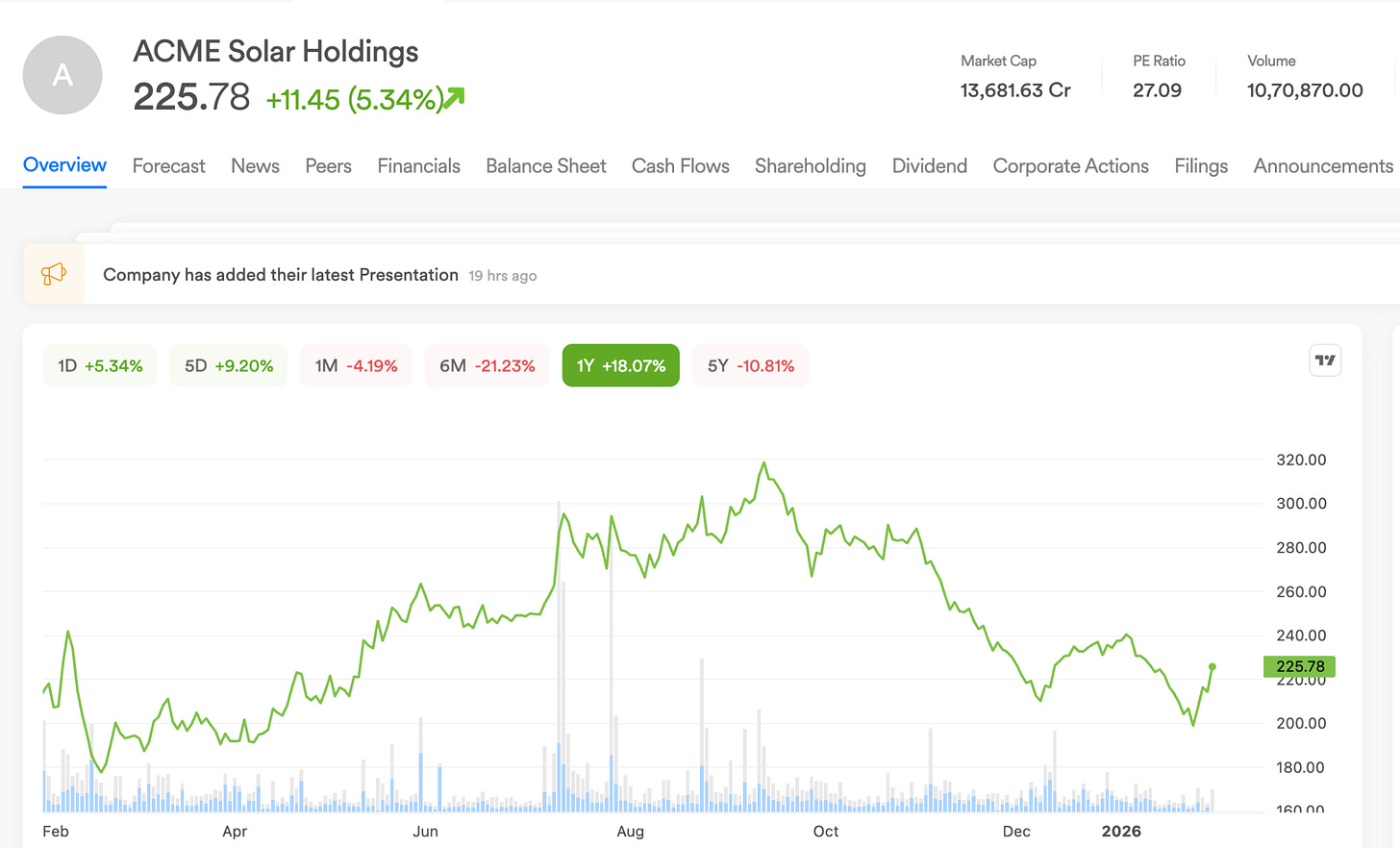
ACME Solar Holdings shares jumped 5% after the company announced a long-term power supply agreement with NHPC, alongside strong Q3 numbers and an interim dividend.
ACME Solar is a renewable energy player, while NHPC builds and operates hydropower plants, generating electricity from rivers and dams to supply clean energy across India.
About the deal: the company will invest around ₹3,700 crore in the project.
In simple terms, it means a clean power plant that can supply up to 250 MW of electricity. It can deliver power when needed, not just when the sun shines or the wind blows, making renewable energy more reliable.
The project will be linked to Inter-State Transmission System substations, and all connectivity approvals are already in place.
3. Clean shipping push powers Cochin Shipyard ✅
Cochin Shipyard just got a clean-energy boost, and the market noticed.
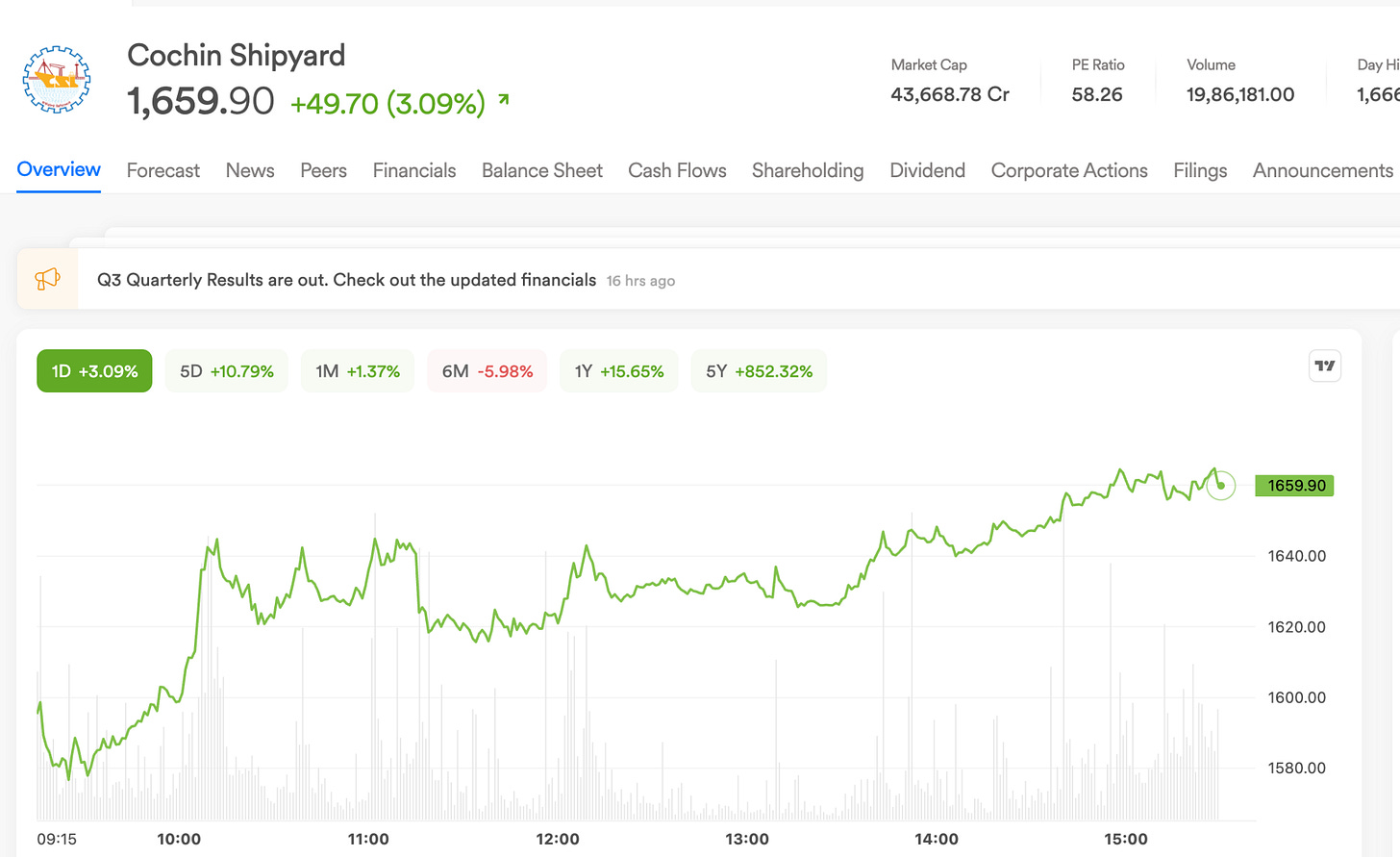
The stock climbed 3% on Friday after the company bagged a ₹100-250 crore order to build two green tugboats for Polestar Maritime under the Government’s Green Tug Transition Programme.
Polestar Maritime is a marine services company providing tugboats, port support, coastal logistics, and vessel operations for shipping and ports.
In simple terms, tugboats are the tough little workhorses that push and pull massive ships around ports. The 60T bollard pull tag is basically their muscle rating, how much they can pull.
Numbers check: the win comes right after a mixed Q3. Profit slipped 18.3% YoY to ₹144.6 crore, but revenue rose 17.7% to ₹1,350.4 crore.
What else are we snackin’ 🍿
🏢 Long lease: IBM signed a 10-year lease for 230,000 sq. ft. of office space at Tata Realty’s Intellion Park in Gurugram, reflecting strong demand in tier-I office markets.
🤖 Big talks: Amazon is in early-stage talks to invest up to $50 billion in OpenAI, according to a Reuters source, with discussions still ongoing.
✈️ India sourcing: Airbus is targeting $2 billion in annual sourcing from India as the country’s commercial aircraft fleet is set to triple to 2,250 planes over the next decade.
☁️ Cloud power: Perplexity signed a $750 million deal with Microsoft Azure to deploy AI models via Foundry, while continuing AWS as a key cloud partner.
🍎 AI expands: Apple acquired Israeli AI startup Q.ai to strengthen its audio and on-device AI capabilities, as the race with Meta and Google heats up.
That’s a wrap! Don’t let the Monday blues get to you.
And if you’d like to place your brand on this newsletter, let us know.
Hit that 💚 if you liked this issue.