
 Newsletter

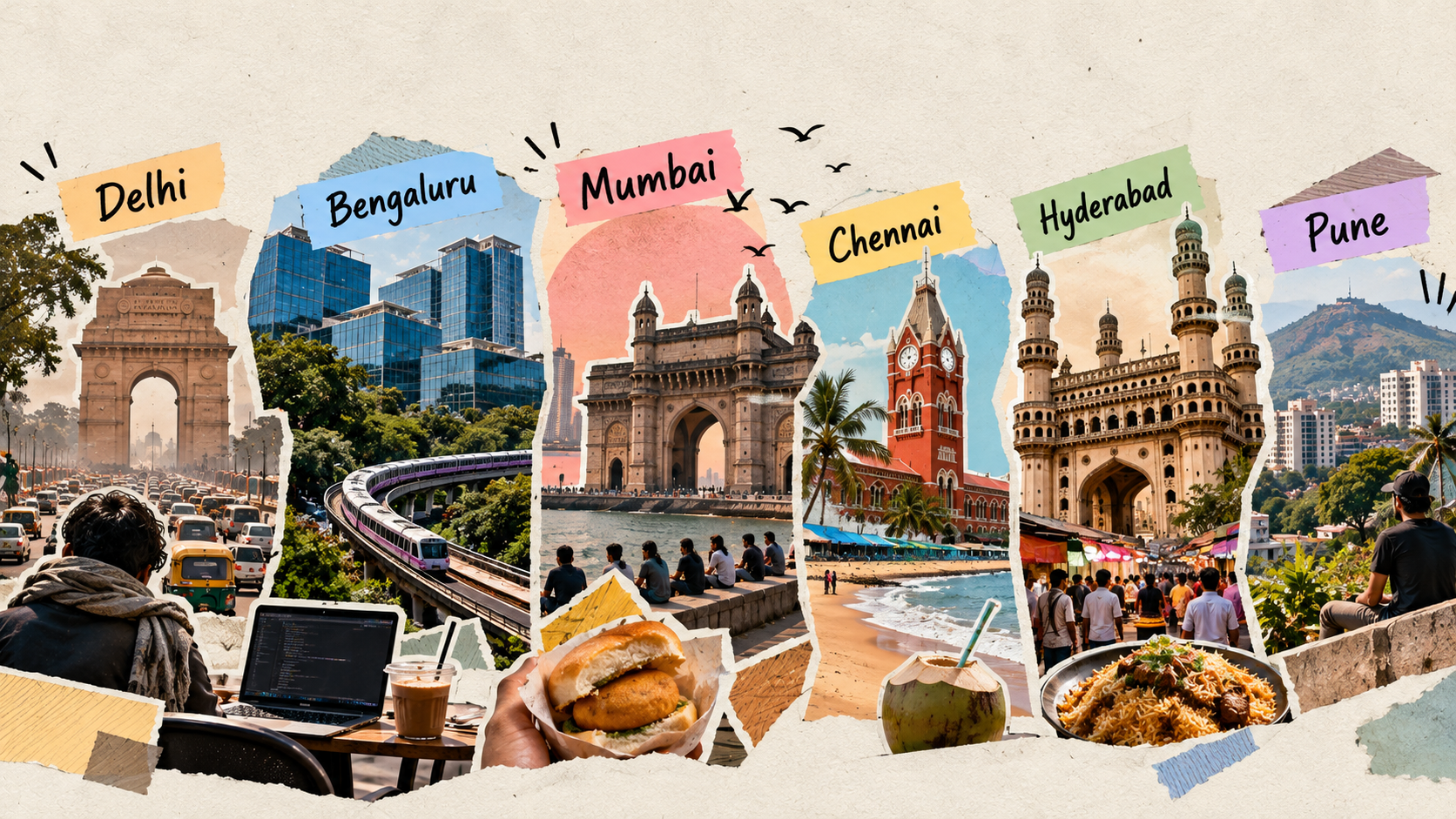
Every city has two versions of itself. The one visitors fall in love with, and the one residents experience every Monday morning.
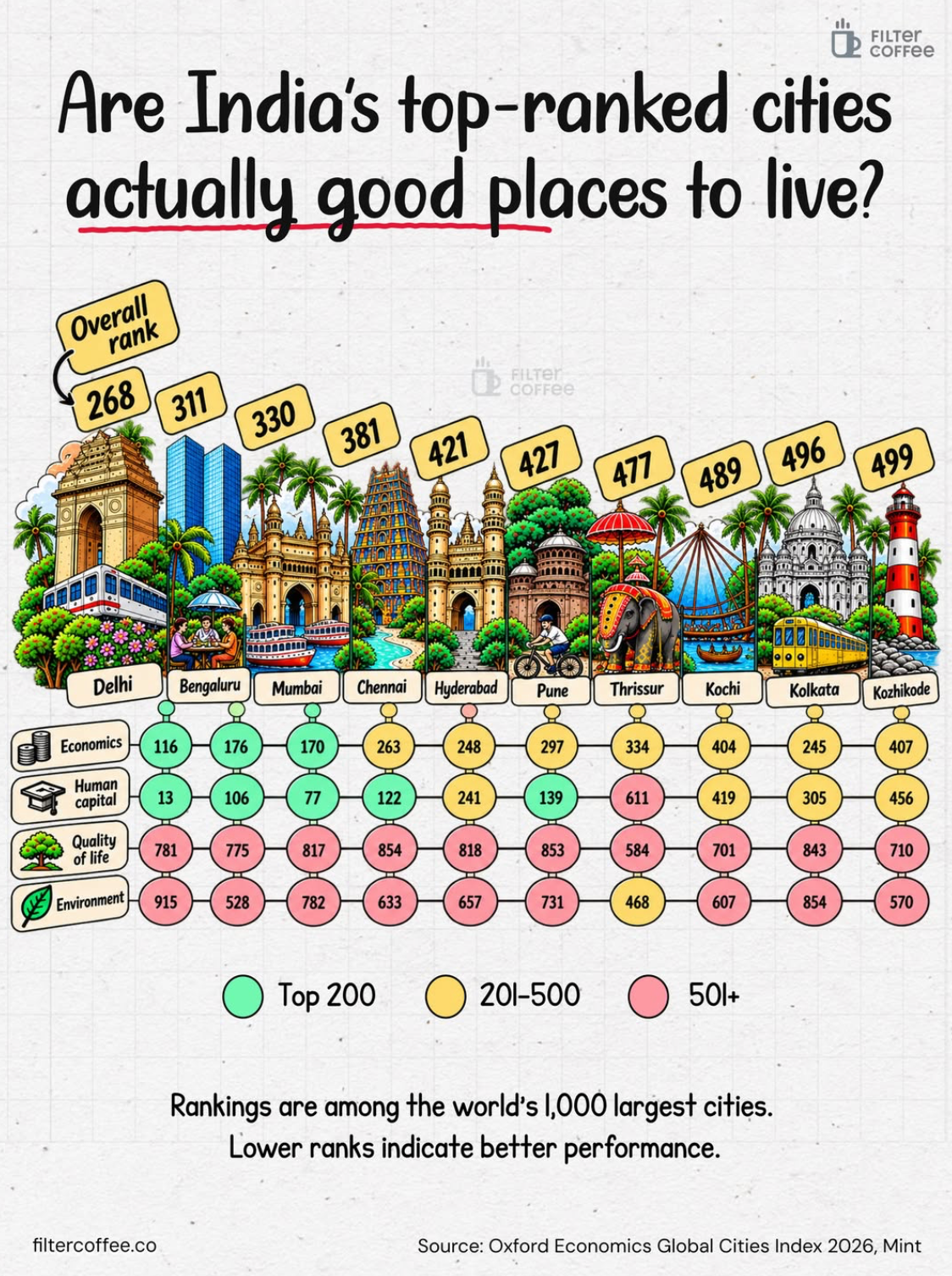
A 2026 ranking by Oxford Economics offers an interesting look at this difference. Among the world’s 1,000 largest cities, Delhi ranks 268th overall, followed by Bengaluru at 311th and Mumbai at 330th. Chennai ranks 381st, Hyderabad 421st and Pune 427th.
The ranking considers economic strength, education, quality of life and the environment. And the results raise an interesting question about the cities millions of Indians call home.
Take Mumbai. People move here for jobs, better salaries and the chance to build a career. But there is also the rent, the crowded local trains and the hours spent travelling between home and work. For many, living in Mumbai means accepting these compromises in exchange for the opportunities it offers.
Bengaluru faces a similar situation. It has become one of India's biggest technology hubs, attracting professionals from across the country. Yet traffic and rising housing costs have become part of everyday life. Delhi offers plenty of career opportunities, too, but air pollution remains a serious concern.
The numbers reflect some of these differences. Delhi ranks 116th for economics but 781st for quality of life. Bengaluru ranks 176th for economics and 775th for quality of life, while Mumbai ranks 170th and 817th, respectively. All three perform considerably better economically than they do on quality of life.
Of course, a ranking cannot capture everything about living in a city. It cannot measure the comfort of having family nearby, the friends you meet over the years or the little routines that make an unfamiliar place feel like home. Two people can experience the same city very differently.
India's Ease of Living Index offers another perspective, placing Pune, Navi Mumbai and Greater Mumbai among its leading cities. The two rankings use different methods, so they cannot be directly compared. Still, they remind us that there is more than one way to measure a city's appeal.
This question will become more important as India's cities grow. The World Bank estimates that India's urban population could reach 951 million by 2050. Housing, public transport, clean air and reliable infrastructure will become increasingly important as more people move to cities for work and education.
None of this means India's biggest cities are bad places to live. For many, they offer opportunities that are difficult to find elsewhere. For others, a smaller city or their hometown may offer a better balance between work, expenses and personal life.
Ultimately, a city's success isn't just about the jobs it creates or the money it attracts. It's also about whether people can afford a home, get to work without losing hours every day, breathe clean air and have enough time left to enjoy their lives.
After all, we don't move to cities just to work in them. We move there to build a life.