
 Newsletter
"Our favourite holding period is forever."
- Warren Buffet
For decades, those six words have shaped the way millions of people invest. They've been quoted in books, repeated during every market correction and slowly turned into what many believe is the golden rule of investing. Buy a great company, hold it forever and let time do the rest.
But what if we've been focusing on the wrong part of Buffett's advice?
Most people remember the word "forever." Buffett always cared more about the business. When he bought companies like Coca-Cola or American Express, he wasn't making a promise never to sell them. He was buying businesses that continued to strengthen their competitive advantage year after year. The long holding period wasn't the strategy. It was simply the result of owning companies that kept earning his conviction.
History shows why that distinction matters. Kodak dominated photography before digital cameras changed the industry. Nokia controlled more than 40% of the global mobile phone market before smartphones rewrote the rules. BlackBerry was once the phone every CEO wanted.
Closer home, investors believed Reliance Communications would ride India's telecom boom for years, Suzlon Energy would dominate renewable energy, Yes Bank would become one of India's finest private banks and DHFL would continue benefiting from India's housing story. At one point, every one of these companies looked like a business you could comfortably own for decades.
They didn't collapse overnight. The businesses changed first. The stock prices simply followed.
Buy and hold was never the problem. Holding the wrong business was.
Even Buffett's own investing history tells the same story. Berkshire Hathaway has exited or sharply reduced investments in companies such as Tesco, Walmart, Wells Fargo, the major US airlines and TSMC. Buffett has never followed a "buy and never sell" philosophy. He has simply held businesses for as long as they continued to deserve his capital.
The world Buffett invested in, however, looked very different from the one investors are dealing with today. Back then, market leaders often stayed market leaders for decades.
Today, industries can change completely within a few years. AI is reshaping software, quick commerce has changed how India shops, electric vehicles are forcing automakers to rethink their future and breakthroughs in healthcare are already changing the outlook for entire industries. The speed of change has increased, and that naturally raises a different question for investors.
Instead of asking, "How long should I hold this stock?", maybe the better question is, "If I had fresh money today, would I still buy this business?"
Those two questions sound similar, but they lead to completely different decisions. Most investors continue holding a stock because they've owned it for years. Very few stop and ask whether the original reason for buying it still exists.
Maybe this is where Buffett's philosophy needs one small update.
The idea isn't to trade more or jump from one trending stock to another. It's to stop assuming every great company will remain great forever. Every once in a while, every business deserves to answer the same question again: Would I still buy this today? If the answer is yes, keep holding. If it isn't, maybe it's time to rethink the investment.
That doesn't mean reacting to every quarterly result or every headline. It means accepting that industries change, technology changes and businesses change. Your conviction should change too if the original reason for owning the business no longer exists. Loyalty to a company should never come before loyalty to your investment thesis.
Of course, this approach isn't perfect either.
Some of the greatest fortunes in the stock market have been created because investors simply stayed put. Companies like Infosys, Asian Paints and Bajaj Finance spent years testing investors' patience before rewarding them with extraordinary returns.
On the other hand, research has consistently shown that missing just a handful of the market's best trading days can dramatically reduce long-term returns. Investors who keep moving from one opportunity to another often risk missing the very businesses that go on to create exceptional wealth.
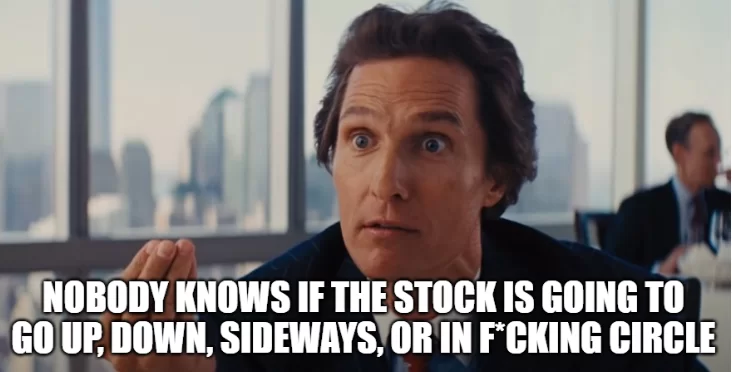
That's what makes investing so difficult. Holding forever can leave you with businesses whose best years are behind them. Selling too early can leave you watching exceptional businesses compound without you. The challenge isn't deciding whether to buy or sell. It's recognising whether you're looking at a temporary setback or the beginning of a permanent change.
Buffett's greatest lesson was never about holding a stock for as long as possible. It was about understanding the business well enough to know why you were holding it in the first place. Somewhere along the way, the investing world remembered the holding period and forgot the reason behind it.
Maybe the biggest risk isn't selling too early. It's holding on to a story that's already over.