

 Newsletter
India may finally be falling in love with expensive chocolate.
In 2026, Amul revealed that its chocolate business had crossed ₹1,400 crore and grown nearly 50% in a single year with sugar-free dark chocolate now contributing around 10% of its chocolate sales.
That is a huge shift for a country where chocolate was once seen mostly as a ₹10 impulse buy sitting near kirana store counters.
Suddenly consumers are not just buying chocolate but are asking how much cocoa is inside it, where the beans came from and whether it is Belgian, Swiss or bean-to-bar from Andhra Pradesh.
That change is slowly reshaping India’s entire chocolate industry.
For decades, the Indian market was dominated by industrial chocolate. Cadbury Dairy Milk, Nestlé Classic, KitKat and Perk became household names because they were affordable, sweet and widely distributed.
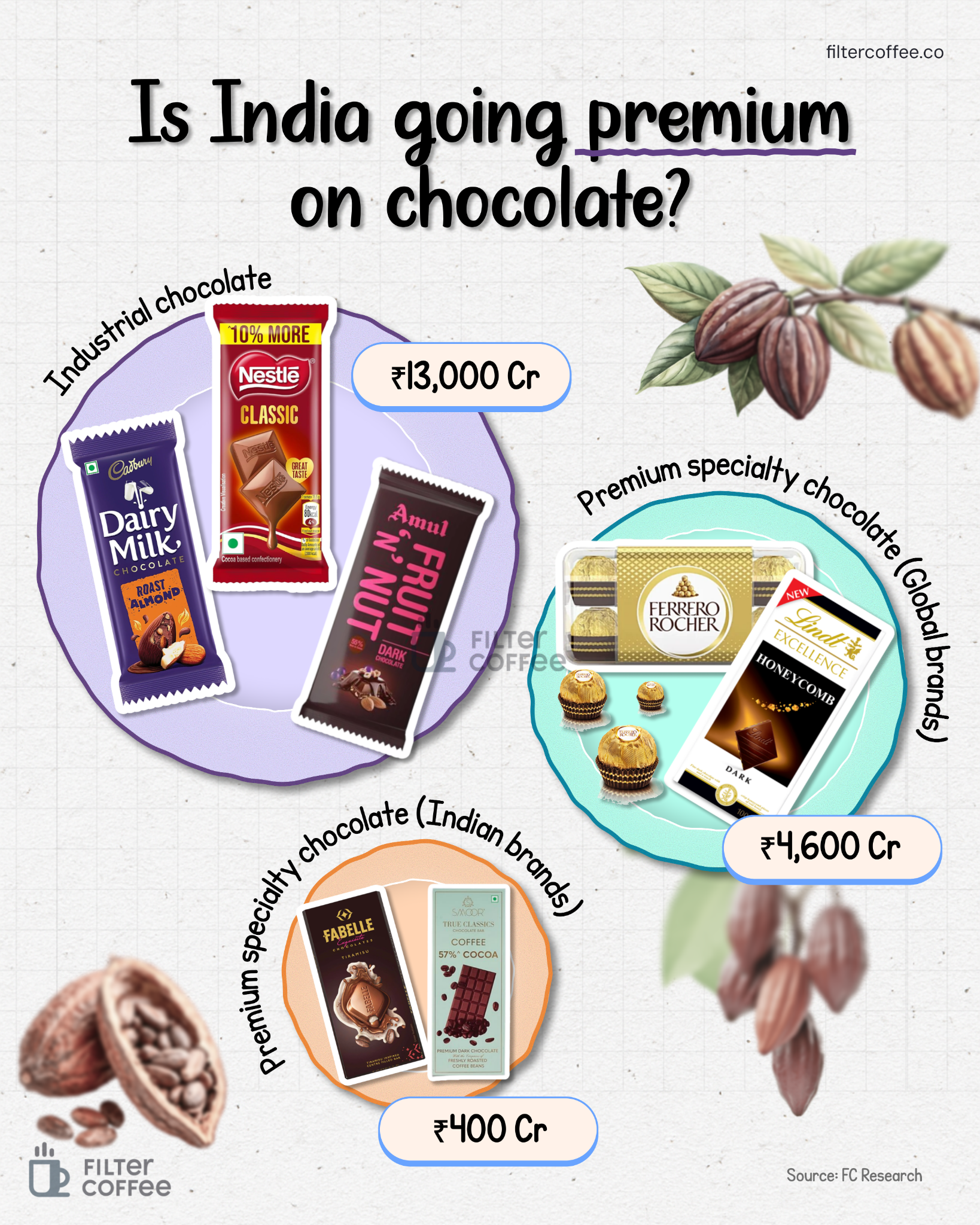
Even today, industrial chocolate remains the biggest segment in the country with an estimated market size of around ₹13,000 crore, but right beside it, another market has quietly exploded.
Premium specialty chocolate from global brands like Ferrero Rocher and Lindt has grown into a ₹4,600 crore segment while Indian premium brands are building a smaller but fast-rising category worth roughly ₹400 crore.
The interesting part is that this premium wave is no longer being driven only by imported gifting boxes during Diwali as India’s middle class is spending differently now.
Consumers who once upgraded from regular coffee to specialty coffee are now doing the same with chocolate. They are moving from “sweet” to “taste”.
Dark chocolate, single-origin chocolate and artisanal bars are suddenly becoming conversation starters in urban India. Brands like Manam, Paul and Mike, Mason & Co, Pascati, Soklet and Subko are building businesses around Indian cacao itself. They are talking about fermentation techniques, cocoa percentages and flavour notes like fruity, nutty or floral in the same way wine brands describe grapes.
This would have sounded absurd in India ten years ago.
What makes the story even more interesting is that India is slowly trying to become part of the global cacao conversation.
Andhra Pradesh already produces the largest share of India’s cocoa and the state government now wants to turn West Godavari into a dedicated “Cocoa City”. In its 2026-27 budget, Andhra allocated over ₹1,223 crore to horticulture expansion, including cocoa development. That matters because most people do not realise India actually grows cocoa beans while famous chocolate countries like Switzerland and Belgium mostly import them.
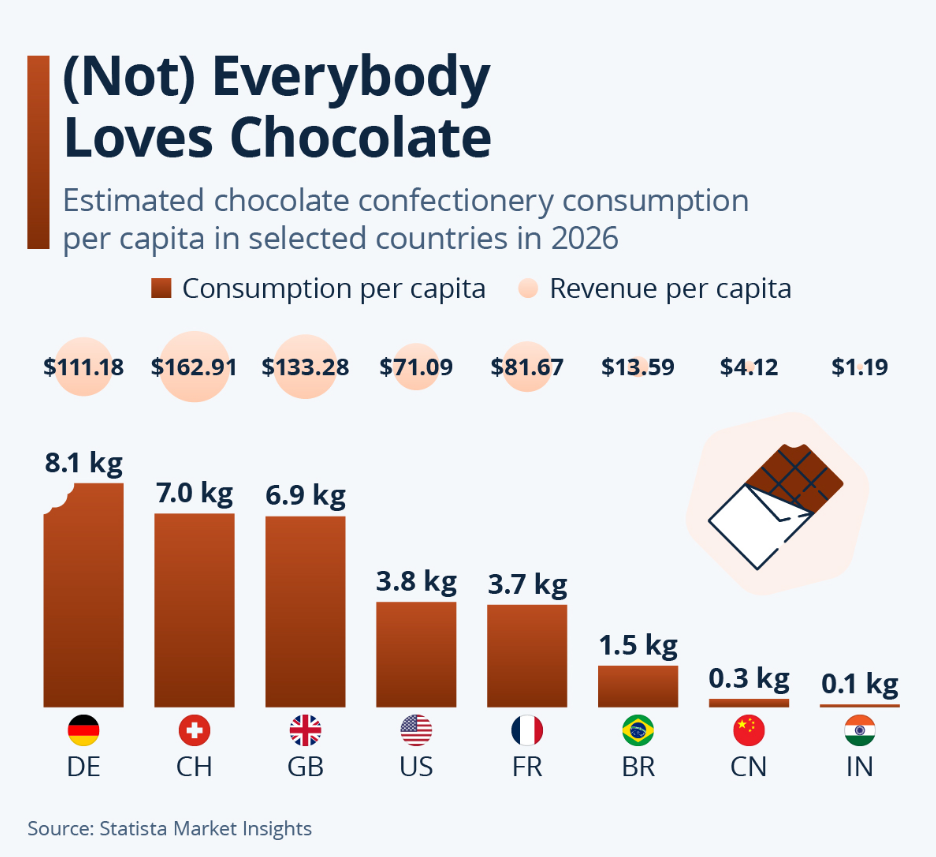
And there is another layer to this story. India’s chocolate consumption is still tiny compared to the rest of the world. Indians consume barely 100 to 200 grams of chocolate per person annually while several European countries consume 5 to 9 kilograms per person every year. That gap alone tells companies why India is becoming such an important market.
At the same time, premiumisation is happening across food and beverages in India.
Consumers are buying gourmet cheese, craft gin, specialty coffee and artisanal ice creams. Chocolate is simply joining that list.
The rise of gifting culture, Instagram-driven aesthetics and modern retail has accelerated the trend further. A Ferrero Rocher box has become a social signal. Meanwhile Indian craft brands are trying to position themselves as authentic luxury rather than cheap alternatives to foreign brands.
But this boom also comes with challenges.
Cocoa prices globally have surged sharply over the last two years because of poor harvests in West Africa, which produces most of the world’s cocoa. That has increased costs for chocolate companies worldwide. Some brands have reduced bar sizes while others have quietly increased prices.
Yet demand in India has remained surprisingly resilient, especially in premium categories where consumers are willing to pay more for perceived quality.
There is also another disruption waiting around the corner.
The proposed India-EU free trade agreement could eventually reduce import duties on European chocolates. If that happens, premium imported brands may become cheaper and more accessible in India. That could intensify competition for Indian craft chocolate makers who are still building scale and distribution.
Still, Indian brands may have one big advantage. They understand local tastes better than anyone else.
While global brands built around hazelnut pralines and milk chocolate, Indian players are experimenting with jaggery chocolate, filter coffee infusions, saffron, cardamom and even regional fruit flavours. They are trying to create a distinctly Indian chocolate identity rather than copying Europe.
And maybe that is the real story here. India is slowly discovering that chocolate can have terroir, craftsmanship and identity just like coffee or wine. A country that once treated chocolate as candy is now beginning to treat it as culture.
Also read: Why India is falling for expensive chocolate?